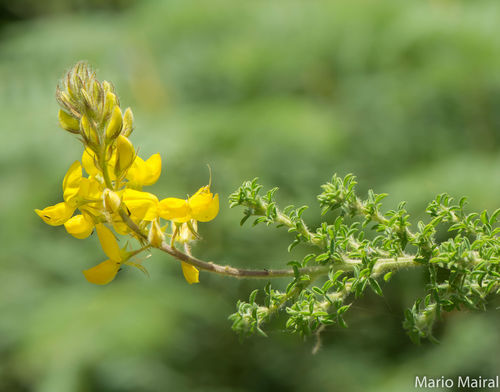


Adenocarpus Foliolosus
adenocarpus foliolosus
Adenocarpus foliolosus, allgemein bekannt als Codeso de Monte, ist ein auffälliger immergrüner Strauch, der auf den Kanarischen Inseln endemisch ist. Diese lebendige Pflanze gehört zur Familie der Hülsenfrüchtler und spielt eine entscheidende ökologische Rolle in den Übergangszonen zwischen feuchten Lorbeerwäldern und trockeneren Kiefernwäldern. Ihre dichte, belaubte Struktur und die üppigen, goldgelben Blüten beleuchten die vulkanischen Hänge von Teneriffa, Gran Canaria, La Palma, La Gomera und El Hierro. Der Codeso ist hervorragend an die einzigartigen Mikroklimata des kanarischen Mittellands angepasst und fängt häufig Feuchtigkeit aus dem von Passatwinden getriebenen Wolkenmeer ab, wodurch Wasser zum Waldboden geleitet wird. Mit seiner Fähigkeit zur Stickstofffixierung fungiert er als Pionierart, die den Boden anreichert und das Wachstum benachbarter einheimischer Flora fördert.
Lebensraum: Vorkommend in kanarischen Kiefernwäldern, Übergangszonen von Lorbeerwäldern und sonnigen Berg-Buschlandschaften auf vulkanischem Boden.
Dieser stark verzweigte, verholzende Strauch erreicht typischerweise eine Höhe zwischen 100 und 300 Zentimetern. Er weist kleine, dreiteilige (trifoliate) grüne Blätter auf, die dicht an den Ästen gedrängt stehen und eine weiche, federartige Textur bilden. Vom Spätwinter bis zum Frühsommer entwickelt er dichte, aufrechte Büschel von leuchtend gelben, erbsenähnlichen Blüten. Darauf folgen längliche, abgeflachte grüne Samenhülsen, die auffällig mit klebrigen, drüsenartigen Haaren bedeckt sind und sich mit zunehmender Reife verdunkeln.
Kategorie
PflanzenSeltenheit
Common
Gefahr
1/5 · Sehr gering
Snaps
Mach den ersten Snap!
Da er vulkanische Landschaften schnell besiedelt, dient er als wichtige Pionierpflanze für die ökologische Wiederherstellung nach Waldbränden.
Historisch verwendeten kanarische Bauern die stabilen, biegsamen Zweige dieses Strauches, um traditionelle rustikale Besen herzustellen.
Der Gattungsname Adenocarpus bedeutet wörtlich 'Drüsenfrucht', ein Hinweis auf die auffälligen klebrigen Unebenheiten an seinen Samenhülsen.
Als photosynthetische Pflanze stellt sie ihre eigene Energie aus Sonnenlicht, Wasser und Kohlendioxid her, während sie essentielle Mineralien aus vulkanischen Böden aufnimmt.
Für dieses Objekt sind noch keine Merkmal-Badges vergeben.
Noch keine Alternativnamen vorhanden.
Sammlungen für dieses Objekt erscheinen hier, wenn weitere Themen hinzugefügt werden.
Gefahr
1/5 · Sehr gering
Noch keine besonderen Sicherheitshinweise.
Der einfachste Weg, Adenocarpus Foliolosus zu bestimmen, ist die Verwendung der Naturführer-App Snappit.
100-300 cm
10-30 Jahre
Als photosynthetische Pflanze stellt sie ihre eigene Energie aus Sonnenlicht, Wasser und Kohlendioxid her, während sie essentielle Mineralien aus vulkanischen Böden aufnimmt.
Vorkommend in kanarischen Kiefernwäldern, Übergangszonen von Lorbeerwäldern und sonnigen Berg-Buschlandschaften auf vulkanischem Boden.
Zoome hinein, um Cluster aufzulösen und zu sehen, wo dieses Objekt fotografiert wurde.
Neueste Snaps erscheinen hier, wenn neue Beobachtungen hinzukommen.
Nimm die Entdeckung mit
Fotografiere deinen Fund mit Snappit, bestimme die Art und füge die Entdeckung deiner Sammlung hinzu.








.jpg&width=800)



_001.jpg&width=800)




