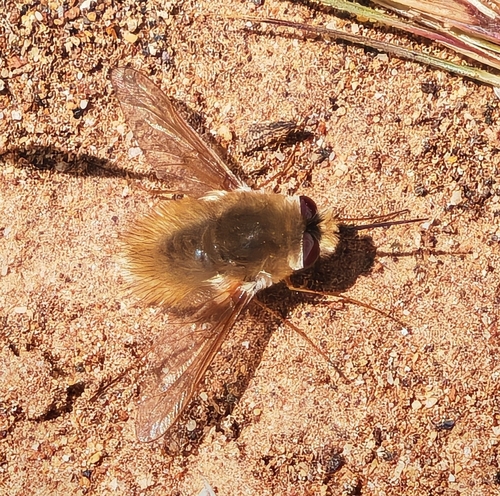


Anastoechus Latifrons
anastoechus latifrons
Anastoechus latifrons ist eine faszinierende Art von Wollschwebern aus der Familie der Bombyliidae. Bekannt für ihre bemerkenswerte Ähnlichkeit mit Bienen, sind diese Insekten ein klassisches Beispiel für Bates'sche Mimikry. Sie tragen dichtes, pelziges Haar, das potenzielle Raubtiere effektiv abschreckt, die sie für stechende Insekten halten. Während die erwachsenen Tiere friedliche, nektarliebende Bestäuber sind, die ihre Tage schwebend über blühenden Wüstenblumen verbringen, führen ihre Larven ein viel dunkleres und geheimnisvolleres Leben. Die Larven von Anastoechus latifrons sind spezialisierte Prädatoren oder Parasitoide von Heuschreckeneipaketen, was sie zu einem wichtigen ökologischen Kontrollmittel in ihren heimischen ariden Lebensräumen macht. Geschickt in der Luft können die erwachsenen Tiere mit unglaublicher Präzision dahinfliegen und schweben, fungieren als wichtige Bestäuber und bereichern die trockenen Grasländer, Buschländer und Wüsten, die sie bewohnen, mit einer dynamischen, summenden Präsenz.
Lebensraum: Hauptsächlich in ariden Buschländern, trockenen Grasländern und sandigen Wüsten zu finden, wo Wirtsheuschrecken und blühende Nektarpflanzen reichlich vorhanden sind.
Diese Art zeichnet sich durch einen gedrungenen, stark behaarten (pilose) Körper aus, der ihr ein deutlich flauschiges, bienenähnliches Aussehen verleiht. Ihre Färbung weist typischerweise gedämpfte Töne von Hellbraun, Gelblich-Braun und Braun auf, perfekt angepasst, um sich in sandige und aride Umgebungen einzufügen. Ein hervorstehender, starrer Rüssel ragt gerade nach vorne aus ihrem Kopf, der dazu dient, Nektar aus tiefkelchigen Blüten zu entnehmen. Die Flügel sind größtenteils transparent, können aber am vorderen Rand einen leichten rauchigen Schimmer aufweisen. Im Ruhezustand werden die Flügel in einer zurückgeschlagenen Deltaflügelhaltung ausgebreitet gehalten.
Kategorie
InsektenSeltenheit
Gewöhnlich
Gefahr
1/5 · Sehr gering
Snaps
Mach den ersten Snap!
Trotz ihres einschüchternden, pelzigen, bienenähnlichen Aussehens besitzen Wollschweber weder Stachel noch Gift und sind für Menschen völlig harmlos.
Ihre Flügel schlagen mit einer unglaublich hohen Frequenz, was ein deutliches Summen erzeugt, das die Illusion, sie seien stechende Bienen, noch verstärkt.
Wenn ein Weibchen bereit ist, ihre Eier zu legen, schwebt sie knapp über dem Boden und schnippt ihre sandbeschichteten Eier energisch in Risse im Boden in der Nähe von Heuschreckenbauten.
Erwachsene ernähren sich ausschließlich von Blütennektar und Pollen, während das Larvenstadium streng karnivor ist und Heuschreckeneipakete verzehrt.
Altersunterschiede: Erfährt eine radikale Ernährungsumstellung: Larven sind fleischfressende Räuber von Heuschreckeneiern, während erwachsene Tiere ausschließlich nektarfressende Pflanzenfresser sind.
Für dieses Objekt sind noch keine Merkmal-Badges vergeben.
Noch keine Alternativnamen vorhanden.
Sammlungen für dieses Objekt erscheinen hier, wenn weitere Themen hinzugefügt werden.
Gefahr
1/5 · Sehr gering
Noch keine besonderen Sicherheitshinweise.
Achte auf sechs Beine, Fühler, drei Körperabschnitte und die Form der Flügel. Käfer haben gehärtete Vorderflügel, Fliegen nur ein funktionierendes Flügelpaar. Winzige Insekten müssen oft aus der Nähe betrachtet werden, bevor ihre Gruppe klar wird. Insekten bestimmen: Lade ein Foto hoch und vergleiche die sichtbaren Merkmale.
1-2 cm
1-3 cm
0.0001-0.0003 kg
bis zu 1 Jahre
15 km/h
Erwachsene ernähren sich ausschließlich von Blütennektar und Pollen, während das Larvenstadium streng karnivor ist und Heuschreckeneipakete verzehrt.
Hauptsächlich in ariden Buschländern, trockenen Grasländern und sandigen Wüsten zu finden, wo Wirtsheuschrecken und blühende Nektarpflanzen reichlich vorhanden sind.
Zoome hinein, um Cluster aufzulösen und zu sehen, wo dieses Objekt fotografiert wurde.
Neueste Snaps erscheinen hier, wenn neue Beobachtungen hinzukommen.
Nimm die Entdeckung mit
Fotografiere deinen Fund mit Snappit, bestimme die Art und füge die Entdeckung deiner Sammlung hinzu.