


Arthrophaga Myriapodina
arthrophaga myriapodina
Arthrophaga myriapodina ist eine bemerkenswerte und etwas makabre Art eines entomopathogenen Pilzes. Als Mitglied einer spezialisierten Pilzgruppe, die Arthropoden parasitiert, ist diese Art einzigartig darauf spezialisiert, Tausendfüßer zu befallen. Sobald ihre Sporen das Exoskelett des Wirts durchdringen, beginnt der Pilz eine stille Invasion, wächst im lebenden Tausendfüßer und konsumiert seine nicht lebenswichtigen Gewebe. Wenn er sich auf die Fortpflanzung vorbereitet, verändert der Pilz das Verhalten des Wirts dramatisch, indem er sein Nervensystem kapert, um die „Gipfelkrankheit“ hervorzurufen. Dies zwingt den sterbenden Tausendfüßer, vor seinem Tod an eine erhöhte, exponierte Position zu klettern. Diese faszinierende, manipulative ökologische Interaktion macht Arthrophaga myriapodina zu einem beeindruckenden Beispiel für einen parasitären Lebenszyklus, der seinen Wirt in ein Sporen verbreitendes Vehikel verwandelt, um das Überleben der nächsten Generation zu sichern.
Lebensraum: In feuchten, gemäßigten Laubwäldern zu finden, insbesondere in Gebieten mit reicher Laubstreu und verrottendem Holz, wo Wirts-Tausendfüßer reichlich vorhanden sind.
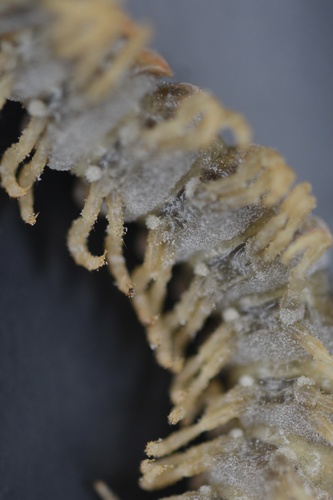
Dieser Pilz ist selten allein anzutreffen und wird fast ausschließlich durch sein Vorkommen auf einem verstorbenen Wirts-Tausendfüßer identifiziert. Wenn er sich aktiv vermehrt, äußert sich Arthrophaga myriapodina als fuzzy, weißliche bis hellgelbe Pilzgewebs-Büschel (Konidienträger), die lebhaft aus den intersegmentalen Membranen – den weicheren Bändern zwischen den gehärteten, panzerartigen Platten des Tausendfüßers – hervorbrechen. Der infizierte Wirt ist typischerweise ungewöhnlich fest an einem Zweig, Blatt oder Felsen in großer Höhe haftend zu finden, durch das ausgedehnte Pilznetzwerk in seinem Körper verfestigt.
Kategorie
PilzeSeltenheit
Gewöhnlich
Gefahr
1/5 · Sehr gering
Snaps
Mach den ersten Snap!
Infizierte Tausendfüßer verriegeln oft ihre Beine in einem 'Todesgriff' um die Pflanze, auf die sie vor ihrem Tod geklettert sind, wodurch ihre Körper während des Sporenverbreitungsprozesses sicher verankert bleiben.
Es gehört zu einer spezialisierten Gruppe von Pilzen, die unabhängig voneinander 'Zombie-machende' Eigenschaften entwickelt haben, ähnlich den berühmten Ophiocordyceps-Pilzen, die Ameisen infizieren.
Der Gattungsname Arthrophaga bedeutet direkt 'Gelenkfresser' und beschreibt perfekt, wie der Pilz aus den Gelenken des Exoskeletts des Tausendfüßers hervorbricht.
Die Sporen werden aktiv aus den Fruchtkörpern geschossen und wirken wie mikroskopische Pilzkanonen, um sicherzustellen, dass sie auf neue, darunter liegende Wirtstiere treffen.
Der Pilz bezieht alle seine Nährstoffe, indem er die inneren Gewebe und die Hämolymphe lebender und kürzlich verstorbener Tausendfüßer verdaut.
Altersunterschiede: Beginnt als Endoparasit, der nicht-vitale Gewebe verzehrt, und wechselt dann dazu, vitale Organe unmittelbar vor dem Tod des Wirts zu konsumieren.
Einzelgänger leben den größten Teil ihres Lebens allein und interagieren mit Artgenossen nur zur Paarung oder zur Aufzucht der Jungen.
Grabende Tiere heben Tunnel und Kammern im Erdboden aus und nutzen diese unterirdischen Strukturen als Unterschlupf, zur Jagd oder zur Fortpflanzung.
Waldlebensräume sind terrestrische Lebensräume, die von dichtem Baumbestand dominiert werden und eine große Vielfalt an Pflanzen- und Tierarten beherbergen.
Beschreibt Organismen, die totes organisches Material abbauen und Nährstoffe in das Ökosystem zurückführen.
Nachtaktive Tiere sind hauptsächlich in den Nachtstunden aktiv und ruhen oder schlafen normalerweise tagsüber.
Noch keine Alternativnamen vorhanden.
Sammlungen für dieses Objekt erscheinen hier, wenn weitere Themen hinzugefügt werden.
Gefahr
1/5 · Sehr gering
Noch keine besonderen Sicherheitshinweise.
Vergleiche die Hutform, die Unterseite, den Stiel samt Basis und ob der Pilz auf Holz oder auf Erde wächst. Manche Pilze haben Lamellen, andere Poren oder Stacheln. Ein Hut, der nur von oben zu sehen ist, verbirgt oft die wichtigsten Merkmale. Pilze bestimmen: Lade ein Foto hoch und vergleiche die sichtbaren Merkmale.
2-5 cm
Der Pilz bezieht alle seine Nährstoffe, indem er die inneren Gewebe und die Hämolymphe lebender und kürzlich verstorbener Tausendfüßer verdaut.
In feuchten, gemäßigten Laubwäldern zu finden, insbesondere in Gebieten mit reicher Laubstreu und verrottendem Holz, wo Wirts-Tausendfüßer reichlich vorhanden sind.
Passiver Kontakt
7-14 Tage
Zoome hinein, um Cluster aufzulösen und zu sehen, wo dieses Objekt fotografiert wurde.
Neueste Snaps erscheinen hier, wenn neue Beobachtungen hinzukommen.
Nimm die Entdeckung mit
Fotografiere deinen Fund mit Snappit, bestimme die Art und füge die Entdeckung deiner Sammlung hinzu.