


Bambusa
bambusa
Bambusa ist eine vielfältige Gattung horstbildender Bambusse, die hauptsächlich in den tropischen und subtropischen Regionen Asiens beheimatet ist. Gekennzeichnet durch ihre schnell wachsenden, holzigen Stängel, die als Halme bekannt sind, bilden diese Pflanzen dichte, majestätische Haine, die viele asiatische Waldlandschaften prägen. Im Gegensatz zu ausläuferbildenden Bambussen besitzen Bambusa-Arten sympodiale Rhizome, was bedeutet, dass sie in dichten, vorhersehbaren Horsten wachsen, was sie sowohl für die ökologische Bodenstabilität als auch für die kontrollierte Zierlandschaftsgestaltung sehr wertvoll macht. Weltweit ist Bambusa für die Menschheit unverzichtbar. Ihre unglaubliche Stärke, Flexibilität und schnelle Wachstumsrate machen sie zu einer erstklassigen erneuerbaren Ressource, die für den Bau von Gerüsten, Brücken, Musikinstrumenten und Papier verwendet wird, während ihre zarten Triebe ein kulinarisches Grundnahrungsmittel bleiben.
Lebensraum: Typischerweise in tropischen und subtropischen Monsunwäldern, an Flussufern und in feuchten Tälern zu finden, wo sie in gut durchlässigen, fruchtbaren Böden gedeihen.
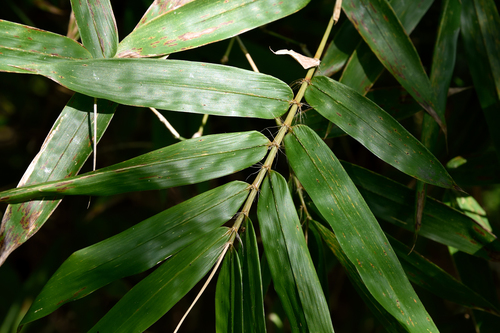
Bambusa-Pflanzen sind leicht an ihren hohen, hohlen grünen oder gelben Halmen zu erkennen, die in dichten, runden Horsten wachsen. Je nach Art reichen die reifen Halme von leuchtendem Smaragdgrün bis zu tiefem Gold und weisen oft charakteristische dunkelgrüne vertikale Streifen in der Nähe der ringartigen Knoten auf. Die Verzweigung erfolgt typischerweise von diesen Knoten entlang der oberen Hälfte des Stängels und bringt zarte, lanzettförmige Blätter mit feinen parallelen Adern hervor. Junge Triebe kommen aus dem Boden, eingehüllt in dunkle, haarige, papierartige Scheiden, die abfallen, wenn der Halm reift.
Kategorie
PflanzenSeltenheit
Gewöhnlich
Gefahr
1/5 · Sehr gering
Snaps
Mach den ersten Snap!
Bambusa-Pflanzen zeigen oft eine Massenblüte, bei der alle Mitglieder einer einzigen Klonlinie weltweit gleichzeitig blühen, bevor sie absterben.
Die silikareiche Außenschicht der Bambusa-Halme ist so dicht und zäh, dass sie Funken schlagen kann, wenn sie mit Stahlklingen getroffen wird.
Unter optimalen Bedingungen können bestimmte Arten der Gattung Bambusa innerhalb eines einzigen 24-Stunden-Zeitraums bis zu 91 Zentimeter (36 Zoll) wachsen.
Wie alle grünen Pflanzen sind Bambusa-Arten autotroph und synthetisieren ihre eigene Energie aus Sonnenlicht, Wasser und Kohlendioxid durch Photosynthese.
Altersunterschiede: Junge Triebe sind stark auf Nährstoffe angewiesen, die im mütterlichen Rhizomnetzwerk gespeichert sind, während reife Halme unabhängig Photosynthese betreiben.
Für dieses Objekt sind noch keine Merkmal-Badges vergeben.
Noch keine Alternativnamen vorhanden.
Sammlungen für dieses Objekt erscheinen hier, wenn weitere Themen hinzugefügt werden.
Gefahr
1/5 · Sehr gering
Noch keine besonderen Sicherheitshinweise.
Vergleiche Blütenstände, Stängelform, den Ansatz der Blätter und das Gelenk, an dem das Blatt auf den Stängel trifft. Eine gemähte Rasenfläche zeigt selten genug für eine genaue Bestimmung. Gräser bestimmen: Lade ein Foto hoch und vergleiche die sichtbaren Merkmale.
100-3000 cm
5-80 kg
20-120 Jahre
Wie alle grünen Pflanzen sind Bambusa-Arten autotroph und synthetisieren ihre eigene Energie aus Sonnenlicht, Wasser und Kohlendioxid durch Photosynthese.
Typischerweise in tropischen und subtropischen Monsunwäldern, an Flussufern und in feuchten Tälern zu finden, wo sie in gut durchlässigen, fruchtbaren Böden gedeihen.
Photosynthese
Zoome hinein, um Cluster aufzulösen und zu sehen, wo dieses Objekt fotografiert wurde.
Neueste Snaps erscheinen hier, wenn neue Beobachtungen hinzukommen.
Nimm die Entdeckung mit
Fotografiere deinen Fund mit Snappit, bestimme die Art und füge die Entdeckung deiner Sammlung hinzu.

















