

Blacksburg-Salamander
plethodon jacksoni
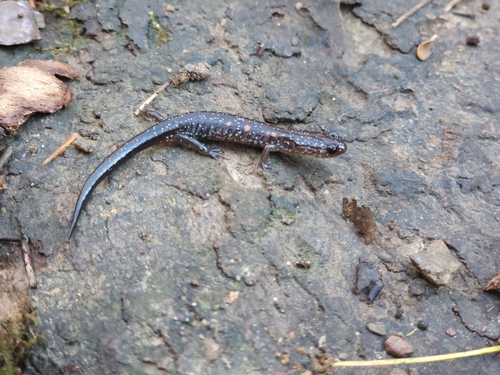
Der Blacksburg-Salamander (Plethodon jacksoni) ist ein faszinierendes und schwer fassbares Waldamphibium, das die feuchten, bewaldeten Hänge der Appalachen sein Zuhause nennt. Als Mitglied der Familie der lungenlosen Salamander (Plethodontidae) atmet dieses bemerkenswerte Geschöpf vollständig durch seine feuchte Haut und die Mundschleimhaut, wobei ihm im Erwachsenenalter vollständig Lungen oder Kiemen fehlen. Diese einzigartige physiologische Anpassung bindet es dauerhaft an feuchte Mikrohabitate, wodurch die feuchten Unterseiten verrottender Baumstämme und moosbewachsener Felsen zu seinem perfekten Zufluchtsort werden. Obwohl er einen Großteil seines Lebens vor menschlichen Augen verborgen verbringt, ist ein Blick auf den Blacksburg-Salamander eine besondere Freude für Naturliebhaber, die die Wälder Ost-Nordamerikas erkunden. Ihre geheimnisvolle Natur und ihre strikte Abhängigkeit von unberührten, ungestörten Wäldern machen sie zu hervorragenden Indikatoren für die Waldgesundheit und erinnern uns an die empfindlichen, verborgenen Ökosysteme, die unter dem Waldboden gedeihen.
Lebensraum: Man findet ihn hauptsächlich in feuchten, alten Laub- und Mischwäldern der Appalachen-Region, typischerweise versteckt unter verrottenden Baumstämmen, dicker Laubstreu und moosbewachsenen Felsen.
Dieser mittelgroße, schlanke Salamander weist typischerweise eine dunkelbraune bis schwärzliche Grundfärbung auf, elegant gesprenkelt mit weißen, silbernen oder schwach messingfarbenen Flecken entlang seines Rückens und seiner Seiten. Sein Bauch ist normalerweise heller und zeigt oft einen gesprenkelten oder einheitlich gräulichen Farbton. Wie die meisten Plethodon-Arten hat er eine glatte, feuchte Haut, deutliche vertikale Rippenfurchen, die seine Flanken hinunterlaufen, und hervorstehende, leicht hervorquellende Augen, die an das Sehen bei schlechten Lichtverhältnissen angepasst sind. Ihm fehlen die hellroten oder orangefarbenen Rückenstreifen, die bei einigen seiner nahen Verwandten zu sehen sind; stattdessen verlässt er sich auf sein dunkles, sternartiges Muster, um sich perfekt gegen dunklen, feuchten Boden und schattige Laubstreu zu tarnen.
Kategorie
AmphibienSeltenheit
Gewöhnlich
Gefahr
1/5 · Sehr gering
Snaps
Mach den ersten Snap!
Da sie vollständig durch ihre Haut atmen, ersticken Blacksburg-Salamander schnell, wenn ihre Haut austrocknet, weshalb sie an warmen, sonnigen Tagen selten ins Freie kommen.
Während extremer Sommertrockenheiten können sie vertikal tief in den Untergrund wandern und Wurzelkanäle sowie Felsspalten nutzen, um stabile Feuchtigkeitsniveaus zu finden.
Sie umgehen das aquatische Kaulquappenstadium vollständig; Weibchen legen Eier in feuchte, versteckte terrestrische Nester, und vollständig entwickelte Miniatur-Salamander schlüpfen direkt aus den Eiern.
Dieser Salamander gehört zu einer alten Evolutionslinie, die die brutalen Eiszeiten des Pleistozäns überlebte, indem sie in den tiefen, unvergletscherten Tälern der Appalachen Zuflucht suchte.
Ohne Lungen absorbiert dieser Salamander Sauerstoff und gibt Kohlendioxid vollständig über seine hochpermeable, feuchte Haut ab.
Er nutzt spezialisierte nasolabiale Furchen – winzige Schlitze, die von seinen Nasenlöchern zu seiner Oberlippe verlaufen – um chemische Signale von Beute und potenziellen Partnern zu erkennen.
Wenn er bedroht oder von einem Raubtier gepackt wird, kann er seinen Schwanz freiwillig abwerfen, um eine zappelnde Ablenkung zu erzeugen, und regeneriert schließlich einen neuen.
Er ernährt sich ausschließlich von einer Vielzahl kleiner Wirbelloser, die auf dem Waldboden zu finden sind, und jagt sie aktiv in feuchten, nassen Nächten.
Altersunterschiede: Jungtiere fressen viel kleinere Mikro-Wirbellose wie winzige Milben und Springschwänze und wechseln mit zunehmendem Wachstum zu größerer Beute wie Käfern und Spinnen.

Diadophis punctatus
Ein häufiger Räuber, der kleine Waldsalamander aktiv unter der Laubstreu jagt.
Reticulitermes flavipes
Eine häufige wirbellose Beute, die vom Salamander in verrottenden Baumstämmen gejagt wird.
Plethodon cinereus
Konkurriert um ähnliche wirbellose Beute und bevorzugte Versteckobjekte auf dem Waldboden.
Für dieses Objekt sind noch keine Merkmal-Badges vergeben.
Noch keine Alternativnamen vorhanden.
Sammlungen für dieses Objekt erscheinen hier, wenn weitere Themen hinzugefügt werden.
Gefahr
1/5 · Sehr gering
Noch keine besonderen Sicherheitshinweise.
Vergleiche Körperform, Zehen, Zeichnung, Schwanz und Hautstruktur. Kaulquappen und Larven können völlig anders aussehen als die erwachsenen Tiere, zu denen sie werden. Amphibienbestimmer: Lade ein Foto hoch und vergleiche die sichtbaren Merkmale.
10-16 cm
0.005-0.015 kg
10-20 Jahre
Er ernährt sich ausschließlich von einer Vielzahl kleiner Wirbelloser, die auf dem Waldboden zu finden sind, und jagt sie aktiv in feuchten, nassen Nächten.
Man findet ihn hauptsächlich in feuchten, alten Laub- und Mischwäldern der Appalachen-Region, typischerweise versteckt unter verrottenden Baumstämmen, dicker Laubstreu und moosbewachsenen Felsen.
Futtersuche
10-30
Zoome hinein, um Cluster aufzulösen und zu sehen, wo dieses Objekt fotografiert wurde.
Neueste Snaps erscheinen hier, wenn neue Beobachtungen hinzukommen.
Nimm die Entdeckung mit
Fotografiere deinen Fund mit Snappit, bestimme die Art und füge die Entdeckung deiner Sammlung hinzu.