

Bleufer
potamilus purpuratus
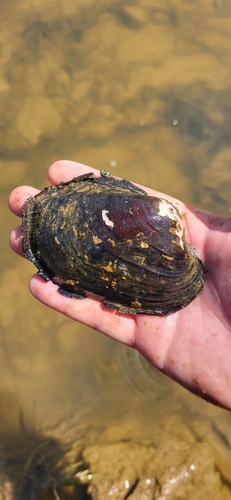
Die Bleufer (Potamilus purpuratus) ist eine robuste Süßwassermuschel, die in den Flüssen und Bächen der zentralen und südlichen Vereinigten Staaten beheimatet ist. Als Mitglied der Familie Unionidae spielt diese Muschel eine entscheidende ökologische Rolle, indem sie riesige Wassermengen filtert, was zur Erhaltung der Klarheit und Gesundheit der Gewässer beiträgt. Sie verbringt den Großteil ihres langen Lebens halb im sandigen oder schlammigen Flussbett vergraben und verankert sich mit einem muskulösen Fuß. Was die Bleufer wirklich faszinierend macht, ist ihr komplexer Fortpflanzungszyklus, der auf einem parasitären Larvenstadium beruht. Um das Überleben ihrer Nachkommen zu sichern, locken die Weibchen spezifische Wirtsfische mit spezialisiertem Gewebe an, das Beute imitiert. Diese elegante evolutionäre Strategie ermöglicht es ihren mikroskopisch kleinen Larven, Glochidien genannt, sich an den Kiemen von Fischen festzuhaken und flussaufwärts zu verbreiten, wo sie schließlich abfallen, um ihr unabhängiges Leben im Sediment zu beginnen.
Lebensraum: Typischerweise in mittelgroßen bis großen Flüssen mit mäßiger Strömung zu finden, halb vergraben in Substraten aus Schlamm, Sand oder feinem Kies.
Die Bleufer zeichnet sich durch ihre große, schwere und bauchige Schale aus, die typischerweise eine Länge von 10 bis 18 Zentimetern erreicht. Ihre äußere Oberfläche ist dunkelgrün, dunkelbraun oder fast schwarz, wobei jüngere Exemplare oft schwache grüne Strahlen aufweisen. Die Form der Schale ist rechteckig bis oval, mit einem ausgeprägten hinteren Grat. Das auffälligste visuelle Merkmal findet sich auf der Innenseite der Schale: Das Perlmutt zeigt einen wunderschönen, stark irisierenden tiefvioletten, lavendelfarbenen oder rosa Farbton, der stark mit ihrem dunklen Äußeren kontrastiert.
Kategorie
InvertebrateSeltenheit
Gewöhnlich
Gefahr
1/5 · Sehr gering
Snaps
Mach den ersten Snap!
Da sie kontinuierlich Wasser filtern, reichern Bleufer-Muscheln Schadstoffe in ihren Schalen und Geweben an, was sie zu wertvollen Bioindikatoren für die Beurteilung der Flussgesundheit macht.
Der gebräuchliche Name 'Bleufer' bezieht sich auf die lebendige, tief blau-violette Farbe der inneren Schalenauskleidung, wodurch sie sich leicht von anderen Süßwassermuscheln unterscheiden lässt.
Ihre Larven sind vollständig vom Süßwasser-Trommelfisch abhängig; wenn die Population des Trommelfischs aus einem Flusssystem verschwindet, kann die Bleufer dort nicht mehr reproduzieren.
Die Bleufer ernährt sich, indem sie Wasser durch ihren Einströmsiphon filtert und dabei winzige organische Partikel, Algen und Mikroorganismen absiebt.
Altersunterschiede: Larvale Glochidien nehmen Nährstoffe aus dem Gewebe der Wirtsfische auf, während Jungtiere und Erwachsene ausschließlich auf Filterung angewiesen sind.
Für dieses Objekt sind noch keine Merkmal-Badges vergeben.
Noch keine Alternativnamen vorhanden.
Sammlungen für dieses Objekt erscheinen hier, wenn weitere Themen hinzugefügt werden.
Gefahr
1/5 · Sehr gering
Noch keine besonderen Sicherheitshinweise.
Vergleiche Körpersymmetrie, Gehäuse, Segmente, Beine, Tentakel und die Fortbewegung des Tiers. Wirbellose umfassen viele nicht verwandte Gruppen, beginne also mit dem Körperbau. Wirbellose bestimmen: Lade ein Foto hoch und vergleiche die sichtbaren Merkmale.
8+ cm
0.1+ kg
10+ Jahre
Die Bleufer ernährt sich, indem sie Wasser durch ihren Einströmsiphon filtert und dabei winzige organische Partikel, Algen und Mikroorganismen absiebt.
Typischerweise in mittelgroßen bis großen Flüssen mit mäßiger Strömung zu finden, halb vergraben in Substraten aus Schlamm, Sand oder feinem Kies.
Filtern
10000+
Zoome hinein, um Cluster aufzulösen und zu sehen, wo dieses Objekt fotografiert wurde.
Neueste Snaps erscheinen hier, wenn neue Beobachtungen hinzukommen.
Nimm die Entdeckung mit
Fotografiere deinen Fund mit Snappit, bestimme die Art und füge die Entdeckung deiner Sammlung hinzu.