
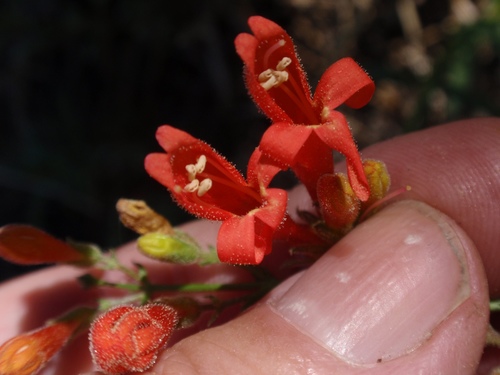


Bridges-Penstemon
penstemon rostriflorus
Der Bridges-Penstemon ist ein widerstandsfähiger und auffälliger ausdauernder Halbstrauch, der in den Gebirgszügen und trockenen Schluchten des Südwestens der Vereinigten Staaten beheimatet ist. Bekannt für seine leuchtend scharlachroten bis orangeroten röhrenförmigen Blüten, hebt sich diese Pflanze dramatisch von ihrer staubigen, ariden Umgebung ab. Er ist an der Basis verholzt und bildet mehrere aufrechte Stängel, die von Mittsommer bis Frühherbst in spektakuläre Blütenpracht ausbrechen. Seine nektarreichen, nach unten gerichteten Blüten sind bei Kolibris unglaublich beliebt, was ihn zu einem entscheidenden Bestandteil lokaler Gebirgsökosysteme. Gärten und Wildgebiete profitieren gleichermaßen von dieser robusten, trockenheitstoleranten Art, die trockenen, felsigen Umgebungen, in denen nur wenige andere Pflanzen gedeihen können, lebendige Farbe verleiht.
Lebensraum: Man findet ihn an trockenen, felsigen Hängen, Canyonwänden sowie in offenen Nadelwäldern und Salbeibüschen in höheren Lagen.
Dieser Halbstrauch wächst typischerweise in Horsten von 30 bis 100 Zentimetern Höhe, gestützt von einer holzigen Basis. Seine Blätter sind schmal, lanzettlich und graugrün und wachsen gegenständig entlang der Stängel. Das markanteste Merkmal ist die Anordnung horizontaler oder nach unten gebogener röhrenförmiger Blüten, die leuchtend scharlachrot oder orangerot sind. Die Blüten weisen eine stark zweilippige Struktur auf, bei der die unteren Lappen deutlich zurückgebogen oder nach hinten gedreht sind und einem winzigen offenen Schnabel ähneln. Diese einzigartige Blütenform und leuchtende Färbung unterscheiden ihn von anderen Penstemon-Arten in seinem geografischen Verbreitungsgebiet.
Kategorie
PflanzenSeltenheit
Gewöhnlich
Gefahr
1/5 · Sehr gering
Snaps
Mach den ersten Snap!
Seine scharlachrote Farbe ist für Vögel gut sichtbar, aber für die meisten Bienen praktisch unsichtbar, was dazu beiträgt, dass sein Nektar den effektivsten Bestäubern zugutekommt.
Der wissenschaftliche Name 'rostriflorus' bedeutet 'schnabelblütig' und bezieht sich auf die charakteristische zurückgebogene Lippe der röhrenförmigen Blüte.
Im Gegensatz zu den meisten krautigen Penstemon-Arten besitzt diese Art eine holzige, stammartige Basis, was sie technisch als Halbstrauch klassifiziert.
Diese Pflanze produziert ihre eigenen organischen Nährstoffe mithilfe von Sonnenlicht, Wasser und Kohlendioxid durch den Prozess der Photosynthese, während sie essentielle Mineralien aus trockenen Felsböden aufnimmt.
Selasphorus platycercus
Ernährt sich vom reichhaltigen Nektar der Blüte und dient als deren primärer Bestäuber in Hochgebirgsumgebungen.
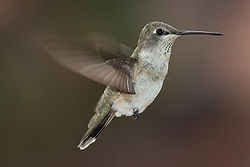
Archilochus alexandri
Besucht die scharlachroten Blüten für Nektar und trägt zur Kreuzbestäubung bei.
Euphydryas chalcedona
Die Raupen dieser Schmetterlingsart ernähren sich gelegentlich von den Blättern von Penstemon-Arten.
Für dieses Objekt sind noch keine Merkmal-Badges vergeben.
Noch keine Alternativnamen vorhanden.
Sammlungen für dieses Objekt erscheinen hier, wenn weitere Themen hinzugefügt werden.
Gefahr
1/5 · Sehr gering
Noch keine besonderen Sicherheitshinweise.
Beginne mit der ganzen Pflanze und vergleiche dann Blattstellung, Blattränder, Stängel und eventuelle Blüten oder Früchte. Gegenständige Blätter wachsen paarweise, wechselständige einzeln am Stängel. Zusammen verraten diese Details weit mehr als ein einzelnes grünes Blatt. Pflanzen bestimmen: Lade ein Foto hoch und vergleiche die sichtbaren Merkmale.
30-100 cm
3-10 Jahre
Diese Pflanze produziert ihre eigenen organischen Nährstoffe mithilfe von Sonnenlicht, Wasser und Kohlendioxid durch den Prozess der Photosynthese, während sie essentielle Mineralien aus trockenen Felsböden aufnimmt.
Man findet ihn an trockenen, felsigen Hängen, Canyonwänden sowie in offenen Nadelwäldern und Salbeibüschen in höheren Lagen.
Zoome hinein, um Cluster aufzulösen und zu sehen, wo dieses Objekt fotografiert wurde.
Neueste Snaps erscheinen hier, wenn neue Beobachtungen hinzukommen.
Nimm die Entdeckung mit
Fotografiere deinen Fund mit Snappit, bestimme die Art und füge die Entdeckung deiner Sammlung hinzu.


















