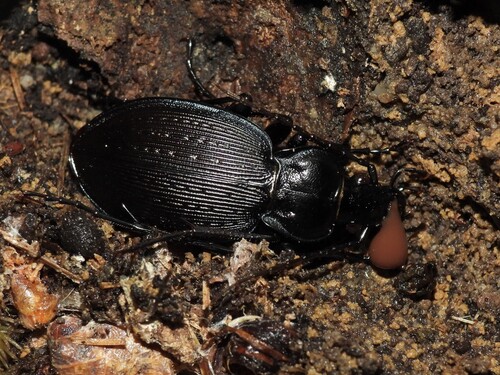


Carabus Goryi
carabus goryi
Carabus Goryi ist eine beeindruckende und elegante Laufkäferart, die in den Wäldern und Buschlandschaften des Nahen Ostens heimisch ist, insbesondere in Regionen wie der Türkei und dem Iran. Als Mitglied der vielfältigen Familie der Carabidae ist dieser Käfer ein äußerst effizienter, nachtaktiver Räuber, der den Waldboden auf der Suche nach kleinen Wirbellosen patrouilliert. Mit seinen auffälligen metallischen Rändern und seinem robusten, athletischen Körperbau ist er ein faszinierender Fund für jeden Insektenliebhaber, der die Natur in der Dämmerung erkundet. Im Gegensatz zu vielen anderen Insektenarten sind diese Laufkäfer hauptsächlich flugunfähig und haben ihren Körper für schnelles Laufen und Kraft angepasst. Ihre Präsenz in einem Ökosystem ist ein starker Indikator für eine gesunde, artenreiche Umwelt, da sie dazu beitragen, die Populationen von Schädlingen wie Schnecken und schädlichen Raupen zu kontrollieren.
Lebensraum: Vorkommend in gemäßigten Laubwäldern, dichten Waldböden und mediterranen Buschlandschaften, typischerweise versteckt unter Laubstreu, Steinen oder verrottenden Baumstämmen.
Carabus Goryi misst typischerweise zwischen 2,5 und 3,8 Zentimeter in der Länge und präsentiert einen länglichen, robusten Körper mit einer mattschwarzen Grundfarbe. Die Ränder seines Halsschilds (Pronotum) und der verwachsenen Flügeldecken (Elytren) weisen unter direktem Licht oft einen auffälligen, metallischen violetten, blauen oder kupfergrünen Glanz auf. Seine Elytren sind unverwechselbar mit schwachen Rippen oder Punktierungen strukturiert, und er besitzt lange, kräftige Beine, die für schnelles Laufen angepasst sind, sowie auffällige, scharfe Kiefer (Mandibeln), die zum Erbeuten von Beute dienen.
Kategorie
InsektenSeltenheit
Gewöhnlich
Gefahr
1/5 · Sehr gering
Snaps
Mach den ersten Snap!
Die meisten Mitglieder der Gattung Carabus, einschließlich Carabus Goryi, haben verwachsene Flügeldecken (Elytren) und sind vollständig flugunfähig; sie verlassen sich ausschließlich auf ihre beeindruckende Laufgeschwindigkeit.
Die metallische Färbung ihrer Körper wird nicht durch Pigmente verursacht, sondern durch Strukturfarben, die Licht brechen und einen schimmernden Effekt erzeugen.
Ihre Kiefer sind so kräftig, dass sie problemlos die Schalen kleiner Schnecken durchdringen können, um an die weiche Beute im Inneren zu gelangen.
Wenn er bedroht wird, kann er einen übelriechenden chemischen Cocktail aus seinem Hinterleib absondern oder versprühen, um Raubtiere abzuschrecken.
Ausgestattet mit langen, kräftigen Beinen kann er schnell über unebene Waldböden sprinten, um Beute zu jagen oder Gefahren zu entkommen.
Er würgt Verdauungsenzyme auf seine Beute, um Gewebe vor dem Verzehr aufzuweichen, wodurch er zähe Wirbellose wie Schnecken fressen kann.
Ein gefräßiger Räuber, der sich hauptsächlich von Weichtieren ernährt, die auf oder knapp unter dem Waldboden zu finden sind.

Cornu aspersum
Jagt diese Landschnecke intensiv und benutzt seine kräftigen Mandibeln, um die Schalen zu zerbrechen oder den Körper herauszuziehen.
Erinaceus concolor
Wird häufig von diesem nachtaktiven Säugetier gefressen, während es auf dem Waldboden nach Nahrung sucht.

Carabus violaceus
Konkurriert mit anderen großen Laufkäfern um Nahrungsressourcen und Jagdgebiete auf dem Waldboden.
Für dieses Objekt sind noch keine Merkmal-Badges vergeben.
Noch keine Alternativnamen vorhanden.
Sammlungen für dieses Objekt erscheinen hier, wenn weitere Themen hinzugefügt werden.
Gefahr
1/5 · Sehr gering
Noch keine besonderen Sicherheitshinweise.
Achte auf die harten Flügeldecken, die in einer Linie auf dem Rücken zusammenstoßen, und vergleiche dann Fühler, Körperform, Beine und Zeichnung. Metallische Farben verändern sich je nach Licht stark. Käfer bestimmen: Lade ein Foto hoch und vergleiche die sichtbaren Merkmale.
4 km/h
Ein gefräßiger Räuber, der sich hauptsächlich von Weichtieren ernährt, die auf oder knapp unter dem Waldboden zu finden sind.
Vorkommend in gemäßigten Laubwäldern, dichten Waldböden und mediterranen Buschlandschaften, typischerweise versteckt unter Laubstreu, Steinen oder verrottenden Baumstämmen.
Verfolgungsjagd
Zoome hinein, um Cluster aufzulösen und zu sehen, wo dieses Objekt fotografiert wurde.
Neueste Snaps erscheinen hier, wenn neue Beobachtungen hinzukommen.
Nimm die Entdeckung mit
Fotografiere deinen Fund mit Snappit, bestimme die Art und füge die Entdeckung deiner Sammlung hinzu.