





Chamise
Adenostoma fasciculatum
Chamise ist eine buschige Pflanze, die an sonnigen Orten wächst. Sie hat dünne, nadelartige Blätter und kann sehr hoch werden. Diese Pflanze hilft, den Boden stabil zu halten und bietet kleinen Tieren ein Zuhause.
Lebensraum: Bergregionen
Chamise hat winzige, hellgrüne, nadelartige Blätter, die dicht an rötlich-braunen Stängeln gruppiert sind. Sie produziert zahlreiche cremeweiße Blüten in federartigen Ähren, die dem Strauch ein gefrostetes Aussehen verleihen. Ihr dickes, aufrechtes Wachstum bildet dichte, unverkennbare Dickichte.
Kategorie
PflanzenSeltenheit
Common
Gefahr
1/5 · Sehr gering
Snaps
4
Chamise wird manchmal 'Greasewood' genannt, weil sich seine Blätter ölig und wachsartig anfühlen!
Sie bildet riesige, dichte Dickichte, die natürliche grüne Wände schaffen, durch die nur wenige Tiere leicht hindurchkommen!
Dieser zähe Strauch kann über 100 Jahre alt werden und selbst nach Bränden neue Stängel treiben!
Wenn Chamise brennt, kann der Rauch tatsächlich dazu beitragen, dass die Samen anderer Pflanzen keimen!
Chamise besitzt winzige, harzige Blätter, die ihm helfen, den Wasserverlust zu reduzieren und lange, trockene Sommer zu überleben.
Diese Pflanze treibt nach Waldbränden von ihrer Basis wieder aus und besiedelt schnell verbrannte Gebiete, indem sie mit dem Feuer gedeiht.
Apis mellifera
Bienen sammeln ihren Nektar und Pollen
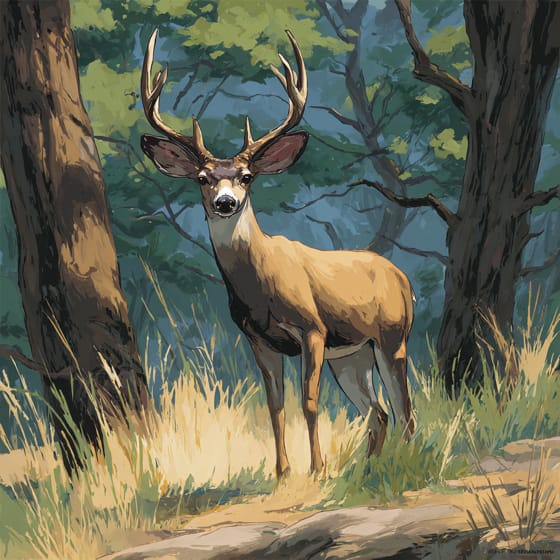
Odocoileus hemionus
Hirsche fressen ihre Blätter und Zweige
Pipilo crissalis
bietet dichten Schutz für nistende Vögel
Sylvilagus audubonii
Kaninchen finden sichere Verstecke in ihren Dickichten
Blütenpflanzen sind alle Pflanzen, die als Teil ihres Fortpflanzungszyklus Blüten bilden.
Ein Strauch ist eine verholzende Pflanze, die kleiner als ein Baum ist und typischerweise mehrere Stämme hat, die sich ab oder nahe dem Boden verzweigen.
Immergrüne Pflanzen behalten ihr Laub das ganze Jahr über und werfen nie alle Blätter auf einmal ab.
Trockenheitstolerante Pflanzen können unter Bedingungen mit begrenzter Wasserverfügbarkeit überleben und gedeihen.

Dieses Lebensraummerkmal kennzeichnet Arten, die in Bergregionen vorkommen, welche sich durch große Höhen, steile Hänge und unterschiedliche Klimazonen auszeichnen.

Beschreibt eine Art, deren Anwesenheit und Rolle einen unverhältnismäßig großen Einfluss auf ihre Umwelt haben.
Noch keine Alternativnamen vorhanden.
Gefahr
1/5 · Sehr gering
Seid vorsichtig, wenn ihr Chamise-Sträucher erkundet; sie können stachelig sein!
Der einfachste Weg, Chamise zu bestimmen, ist die Verwendung der Naturführer-App Snappit.
100-300 cm
100-250 cm
0.3-0.5 cm
Late spring to early summer
Nein
Keine
Mehrjährig
Zoome hinein, um Cluster aufzulösen und zu sehen, wo dieses Objekt fotografiert wurde.

California, US
Hier kann man sehen Kriegerfeder, Purpur-Eulenklee und Woolly Paintbrush.
Führer anzeigen →

California, US
Hier kann man sehen Peridot-Schweißbiene und Westlicher Zaunleguan.
Führer anzeigen →

California, US
Hier kann man sehen Westlicher Zaunleguan und Kalifornischer Mohn.
Führer anzeigen →

California, US
Hier kann man sehen Graublättrige Zistrose und Sprödblatt-Manzanita.
Führer anzeigen →

California, US
Hier kann man sehen Sonoma-Salbei, Weiße Kugel-Lilie und Höckerschwan.
Führer anzeigen →

California, US
Hier kann man sehen Kalifornischer Buchweizen und Chaparral-Yucca.
Führer anzeigen →
Nimm die Entdeckung mit
Fotografiere deinen Fund mit Snappit, bestimme die Art und füge die Entdeckung deiner Sammlung hinzu.








.jpg&width=800)



_001.jpg&width=800)



