

Chia
salvia columbariae
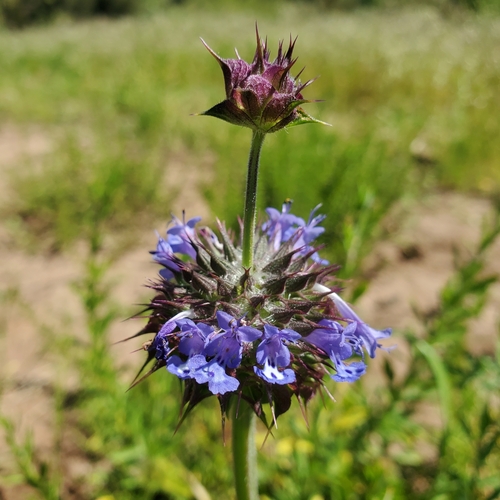
Die Goldene Chia (Salvia columbariae) ist eine faszinierende, widerstandsfähige einjährige Wildblume, die in den ariden und semi-ariden Landschaften des südwestlichen Teils der Vereinigten Staaten und des nordwestlichen Mexikos beheimatet ist. Diese robuste Pflanze gehört zur Familie der Lippenblütler (Lamiaceae) und ist bekannt für ihren bemerkenswerten Nährwert und ihre historische Rolle als wichtige Nahrungsquelle für indigene Völker, darunter die Cahuilla, Tongva und Chumash. Im Frühling färbt sie trockene Hänge und Wüstentäler mit auffälligen violetten Farbtönen und sticht als Lebenszeichen in scheinbar kargen Umgebungen hervor. Über ihre historische und kulturelle Bedeutung hinaus spielt die Goldene Chia eine entscheidende ökologische Rolle. Sie zieht eine Vielzahl einheimischer Bestäuber an, darunter Bienen, Schmetterlinge und Kolibris, während ihre ölreichen Samen viele Wüstenvögel und kleine Säugetiere ernähren. Ihre Fähigkeit, in armen, sandigen Böden zu gedeihen und sich nach Chaparralbränden schnell zu regenerieren, zeigt die unglaubliche Anpassungsfähigkeit der Wüstenflora.
Lebensraum: Zu finden in trockenen, sandigen oder kiesigen Böden in Küsten-Beifuß-Strauchheiden, Chaparral- und Wüstental-Ökosystemen im gesamten Südwesten der Vereinigten Staaten.
Diese einjährige krautige Pflanze wird typischerweise zwischen 10 und 50 Zentimeter hoch und weist einen oder mehrere dunkelviolette, vierkantige Stängel auf. Die Blätter sind meist grundständig, graugrün, tief gelappt und stark strukturiert oder runzelig, bis zu 10 Zentimeter lang. Das markanteste Merkmal ist das Vorhandensein von ein bis mehreren kugelförmigen, stacheligen Blütenquirle, die wie Perlen entlang des Stängels gestapelt sind, wobei winzige, zweilippige, tiefblaue bis violette Blüten aus den spitz zulaufenden Hochblättern hervorgehen.
Kategorie
PflanzenSeltenheit
Gewöhnlich
Gefahr
1/5 · Sehr gering
Snaps
1
Während des kalifornischen Goldrauschs sollen Bergleute die Samen verwendet haben, um alkalisches Wasser zu reinigen und Wüstenquellwasser trinkbarer zu machen.
Indigene Völker Kaliforniens mischten die gemahlenen Samen oft mit Wasser, um ein nährstoffreiches, gelartiges Getränk herzustellen, das sie auf langen Reisen versorgen konnte.
Der gebräuchliche Pflanzenname 'Chia' leitet sich vom Nahuatl-Wort 'chian' ab, was 'ölig' bedeutet und den hohen Gehalt an gesunden Lipiden der Samen hervorhebt.
Bei Kontakt mit Feuchtigkeit quillt die äußere Schicht des Samens zu einer dicken gelatinösen Hülle auf, die den Samen vor dem Austrocknen schützt und ihm hilft, am Wüstenboden zu haften.
Die Samen besitzen einen Dormanzmechanismus, der durch Hitze oder chemische Signale aus Holzrauch gebrochen wird, wodurch die Pflanze verbrannte Chaparral-Gebiete schnell besiedeln kann.
Als Winterannuelle keimt sie schnell mit den Winterregen, blüht im Frühling und produziert Samen, bevor die extreme Sommerhitze einsetzt.
Als photosynthetischer Organismus erzeugt die Goldene Chia ihre eigene Energie aus Sonnenlicht, Kohlendioxid und Wasser, während sie essentielle Mineralien aus trockenen Wüstenböden aufnimmt.

Calypte costae
Die Blüten liefern energiereichen Nektar für Bestäuber, die ihrerseits die Pflanze befruchten.

Pogonomyrmex californicus
Die sehr nahrhaften Samen der Goldenen Chia werden als primäre Nahrungsquelle geerntet und verzehrt.
Callipepla californica
Die Samen liefern während Trockenperioden wichtige Fett- und Proteinnahrung für Wüstenvogelarten.
Für dieses Objekt sind noch keine Merkmal-Badges vergeben.
Noch keine Alternativnamen vorhanden.
Sammlungen für dieses Objekt erscheinen hier, wenn weitere Themen hinzugefügt werden.
Gefahr
1/5 · Sehr gering
Noch keine besonderen Sicherheitshinweise.
Beginne mit der ganzen Pflanze und vergleiche dann Blattstellung, Blattränder, Stängel und eventuelle Blüten oder Früchte. Gegenständige Blätter wachsen paarweise, wechselständige einzeln am Stängel. Zusammen verraten diese Details weit mehr als ein einzelnes grünes Blatt. Pflanzen bestimmen: Lade ein Foto hoch und vergleiche die sichtbaren Merkmale.
10-50 cm
1 Jahre
Als photosynthetischer Organismus erzeugt die Goldene Chia ihre eigene Energie aus Sonnenlicht, Kohlendioxid und Wasser, während sie essentielle Mineralien aus trockenen Wüstenböden aufnimmt.
Zu finden in trockenen, sandigen oder kiesigen Böden in Küsten-Beifuß-Strauchheiden, Chaparral- und Wüstental-Ökosystemen im gesamten Südwesten der Vereinigten Staaten.
Zoome hinein, um Cluster aufzulösen und zu sehen, wo dieses Objekt fotografiert wurde.
Nimm die Entdeckung mit
Fotografiere deinen Fund mit Snappit, bestimme die Art und füge die Entdeckung deiner Sammlung hinzu.