




Corythucha immaculata
Corythucha immaculata
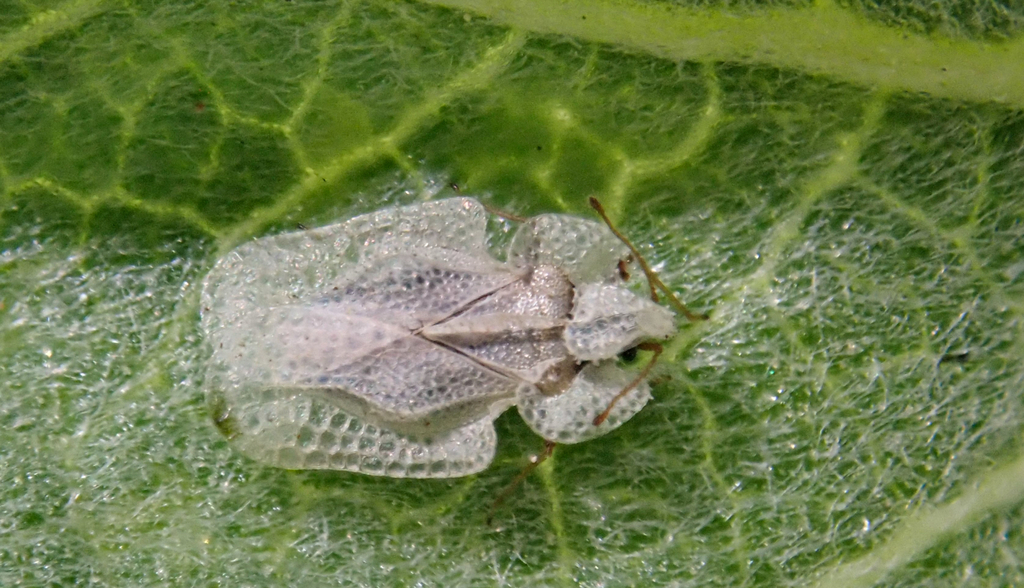
Die Corythucha immaculata, auch bekannt als Weiße Spitzenwanze, ist ein kleines Insekt, das gerne Pflanzen anknabbert. Sie hat ein einzigartiges spitzenartiges Muster auf ihren Flügeln, das sie besonders aussehen lässt!
Lebensraum: Städtische Gebiete
Die Corythucha immaculata ist ein winziges, blasses Insekt mit zarten, abgeflachten, spitzenartigen Flügeln, die über ihren Körper hinausragen. Ihre transparenten Flügel weisen oft schwache, unregelmäßige dunklere Markierungen auf, die gefrostetem Glas ähneln. Dieses einzigartige 'Spitzen'-Aussehen hilft ihr, sich an Pflanzentexturen anzupassen.
Kategorie
InsektenSeltenheit
Gewöhnlich
Gefahr
1/5 · Sehr gering
Snaps
Mach den ersten Snap!
Wow! Spitzenwanzen hinterlassen winzige schwarze 'Teerflecken' auf Blättern von ihren Ausscheidungen!
Wow! Einige Spitzenwanzen 'klopfen' auf Blätter, um miteinander zu kommunizieren!
Wow! Ihre Flügel sind so durchsichtig, man kann fast durch sie hindurchlesen!
Wow! Sie können ihr ganzes Leben auf nur einem Pflanzenblatt verbringen!
Corythucha immaculata kann mit ihren strohhalmähnlichen Mundwerkzeugen Pflanzensaft trinken, dank ihres spezialisierten Rüssels, der ihnen hilft, Nährstoffe aufzunehmen.
Corythucha immaculata hat einzigartige spitzenartige Flügel, die ihr helfen, sich perfekt an die Blattunterseiten anzupassen und so hungrigen Raubtieren zu entgehen.
Corythucha immaculata kann ihre Eier mit einem speziellen Klebstoff an Blattoberflächen kleben, was ihnen hilft, versteckt und sicher zu bleiben.
Diese winzigen Insekten sind Pflanzensaft-Kenner, die sich an den nahrhaften Säften in Blättern laben.
Hippodamia convergens
Fressfeinde von Spitzenwanzen-Nymphen und erwachsenen Tieren.
Chrysoperla carnea
Florfliegenlarven fressen Spitzenwanzen gierig.

Platanus occidentalis
Nährt sich vom Saft ihrer Blätter.

Tilia americana
Erhält Nährstoffe, indem es sich von diesem Baum ernährt.
Anagrus atomus
Winzige Wespen legen Eier in die Eier der Spitzenwanzen.
Einzelgänger leben den größten Teil ihres Lebens allein und interagieren mit Artgenossen nur zur Paarung oder zur Aufzucht der Jungen.
Farbenfroh beschreibt Organismen oder Objekte, die eine große Vielfalt an leuchtenden und deutlich erkennbaren Farben aufweisen.
Dieses Merkmal kennzeichnet Lebewesen, deren Ernährung vollständig oder hauptsächlich aus pflanzlichem Material besteht.
Bezieht sich auf Arten, die deutlich kleiner sind als der Durchschnitt oder das Typische ihrer Art.
Tagaktive Tiere sind hauptsächlich bei Tageslicht aktiv und ruhen oder schlafen in der Regel nachts.
Dieses Lebensraummerkmal weist auf Arten hin, die in städtischen und vorstädtischen Umgebungen mit Menschen zusammenleben können und von Menschen geschaffene Strukturen sowie Grünflächen nutzen.
Beschreibt Organismen, die Pollen übertragen und so die Befruchtung und Fortpflanzung von Pflanzen ermöglichen.
Gefahr
1/5 · Sehr gering
Diese Insekten sind harmlos, aber es ist am besten, sie anzusehen und nicht anzufassen.
Achte auf sechs Beine, Fühler, drei Körperabschnitte und die Form der Flügel. Käfer haben gehärtete Vorderflügel, Fliegen nur ein funktionierendes Flügelpaar. Winzige Insekten müssen oft aus der Nähe betrachtet werden, bevor ihre Gruppe klar wird. Insekten bestimmen: Lade ein Foto hoch und vergleiche die sichtbaren Merkmale.
3-4 mm
30-60 Tage
Diese winzigen Insekten sind Pflanzensaft-Kenner, die sich an den nahrhaften Säften in Blättern laben.
Städtische Gebiete
Futtersuche
6
Zoome hinein, um Cluster aufzulösen und zu sehen, wo dieses Objekt fotografiert wurde.
Neueste Snaps erscheinen hier, wenn neue Beobachtungen hinzukommen.
Nimm die Entdeckung mit
Fotografiere deinen Fund mit Snappit, bestimme die Art und füge die Entdeckung deiner Sammlung hinzu.