


Cyrtandra Longifolia
cyrtandra longifolia
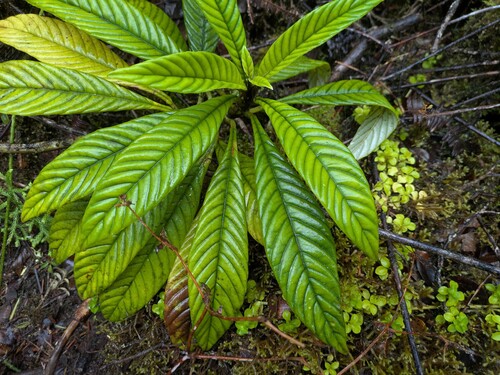
Cyrtandra longifolia, auf Hawaiianisch allgemein als eine Art von Ha‘iwale bekannt, ist ein bezaubernder Strauch oder kleiner Baum, der endemisch in den feuchten, wolkenverhangenen Wäldern der hawaiianischen Inseln ist. Als herausragendes Mitglied der Familie der Usambaraveilchengewächse (Gesneriaceae) spielt sie eine entscheidende Rolle in der Unterholzvegetation der unberührten hawaiianischen Regenwälder. Diese Pflanze ist ein Paradebeispiel für adaptive Radiation auf Inseln, die zeigt, wie sich ein einzelner ursprünglicher Kolonisator zu vielen verschiedenen Arten über den Archipel hinweg entwickelte, um einzigartige ökologische Nischen zu besetzen.
Lebensraum: Typischerweise im feuchten, tief schattigen Unterholz hawaiianischer Regenwälder und montaner Feuchtwälder zu finden, oft in der Nähe von Bächen oder feuchten Schluchten.
Diese Art wächst typischerweise als holziger Strauch oder kleiner Baum mit einer Höhe von 1 bis 5 Metern. Sie ist leicht an ihren gegenständig angeordneten, länglichen, lanzettförmigen Blättern zu erkennen, die bis zu 20 Zentimeter lang werden können und fein gezahnte Ränder aufweisen. Während der Blütezeit bildet sie Büschel zarter, röhrenförmiger weißer Blüten, die aus den Blattachseln entspringen und später fleischigen, eiförmigen weißen oder hellrosa Beeren weichen, die einen starken Kontrast zum dunkelgrünen Laub bilden.
Kategorie
PflanzenSeltenheit
Gewöhnlich
Gefahr
1/5 · Sehr gering
Snaps
Mach den ersten Snap!
Cyrtandra ist die artenreichste Pflanzengattung auf den hawaiianischen Inseln und dient als Lehrbuchbeispiel für schnelle evolutionäre Diversifizierung.
Trotz ihrer holzigen, baumartigen Form gehört diese Art zur Familie der Gesneriaceae, was sie zu einer entfernten Verwandten des beliebten Usambaraveilchens als Zimmerpflanze macht.
Der Gattungsname Cyrtandra leitet sich von den griechischen Wörtern für ‚gekrümmt‘ und ‚männliches Fortpflanzungsorgan‘ ab und bezieht sich auf die charakteristisch gekrümmten Staubblätter der Blüten.
Verfügt über breite, stark pigmentierte Blätter, die speziell angepasst sind, um minimales Sonnenlicht einzufangen, das durch das dichte hawaiianische Waldkronendach dringt.
Produziert helle, feuchtigkeitsreiche weiße Beeren, die gezielt einheimische fruchtfressende Vögel anlocken, um die Samenverbreitung in fragmentierten Waldhabitaten zu erleichtern.
Besitzt eine spezialisierte Kutikulaschicht, die Pilzfäule und physiologischen Stress in extrem nassen, niederschlagsreichen Nebelwäldern verhindert.
Als photoautotrophe Pflanze synthetisiert sie ihre eigenen organischen Verbindungen aus Kohlendioxid und Wasser unter Nutzung der Sonnenenergie.
Myadestes palmeri
Fleischige weiße Beeren werden von diesem seltenen endemischen Vogel gefressen, der dann die Samen im gesamten Feuchtwaldlebensraum verbreitet.
Hylaeus specularis
Einheimische gelbgesichtige Bienen besuchen die röhrenförmigen weißen Blüten für Nektar und fungieren als wichtige Bestäuber für die Art.
Für dieses Objekt sind noch keine Merkmal-Badges vergeben.
Noch keine Alternativnamen vorhanden.
Sammlungen für dieses Objekt erscheinen hier, wenn weitere Themen hinzugefügt werden.
Gefahr
1/5 · Sehr gering
Noch keine besonderen Sicherheitshinweise.
Beginne mit der ganzen Pflanze und vergleiche dann Blattstellung, Blattränder, Stängel und eventuelle Blüten oder Früchte. Gegenständige Blätter wachsen paarweise, wechselständige einzeln am Stängel. Zusammen verraten diese Details weit mehr als ein einzelnes grünes Blatt. Pflanzen bestimmen: Lade ein Foto hoch und vergleiche die sichtbaren Merkmale.
100-500 cm
15-50 Jahre
Als photoautotrophe Pflanze synthetisiert sie ihre eigenen organischen Verbindungen aus Kohlendioxid und Wasser unter Nutzung der Sonnenenergie.
Typischerweise im feuchten, tief schattigen Unterholz hawaiianischer Regenwälder und montaner Feuchtwälder zu finden, oft in der Nähe von Bächen oder feuchten Schluchten.
30-90 Tage
Zoome hinein, um Cluster aufzulösen und zu sehen, wo dieses Objekt fotografiert wurde.
Neueste Snaps erscheinen hier, wenn neue Beobachtungen hinzukommen.
Nimm die Entdeckung mit
Fotografiere deinen Fund mit Snappit, bestimme die Art und füge die Entdeckung deiner Sammlung hinzu.

















