




Cyrtolobus Tuberosus
cyrtolobus tuberosus
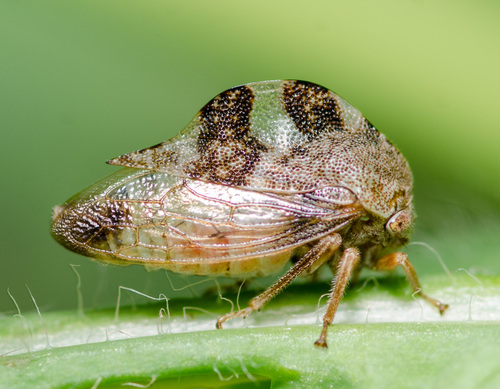
Cyrtolobus tuberosus, allgemein als Buckelzirpe bekannt, ist ein faszinierendes Mitglied der Familie der Buckelzirpen (Membracidae), bekannt für ihre markanten und oft bizarren Fortsätze am Halsschild. Diese kleinen Insekten verbringen ihr Leben hauptsächlich auf den verholzten Stängeln und Ästen von Laubbäumen, wo sie sich von Pflanzensaft ernähren. Sie sind Meister der Tarnung, denn ihre Körperformen und Farben ermöglichen es ihnen, sich nahtlos an Rinde, Dornen oder Knospen anzupassen, was sie unglaublich schwer zu entdecken macht. Ihre Anwesenheit bleibt aufgrund ihrer verborgenen Lebensweise und geringen Größe oft unbemerkt, doch sie spielen eine unauffällige Rolle in Waldökosystemen, dienen als Nahrungsquelle für verschiedene Raubtiere und gehen faszinierende mutualistische Beziehungen mit Ameisen ein.
Lebensraum: Findet man in Laubwäldern, Waldgebieten und Gegenden mit vielen Eichen, wo sie sich von Pflanzensaft ernähren.
Cyrtolobus tuberosus ist ein kleines Insekt, das typischerweise eine Länge zwischen 5 und 8 Millimetern erreicht. Sein auffälligstes Merkmal ist sein helmähnlicher Halsschild (Pronotum), der sich nach hinten über seinen Körper erstreckt und oft ein „höckeriges“ oder buckeliges Aussehen aufweist, was zu seiner Tarnung beiträgt. Die Färbung reicht normalerweise von gesprenkelten Braun- und Grautönen bis hin zu grünlichen Nuancen und ahmt perfekt Rinde, Zweige oder Flechten nach. Sie besitzen durchscheinende, oft geäderte Flügel, die in Ruhestellung zeltartig über dem Körper gehalten werden, und kleine, dunkle Augen.
Kategorie
InsektenSeltenheit
Gewöhnlich
Gefahr
1/5 · Sehr gering
Snaps
Mach den ersten Snap!
Cyrtolobus tuberosus gehört zur Familie der Buckelzirpen (Membracidae), die für einige der bizarrsten und aufwendigsten Modifikationen des Halsschilds (Pronotum, erstes Segment des Brustkorbs) in der Insektenwelt berüchtigt ist.
Trotz ihrer geringen Größe können Buckelzirpen kräftig springen und kurze Strecken fliegen, was ihnen bei der Flucht vor Raubtieren und bei der Bewegung zwischen Futterplätzen hilft.
Wie viele andere saftsaugende Insekten scheidet C. tuberosus ein zuckerhaltiges Abfallprodukt namens Honigtau aus, das eine wertvolle Nahrungsquelle für Ameisen ist. Dies führt zu mutualistischen Beziehungen, bei denen Ameisen die Zirpen beschützen.
Nymphen (unreife Buckelzirpen) leben oft in Gruppen auf der Wirtspflanze und können manchmal dabei beobachtet werden, wie sie sich synchron bewegen – ein Verhalten, das vermutlich Raubtiere verwirren soll.
Die einzigartige, oft buckelige oder knorrige Form seines Halsschilds ermöglicht es ihm, Teile seiner Wirtspflanze wie Dornen, Rindenunregelmäßigkeiten oder Knospen perfekt nachzuahmen, was es für Raubtiere fast unsichtbar macht.
Ausgestattet mit einem spezialisierten stechend-saugenden Mundwerkzeug (Proboscis) saugt Cyrtolobus tuberosus effizient nährstoffreichen Phloemsaft aus den Stängeln und Ästen von Wirtsbäumen, vor allem Eichen.
Buckelzirpen kommunizieren miteinander durch Vibrationen, die über ihre Wirtspflanzen übertragen werden. Dies ermöglicht es ihnen, Partner zu finden und vor Raubtieren zu warnen, ohne unerwünschte Aufmerksamkeit zu erregen.
Cyrtolobus tuberosus ist ein pflanzenfressendes Insekt, das sich ausschließlich vom Phloemsaft verschiedener Gehölze ernährt und die Nährstoffe mit seinen spezialisierten Mundwerkzeugen aufnimmt.
Altersunterschiede: Nymphen und erwachsene Tiere haben die gleiche Ernährung und ernähren sich beide von Pflanzensaft.

Quercus spp.
Primäre Wirtspflanze und Nahrungsquelle
Formica spp.
Ameisen pflegen oft Buckelzirpen, um den von ihnen ausgeschiedenen zuckerhaltigen Honigtau zu sammeln, und bieten im Gegenzug Schutz vor Raubtieren.
Sphecidae spp.
Häufiger Fressfeind von kleinen Insekten, einschließlich Buckelzirpen.

Parulidae spp.
Verschiedene kleine insektenfressende Vögel fressen Buckelzirpen, wenn sie sie entdecken.
Pelzig beschreibt Tiere, die eine dichte Schicht aus weichen Haaren oder Fell besitzen.
Soziale Tiere leben in organisierten Gruppen und kooperieren, um ihr Überleben zu sichern, beispielsweise bei der Nahrungssuche, Verteidigung und Aufzucht der Jungen.
Baumbewohnende Tiere leben hauptsächlich in Bäumen und nutzen diese als Unterschlupf, Nahrungsquelle und zum Schutz vor Raubtieren.
Dieses Merkmal kennzeichnet Lebewesen, deren Ernährung vollständig oder hauptsächlich aus pflanzlichem Material besteht.
Tagaktive Tiere sind hauptsächlich bei Tageslicht aktiv und ruhen oder schlafen in der Regel nachts.
Noch keine Alternativnamen vorhanden.
Sammlungen für dieses Objekt erscheinen hier, wenn weitere Themen hinzugefügt werden.
Gefahr
1/5 · Sehr gering
Noch keine besonderen Sicherheitshinweise.
Achte auf sechs Beine, Fühler, drei Körperabschnitte und die Form der Flügel. Käfer haben gehärtete Vorderflügel, Fliegen nur ein funktionierendes Flügelpaar. Winzige Insekten müssen oft aus der Nähe betrachtet werden, bevor ihre Gruppe klar wird. Insekten bestimmen: Lade ein Foto hoch und vergleiche die sichtbaren Merkmale.
0 cm
1-2 cm
0 kg
0 Jahre
Cyrtolobus tuberosus ist ein pflanzenfressendes Insekt, das sich ausschließlich vom Phloemsaft verschiedener Gehölze ernährt und die Nährstoffe mit seinen spezialisierten Mundwerkzeugen aufnimmt.
Findet man in Laubwäldern, Waldgebieten und Gegenden mit vielen Eichen, wo sie sich von Pflanzensaft ernähren.
Weiden
Zoome hinein, um Cluster aufzulösen und zu sehen, wo dieses Objekt fotografiert wurde.
Neueste Snaps erscheinen hier, wenn neue Beobachtungen hinzukommen.
Nimm die Entdeckung mit
Fotografiere deinen Fund mit Snappit, bestimme die Art und füge die Entdeckung deiner Sammlung hinzu.