

Dasymutilla Magna
dasymutilla magna
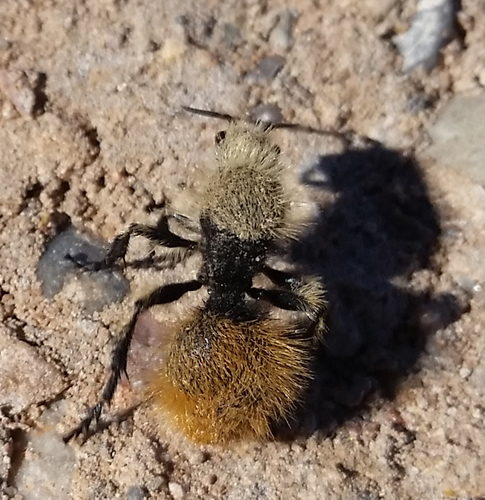
Dasymutilla magna, gemeinhin bekannt als Ameisenwespe, ist ein auffälliges und faszinierendes Insekt aus der Familie der Mutillidae. Trotz ihres Trivialnamens und ihres ameisenähnlichen Aussehens sind diese Kreaturen tatsächlich solitäre Wespen. Die Weibchen sind völlig flügellos und huschen schnell über sandige Böden, während die Männchen transparente Flügel besitzen und viel Zeit damit verbringen, tief auf der Suche nach Partnern zu fliegen. Ihre leuchtenden, dichten Fellmäntel aus plüschigen Haaren dienen als aposematische Warnfärbung und signalisieren potenziellen Fressfeinden, dass sie gefährlich sind. Was Dasymutilla magna wirklich bemerkenswert macht, ist ihre beeindruckende Reihe von Verteidigungsmechanismen. Weibchen besitzen einen außergewöhnlich langen Stachel im Verhältnis zu ihrer Körpergröße, der einen notorisch schmerzhaften Stich abgibt, der ihren Verwandten den Spitznamen 'Kuhkiller' eingebracht hat. Zusätzlich tragen sie ein unglaublich dickes, panzerartiges Exoskelett, das sie vor den Verteidigungsbissen und -stichen der bodennistenden Bienen und Wespen schützt, deren Nester sie zur Eiablage invadieren.
Lebensraum: Vorwiegend in ariden und semi-ariden Umgebungen zu finden, einschließlich Wüstenbuschland, Sanddünen und trockenen Graslandschaften mit spärlicher Vegetation.
Diese Art zeichnet sich durch einen robusten, etwas länglichen Körper von etwa 1 bis 3 Zentimetern Länge aus. Weibchen sind flügellos und dicht mit groben, samtigen Setae (Haaren) bedeckt, die typischerweise leuchtend gelb-orange bis rostrot über Thorax und Abdomen verlaufen und scharf mit ihren glänzenden schwarzen Beinen, Antennen und der Unterseite kontrastieren. Männchen weisen eine ähnliche, wenn auch manchmal mattere Färbung auf, sind aber leicht an den großen, durchscheinenden, dunkel getönten Flügeln zu erkennen. Beide Geschlechter besitzen schwere, gepanzerte Exoskelette, die ihnen beim Bewegen ein deutlich steifes, robustes Aussehen verleihen.
Kategorie
InsektenSeltenheit
Common
Gefahr
1/5 · Sehr gering
Snaps
2
Obwohl sie 'Ameisenwespen' genannt werden, handelt es sich tatsächlich um eine Familie solitärer Wespen, bei denen die Weibchen im Laufe der Evolution ihre Flügel vollständig verloren haben.
Die leuchtenden orange-roten Farben dieses Insekts sind ein klassisches Beispiel für Aposematismus, eine biologische Strategie, die dazu dient, potenziellen Fressfeinden Gefahr anzuzeigen.
Das Exoskelett einer Ameisenwespe ist so außergewöhnlich zäh, dass Entomologen manchmal ihre Stahlpräpariernadeln verbiegen, wenn sie versuchen, sie einer Museumssammlung hinzuzufügen.
Ihr Stich ist unglaublich schmerzhaft und rangiert bekanntermaßen nahe der Spitze des Schmidt-Stichschmerzindex, obwohl ihr Gift für den Menschen relativ ungiftig ist.
Erwachsene Tiere ernähren sich hauptsächlich von Nektar und Wasser, während ihr Larvenstadium streng karnivor ist und sich als Ektoparasitoide an den unreifen Stadien anderer Insekten entwickelt.
Altersunterschiede: Larven sind vollständig fleischfressende Ektoparasitoide, die sich von einem einzigen Wirtsinsekt ernähren, während erwachsene Tiere vollständig auf eine flüssige Diät aus Pflanzensaft und Wasser umsteigen.
Für dieses Objekt sind noch keine Merkmal-Badges vergeben.
Noch keine Alternativnamen vorhanden.
Sammlungen für dieses Objekt erscheinen hier, wenn weitere Themen hinzugefügt werden.
Gefahr
1/5 · Sehr gering
Noch keine besonderen Sicherheitshinweise.
Der einfachste Weg, Dasymutilla Magna zu bestimmen, ist die Verwendung der Naturführer-App Snappit.
1-3 cm
1-3 cm
0.0001-0.0005 kg
0-1 Jahre
Erwachsene Tiere ernähren sich hauptsächlich von Nektar und Wasser, während ihr Larvenstadium streng karnivor ist und sich als Ektoparasitoide an den unreifen Stadien anderer Insekten entwickelt.
Vorwiegend in ariden und semi-ariden Umgebungen zu finden, einschließlich Wüstenbuschland, Sanddünen und trockenen Graslandschaften mit spärlicher Vegetation.
Futtersuche
Zoome hinein, um Cluster aufzulösen und zu sehen, wo dieses Objekt fotografiert wurde.
Nimm die Entdeckung mit
Fotografiere deinen Fund mit Snappit, bestimme die Art und füge die Entdeckung deiner Sammlung hinzu.














.jpg&width=800)




