


Days Cymbidium
cymbidium dayanum
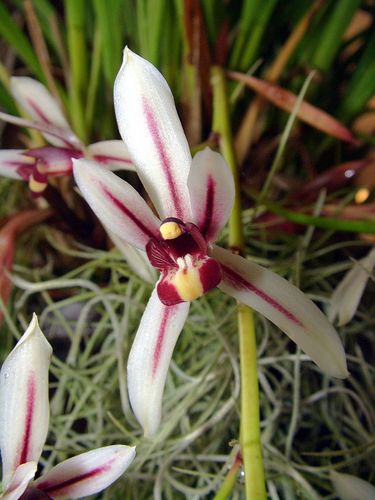
Days Cymbidium (Cymbidium dayanum), auch bekannt als Phönix-Orchidee, ist eine beeindruckende epiphytische Orchideenart, die in den feuchten Wäldern Ost- und Südostasiens beheimatet ist. Diese elegante Pflanze wird von Orchideenliebhabern für ihre anmutigen, kaskadenförmigen weißen Blüten mit satten burgunderroten Akzenten sehr geschätzt. Sie wächst auf Baumstämmen oder moosbewachsenen Felsen und verleiht ihren rauen Waldumgebungen einen Hauch zarter Schönheit. Im Gegensatz zu vielen auffälligen, großblütigen Orchideen weist Days Cymbidium zierliche, sternförmige Blüten auf, die in hängenden Trauben blühen. Ihr schmales, grasähnliches Laub bildet einen schönen Kontrast zu den auffälligen, hängenden Blütenständen und macht sie zu einem Favoriten für Naturbeobachter und Pflanzenliebhaber gleichermaßen. Ihre einzigartigen Anpassungen ermöglichen es ihr, in Höhenlagen zu gedeihen, wo Nährstoffe knapp sind, und sich auf symbiotische Beziehungen mit Waldpilzen und Wirtsbäumen zu verlassen, um ihr Wachstum aufrechtzuerhalten.
Lebensraum: Findet sich in feuchten, schattigen subtropischen und montanen immergrünen Wäldern, typischerweise als Epiphyt auf moosbewachsenen Baumstämmen oder als Lithophyt an steilen Felsklippen wachsend.
Days Cymbidium ist durch ihre langen, riemenförmigen, tiefgrünen Blätter gekennzeichnet, die in einem dichten, grasähnlichen Horst wachsen. Die Blütenstiele fallen kaskadenförmig nach unten und tragen 5 bis 15 sternförmige Blüten. Jede Blüte ist etwa 2,5 bis 5 cm breit und weist weiße oder hellcremefarbene Blütenblätter und Kelchblätter mit einem sehr markanten, dunkel rot-violetten Streifen auf, der die Mitte jedes Segments durchläuft. Die zentrale Lippe (Labellum) ist typischerweise ein sattes, dunkles Burgunderrot oder Purpurrot, oft mit weißen Rändern und einem gelben Zentrum, was einen auffälligen Kontrast schafft, der in schattigen Waldkulissen leicht zu identifizieren ist.
Kategorie
PflanzenSeltenheit
Gewöhnlich
Gefahr
1/5 · Sehr gering
Snaps
Mach den ersten Snap!
Ihre Samen sind so dünn wie Staub und mikroskopisch klein, dass eine einzige Samenkapsel über eine Million Samen enthalten kann, die sich vollständig auf Windströmungen zur Verbreitung verlassen.
Der gebräuchliche Name 'Days Cymbidium' ehrt John Day, einen berühmten englischen Orchideenzüchter und Illustrator des 19. Jahrhunderts, der die Art als erster in Europa zum Blühen brachte.
Im Gegensatz zu vielen Cymbidien, die aufrechte Blütenstiele aufweisen, hat diese Art hängende (pendelnde) Stiele, wodurch die Blüten elegant unter der Pflanze baumeln können.
Nutzt dicke, schwammige, von Velamen überzogene Wurzeln, um sich fest an Baumrinde und Felsen zu klammern und gleichzeitig Feuchtigkeit direkt aus der feuchten Luft aufzunehmen.
Geht im Samenstadion eine Partnerschaft mit spezialisierten Bodenpilzen ein, um essentielle Nährstoffe zu erhalten, da ihre winzigen Samen kein Endosperm zur Wachstumsförderung enthalten.
Gedeiht in nährstoffarmer, stark saurer organischer Substanz, die in Laubstreu und Moosspalten entlang ihrer Wirtsbäume zu finden ist.
Als autotrophe Pflanze stellt sie ihre eigene Nahrung durch Photosynthese her, wobei sie Sonnenlicht, Wasser und atmosphärischen Kohlendioxid nutzt, ergänzt durch Nährstoffe, die aus Regen und verrottendem organischem Material aufgenommen werden.
Apis cerana
Bietet Nektar und ist auf die Bestäubung durch diese heimische Bienenart angewiesen.
Ceratobasidium cornigerum
Unterstützt die Orchideensamen beim Keimen und Etablieren, indem es wichtige organische Verbindungen teilt.
Für dieses Objekt sind noch keine Merkmal-Badges vergeben.
Noch keine Alternativnamen vorhanden.
Sammlungen für dieses Objekt erscheinen hier, wenn weitere Themen hinzugefügt werden.
Gefahr
1/5 · Sehr gering
Noch keine besonderen Sicherheitshinweise.
Beginne mit der ganzen Pflanze und vergleiche dann Blattstellung, Blattränder, Stängel und eventuelle Blüten oder Früchte. Gegenständige Blätter wachsen paarweise, wechselständige einzeln am Stängel. Zusammen verraten diese Details weit mehr als ein einzelnes grünes Blatt. Pflanzen bestimmen: Lade ein Foto hoch und vergleiche die sichtbaren Merkmale.
30-90 cm
10-30 Jahre
Als autotrophe Pflanze stellt sie ihre eigene Nahrung durch Photosynthese her, wobei sie Sonnenlicht, Wasser und atmosphärischen Kohlendioxid nutzt, ergänzt durch Nährstoffe, die aus Regen und verrottendem organischem Material aufgenommen werden.
Findet sich in feuchten, schattigen subtropischen und montanen immergrünen Wäldern, typischerweise als Epiphyt auf moosbewachsenen Baumstämmen oder als Lithophyt an steilen Felsklippen wachsend.
Zoome hinein, um Cluster aufzulösen und zu sehen, wo dieses Objekt fotografiert wurde.
Neueste Snaps erscheinen hier, wenn neue Beobachtungen hinzukommen.
Nimm die Entdeckung mit
Fotografiere deinen Fund mit Snappit, bestimme die Art und füge die Entdeckung deiner Sammlung hinzu.

















