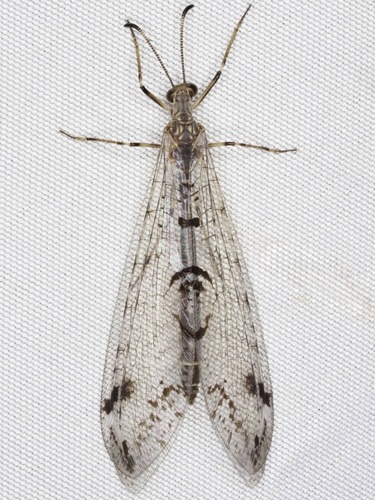





Dendroleon speciosus
Dendroleon speciosus
Die Dendroleon speciosus, auch bekannt als die schöne Florfliege, ist ein winziges Insekt mit zarten, spitzenartigen Flügeln. Sie ist nützlich, weil sie Schädlinge wie Blattläuse frisst und Gärten gesünder und glücklicher macht!
Lebensraum: Wälder
Die Dendroleon speciosus ist ein großes Insekt mit einem robusten Körper und langen, keulenförmigen Antennen. Ihre transparenten, kompliziert geäderten Flügel zeigen dunkle Zeichnungen und einen gelblichen Stich, wodurch ein gesprenkeltes braun-schwarzes Muster entsteht, das ihr hilft, sich mit der Baumrinde zu tarnen.
Kategorie
InsektenSeltenheit
Gewöhnlich
Gefahr
1/5 · Sehr gering
Snaps
Mach den ersten Snap!
Erwachsene Ameisenlöwen werden oft mit Libellen verwechselt, aber sie haben einzigartige keulenförmige Antennen.
Erwachsene Ameisenlöwen sehen aus wie zarte Florfliegen, sind aber oft viel größer und kräftiger.
Die Larven, genannt Ameisenlöwenlarven, können jahrelang leben, bevor sie sich zu geflügelten Erwachsenen entwickeln!
Im Gegensatz zu den meisten Insekten kacken Ameisenlöwenlarven nicht! Sie speichern Abfall, bis sie erwachsen sind.
Larven sind Lauerjäger von Insekten; erwachsene Tiere fressen möglicherweise kleine Insekten oder Nektar.
Altersunterschiede: Larven sind strikte Lauerjäger, während erwachsene Tiere ihre Ernährung mit Nektar oder Pollen ergänzen können.
Einzelgänger leben den größten Teil ihres Lebens allein und interagieren mit Artgenossen nur zur Paarung oder zur Aufzucht der Jungen.
Farbenfroh beschreibt Organismen oder Objekte, die eine große Vielfalt an leuchtenden und deutlich erkennbaren Farben aufweisen.
Getarnt beschreibt Organismen, die über eine Färbung oder Musterung verfügen, durch die sie mit ihrer Umgebung verschmelzen.
Dieses Merkmal kennzeichnet Organismen, deren Nahrung hauptsächlich aus Insekten und anderen kleinen Wirbellosen besteht.
Waldlebensräume sind terrestrische Lebensräume, die von dichtem Baumbestand dominiert werden und eine große Vielfalt an Pflanzen- und Tierarten beherbergen.
Bezieht sich auf Arten, die deutlich kleiner sind als der Durchschnitt oder das Typische ihrer Art.
Beschreibt eine Art, deren Anwesenheit und Rolle einen unverhältnismäßig großen Einfluss auf ihre Umwelt haben.
Nachtaktive Tiere sind hauptsächlich in den Nachtstunden aktiv und ruhen oder schlafen normalerweise tagsüber.
Beschreibt Organismen, die Pollen übertragen und so die Befruchtung und Fortpflanzung von Pflanzen ermöglichen.
Noch keine Alternativnamen vorhanden.
Gefahr
1/5 · Sehr gering
Diese Insekten sind harmlos, aber es ist am besten, sie nur anzusehen und nicht zu berühren.
Achte auf sechs Beine, Fühler, drei Körperabschnitte und die Form der Flügel. Käfer haben gehärtete Vorderflügel, Fliegen nur ein funktionierendes Flügelpaar. Winzige Insekten müssen oft aus der Nähe betrachtet werden, bevor ihre Gruppe klar wird. Insekten bestimmen: Lade ein Foto hoch und vergleiche die sichtbaren Merkmale.
50-70 mm
20-30 mm
365-1095 Tage
5-10 km/h
Larven sind Lauerjäger von Insekten; erwachsene Tiere fressen möglicherweise kleine Insekten oder Nektar.
Wälder
Lauerjagd
Zoome hinein, um Cluster aufzulösen und zu sehen, wo dieses Objekt fotografiert wurde.
Neueste Snaps erscheinen hier, wenn neue Beobachtungen hinzukommen.
Nimm die Entdeckung mit
Fotografiere deinen Fund mit Snappit, bestimme die Art und füge die Entdeckung deiner Sammlung hinzu.