

Descurainia Bourgaeana
descurainia bourgaeana
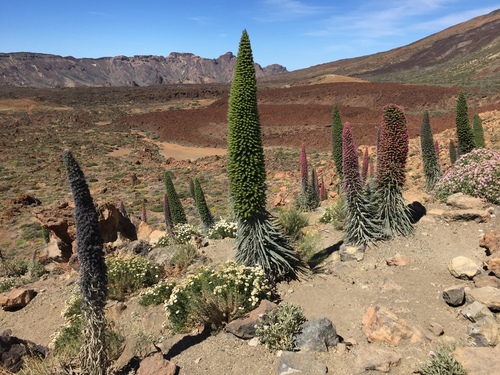
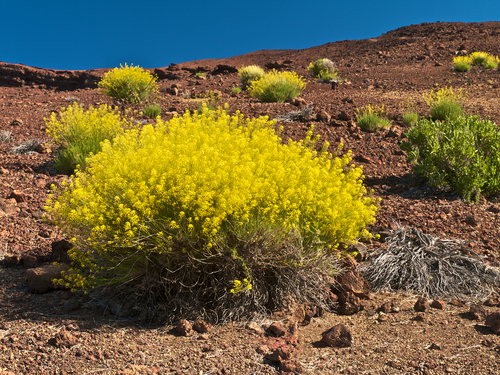
Descurainia bourgaeana, lokal bekannt als „Hierba Pajonera“, ist ein bemerkenswerter Hochgebirgsstrauch, der auf den Kanarischen Inseln endemisch ist und hauptsächlich in den subalpinen Vulkanebenen des Teide auf Teneriffa und in höheren Lagen auf La Palma gedeiht. Diese widerstandsfähige Pflanze bildet dichte, kuppelförmige Polster, die extremen Umweltbedingungen standhalten, darunter eisigen Wintertemperaturen, sengender Sommerhitze und trockenen, nährstoffarmen Vulkanböden. Im Spätfrühling durchläuft sie eine spektakuläre Verwandlung und bricht in eine lebendige Masse leuchtend gelber Blüten aus, die die Kraterböden und felsigen Hänge bedecken. Sie spielt eine entscheidende ökologische Rolle als Pionierart, indem sie lose Vulkanasche stabilisiert und eine wichtige Nektarquelle für alpine Bestäuber bietet.
Lebensraum: Findet sich in hochgelegenen subalpinen Buschlandschaften auf trockenem Vulkanbims, Lavaströmen und felsigen Hängen, hauptsächlich in Höhen zwischen 2.000 und 2.500 Metern.
Diese Art wächst als stark verzweigter, dichter, halbkugelförmiger Strauch, der Höhen von 40 bis 100 Zentimetern erreicht. Er weist graugrüne, tief geteilte, gelappte Blätter auf, die mit feinen, sternförmigen Haaren bedeckt sind, die dem Laub ein samtiges Aussehen verleihen und helfen, überschüssige Strahlung zu reflektieren. Während seiner Blütezeit von Mai bis Juni ist die Pflanze vollständig mit dichten, aufrechten Büscheln kleiner, vierblättriger gelber Blüten bedeckt. Nach der Blüte bildet sie schmale, aufrechte Samenschoten (Schötchen), die schließlich austrocknen und ein strohähnliches Gerüst hinterlassen, das den Winter überdauert.
Kategorie
PflanzenSeltenheit
Gewöhnlich
Gefahr
1/5 · Sehr gering
Snaps
Mach den ersten Snap!
Sie ist ein widerstandsfähiger Überlebenskünstler von Temperaturschocks und hält nachts Temperaturen unter dem Gefrierpunkt und tagsüber im Sommer über 35 Grad Celsius stand.
Ihr gebräuchlicher Name 'Hierba Pajonera' (Strohgras) bezieht sich auf das trockene, strohähnliche Gerüst, zu dem sich die Pflanze während der trockenen Sommermonate verwandelt.
Die leuchtend gelben Kuppelblüten der Pflanze sind so dicht und zahlreich, dass sie während des Höhepunktes des Frühlings sogar auf Satellitenbildern des Teide-Nationalparks deutlich zu erkennen sind.
Die dichte, runde Kissenform schützt die inneren Stängel vor starken Windschäden und hilft, ein gepuffertes Mikroklima zu schaffen, das Feuchtigkeit speichert.
Besitzt ein hoch effizientes Wurzelsystem, das sich in losem Vulkanbims verankern und spärliche Feuchtigkeit und Nährstoffe aus jungen Vulkanböden gewinnen kann.
Die feinen, dichten Haare auf ihren Blättern reduzieren den Wasserverlust durch Transpiration und schützen die Pflanzengewebe vor intensiver ultravioletter Strahlung in großen Höhen.
Als photosynthetische Pflanze synthetisiert sie ihre eigenen organischen Verbindungen unter Verwendung von Sonnenlicht, Kohlendioxid, Wasser und aus dem Boden aufgenommenen Mineralien.
Gallotia galloti
Die endemische Eidechse ernährt sich von den Blüten und Früchten der Pflanze und unterstützt die Samenverbreitung.
Anthophora alluaudi
Die endemische Einsiedlerbiene besucht die Blüten für Nektar und fungiert als primärer Bestäuber.
Oryctolagus cuniculus
Eingeführte europäische Kaninchen weiden die zarten Frühlingstriebe ab und können lokale Schäden verursachen.
Für dieses Objekt sind noch keine Merkmal-Badges vergeben.
Noch keine Alternativnamen vorhanden.
Sammlungen für dieses Objekt erscheinen hier, wenn weitere Themen hinzugefügt werden.
Gefahr
1/5 · Sehr gering
Noch keine besonderen Sicherheitshinweise.
Beginne mit der ganzen Pflanze und vergleiche dann Blattstellung, Blattränder, Stängel und eventuelle Blüten oder Früchte. Gegenständige Blätter wachsen paarweise, wechselständige einzeln am Stängel. Zusammen verraten diese Details weit mehr als ein einzelnes grünes Blatt. Pflanzen bestimmen: Lade ein Foto hoch und vergleiche die sichtbaren Merkmale.
40-100 cm
5-15 Jahre
Als photosynthetische Pflanze synthetisiert sie ihre eigenen organischen Verbindungen unter Verwendung von Sonnenlicht, Kohlendioxid, Wasser und aus dem Boden aufgenommenen Mineralien.
Findet sich in hochgelegenen subalpinen Buschlandschaften auf trockenem Vulkanbims, Lavaströmen und felsigen Hängen, hauptsächlich in Höhen zwischen 2.000 und 2.500 Metern.
Photosynthese
Zoome hinein, um Cluster aufzulösen und zu sehen, wo dieses Objekt fotografiert wurde.
Neueste Snaps erscheinen hier, wenn neue Beobachtungen hinzukommen.
Nimm die Entdeckung mit
Fotografiere deinen Fund mit Snappit, bestimme die Art und füge die Entdeckung deiner Sammlung hinzu.