

Dicromantispa Interrupta
dicromantispa interrupta
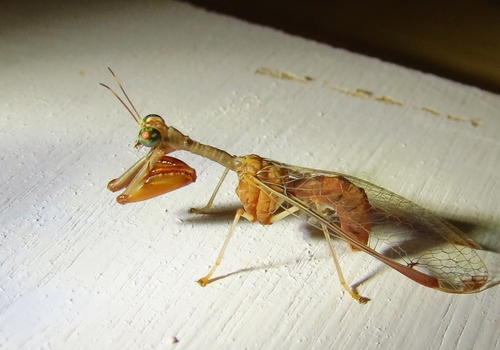
Lernen Sie Dicromantispa interrupta kennen, ein faszinierendes und eindrucksvolles Mitglied der Fanghaften-Familie Mantispidae. Dieses Insekt, oft als „unterbrochene Fanghafte“ bezeichnet, ist ein unglaubliches Beispiel für evolutionäre Konvergenz. Obwohl es mit seinen Fangbeinen und dem verlängerten Prothorax bemerkenswert wie eine Miniatur-Gottesanbeterin aussieht, gehört es tatsächlich zur Ordnung der Netzflügler (Neuroptera) und ist somit enger mit Florfliegen und Ameisenlöwen verwandt. Dieser winzige Prädator ist für seine wespenähnliche Färbung und einen spezialisierten Lebenszyklus bekannt, der sein Überleben direkt an Spinnen knüpft. Während ihres Larvenstadiums durchläuft Dicromantispa interrupta eine Hypermetamorphose, bei der die Larven aktiv nach einer weiblichen Spinne suchen, um auf sie zu klettern und darauf zu warten, dass sie einen Eikokon spinnt, damit sie sich von den Eiern im Inneren ernähren können.
Lebensraum: Typischerweise in Laubwäldern, an Waldrändern, auf Grasland und Feldern anzutreffen, wo Spinnen und kleine Insekten reichlich vorhanden sind.
Dicromantispa interrupta hat einen länglichen, bernsteinfarbenen bis rötlich-braunen Prothorax, der einem Hals ähnelt, mit einer Gesamtkörperlänge von 1 bis 3 Zentimetern. Ihr Kopf ist mit großen Facettenaugen und kurzen Fühlern ausgestattet, während ihre auffälligen Fangbeine mit dunklen Bändern verziert sind. Ihre Flügel sind häutig und transparent, haben eine Spannweite von bis zu 5 Zentimetern und zeichnen sich durch ein deutliches dunkles, unterbrochenes bräunlich-rotes Band am Vorderrand aus.
Kategorie
InsektenSeltenheit
Gewöhnlich
Gefahr
1/5 · Sehr gering
Snaps
1
Obwohl sie fast identisch mit einer Gottesanbeterin aussehen, gehören Fanghafte zu einer völlig anderen Insektenordnung, den Netzflüglern (Neuroptera), was sie zu engeren Verwandten der Florfliegen macht.
Wenn eine Fanghaftenlarve auf eine männliche statt auf eine weibliche Spinne klettert, wartet sie auf ihm und wechselt während der Paarung auf eine weibliche Spinne.
Um Fressfeinde abzuschrecken, ahmen sie nicht nur das Aussehen von Feldwespen nach, sondern auch deren ruckartigen Gang und das Zucken mit den Flügeln.
Erwachsene Tiere zeigen Bates'sche Mimikry, indem sie gelbe, braune und schwarze Muster sowie ein Flügelzittern aufweisen, was sie stechenden Feldwespen ähneln lässt, um Fressfeinde abzuschrecken.
Besitzt stark modifizierte, muskulöse Vorderbeine, die in Millisekunden zuschnappen können, um flinke Beute wie Fliegen und Motten zu fangen.
Larven können vorbeikommende Spinnen aufspüren und auf sie klettern, um sich als blinde Passagiere von der Hämolymphe der Spinne zu ernähren, bis ein Eikokon produziert wird.
Erwachsene Tiere sind aktive Jäger kleiner Insekten, während sich die spezialisierten Larven ausschließlich von den Eiern in Spinnen-Eikokons ernähren.
Altersunterschiede: Larven sind innere oder äußere Parasiten von Spinnen und deren Eikokons, während erwachsene Tiere freilebende Jäger in der Luft sind.
Rabidosa rabida
Larven parasitieren die Eikokons dieser Wolfsspinne, wobei sie gelegentlich zuerst auf die Mutter klettern.
Drosophila melanogaster
Erwachsene Tiere jagen und fressen diese kleinen Fliegen auf Pflanzen.
Poecile carolinensis
Wird von insektenfressenden Vögeln erbeutet, die an Waldrändern nisten.
Für dieses Objekt sind noch keine Merkmal-Badges vergeben.
Noch keine Alternativnamen vorhanden.
Sammlungen für dieses Objekt erscheinen hier, wenn weitere Themen hinzugefügt werden.
Gefahr
1/5 · Sehr gering
Noch keine besonderen Sicherheitshinweise.
Achte auf sechs Beine, Fühler, drei Körperabschnitte und die Form der Flügel. Käfer haben gehärtete Vorderflügel, Fliegen nur ein funktionierendes Flügelpaar. Winzige Insekten müssen oft aus der Nähe betrachtet werden, bevor ihre Gruppe klar wird. Insekten bestimmen: Lade ein Foto hoch und vergleiche die sichtbaren Merkmale.
1-3 cm
2-5 cm
0.0001-0.0005 kg
1 Jahre
Erwachsene Tiere sind aktive Jäger kleiner Insekten, während sich die spezialisierten Larven ausschließlich von den Eiern in Spinnen-Eikokons ernähren.
Typischerweise in Laubwäldern, an Waldrändern, auf Grasland und Feldern anzutreffen, wo Spinnen und kleine Insekten reichlich vorhanden sind.
Lauerjagd
Zoome hinein, um Cluster aufzulösen und zu sehen, wo dieses Objekt fotografiert wurde.

Alabama, US
Hier kann man sehen Malerammer, Hausgimpel und Rotschulterbussard.
Führer anzeigen →

Texas, US
Hier kann man sehen Mittelmeer-Hausgecko und Golfküstenkröte.
Führer anzeigen →
Nimm die Entdeckung mit
Fotografiere deinen Fund mit Snappit, bestimme die Art und füge die Entdeckung deiner Sammlung hinzu.