




Emaravirus
emaravirus
Emaraviren sind eine einzigartige und faszinierende Gattung pflanzeninfizierender RNA-Viren, die zur Familie der Fimoviridae gehören. Diese mikroskopischen Pathogene zeichnen sich durch ihre multipartiten Genome aus, was bedeutet, dass ihr genetischer Bauplan in mehrere separate Segmente einzelsträngiger RNA unterteilt ist. Im Gegensatz zu vielen anderen Pflanzenviren können sich Emaraviren nicht leicht von selbst oder durch mechanischen Kontakt verbreiten. Stattdessen sind sie auf eine hochspezialisierte Beziehung zu mikroskopischen Gallmilben angewiesen, die als spezifische Vektoren fungieren, um sie von Wirt zu Wirt zu tragen. Emaraviren sind weltweit für mehrere bemerkenswerte landwirtschaftliche und ökologische Pflanzenkrankheiten verantwortlich.
Lebensraum: Typischerweise im Gefäßgewebe und den Zellen von Wirtspflanzen sowie in den Körpern ihrer spezialisierten Gallmilben-Vektoren zu finden.
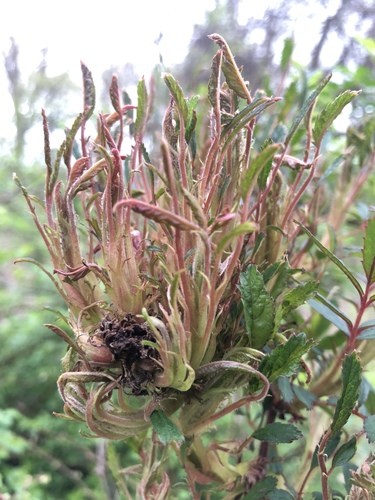
Da Emaraviren mikroskopische Virionen sind, die nur 80 bis 100 Nanometer im Durchmesser messen, können sie mit bloßem Auge nicht direkt gesehen werden. Beobachter können ihre Anwesenheit stattdessen anhand der charakteristischen Symptome erkennen, die sie an infizierten Wirtspflanzen hervorrufen. Zu diesen Symptomen gehören auffällige gelbe Ringflecken, Mosaikmuster auf Blättern, Blattverformungen und 'Hexenbesen' – eine abnormale, dichte Bündelung von Zweigen und Ästen, die einem Besen ähnelt. Bei Rosen verursacht eine Infektion oft eine leuchtend rote Verfärbung von Blättern und Stielen und eine Vermehrung ungewöhnlich weicher, dicker Dornen.
Kategorie
AnimalSeltenheit
Gewöhnlich
Gefahr
1/5 · Sehr gering
Snaps
Mach den ersten Snap!
Gallmilben können das Virus in ihrem Darm und ihren Speicheldrüsen tragen und es beim Fressen auf neue Blätter übertragen.
Der Gattungsname 'Emaravirus' ist ein Akronym, das von der zuerst identifizierten Art abgeleitet ist: European mountain ash ringspot-associated virus (EMARAV).
Im Gegensatz zu vielen Viren mit einfachen genetischen Strängen haben Emaraviren ein hochkomplexes, fragmentiertes Genom, das in bis zu acht separate Hüllen aufgeteilt ist.
Nutzt mikroskopische, vierbeinige Gallmilben, um einen hochspezifischen Transport und eine Übertragung von Pflanze zu Pflanze zu erreichen.
Nutzt eine multipartite RNA-Struktur von vier bis acht Segmenten, wodurch sich das Virus leicht anpassen und schnell entwickeln kann.
Kapert erfolgreich die Translationsmaschinerie des Pflanzenwirts, um virale Proteine zu produzieren und die Immunabwehr der Pflanze zu umgehen.
Emaraviren nehmen keine physische Nahrung auf; stattdessen replizieren sie, indem sie metabolische Ressourcen und zelluläre Maschinerie direkt aus infizierten Pflanzenzellen entnehmen.
Phyllocoptes fructiphilus
Nutzt diese mikroskopische Milbe als hochspezifischen Vektor zur Übertragung des Rosenrosettenvirus auf Wirtsrosensträucher.
Sorbus aucuparia
Dient als wichtige Wirtspflanze für das European Mountain Ash Ringspot-Associated Virus, was zu Blattchlorose führt.

Rosa multiflora
Infiziert diese invasive Rosenart und verursacht eine schnelle Stammverlängerung und Blattverformung.
Soziale Tiere leben in organisierten Gruppen und kooperieren, um ihr Überleben zu sichern, beispielsweise bei der Nahrungssuche, Verteidigung und Aufzucht der Jungen.
Farbenfroh beschreibt Organismen oder Objekte, die eine große Vielfalt an leuchtenden und deutlich erkennbaren Farben aufweisen.
Dieses Merkmal kennzeichnet Lebewesen, deren Ernährung vollständig oder hauptsächlich aus pflanzlichem Material besteht.
Tagaktive Tiere sind hauptsächlich bei Tageslicht aktiv und ruhen oder schlafen in der Regel nachts.
Beschreibt Organismen, die Pollen übertragen und so die Befruchtung und Fortpflanzung von Pflanzen ermöglichen.
Noch keine Alternativnamen vorhanden.
Sammlungen für dieses Objekt erscheinen hier, wenn weitere Themen hinzugefügt werden.
Gefahr
1/5 · Sehr gering
Noch keine besonderen Sicherheitshinweise.
Der einfachste Weg, Emaravirus zu bestimmen, ist die Verwendung der Naturführer-App Snappit.
Emaraviren nehmen keine physische Nahrung auf; stattdessen replizieren sie, indem sie metabolische Ressourcen und zelluläre Maschinerie direkt aus infizierten Pflanzenzellen entnehmen.
Typischerweise im Gefäßgewebe und den Zellen von Wirtspflanzen sowie in den Körpern ihrer spezialisierten Gallmilben-Vektoren zu finden.
Parasitäre Zellinvasion
Zoome hinein, um Cluster aufzulösen und zu sehen, wo dieses Objekt fotografiert wurde.
Neueste Snaps erscheinen hier, wenn neue Beobachtungen hinzukommen.
Nimm die Entdeckung mit
Fotografiere deinen Fund mit Snappit, bestimme die Art und füge die Entdeckung deiner Sammlung hinzu.