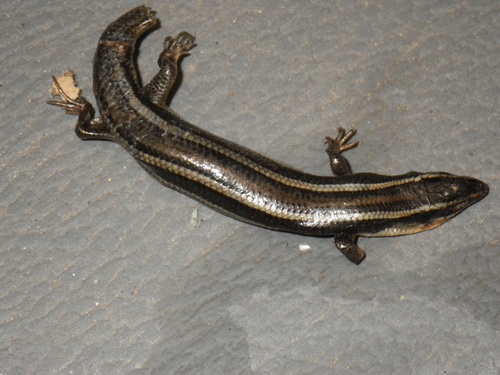


Gilberts Skink
plestiodon gilberti
Gilberts Skink (Plestiodon gilberti) ist eine große, kräftige Eidechse, die im äußersten Westen der Vereinigten Staaten, hauptsächlich in Kalifornien und den umliegenden Regionen, endemisch ist. Bekannt für seinen bemerkenswerten ontogenetischen Farbwechsel, durchläuft diese Art eine auffällige Metamorphose von einem lebhaften, hell gestreiften Jungtier zu einem kräftigen, einfarbigen erwachsenen Tier. Als aktive tagaktive Nahrungssucher sind diese Skinke entscheidende Bestandteile ihrer Ökosysteme, indem sie sowohl effektive Jäger von Wirbellosen als auch wichtige Beute für größere Fleischfresser sind. Diese Eidechsen sind geschickt darin, sich in unterirdischen Räumen zurechtzufinden, und graben sich häufig unter lockerem Boden, Laubstreu, Steinen und Baumstämmen ein. Obwohl sie schwer fassbar und bei Störung schnell zurückweichend sein können, ist die Beobachtung eines Gilberts Skinks beim Sonnen auf einem warmen Stein oder beim Rascheln durch herabgefallene Blätter eine wunderbare Belohnung für jeden geduldigen Naturfreund, der Chaparral- oder Eichenwälder erkundet.
Lebensraum: Vorkommend in offenen Wäldern, Bergwäldern, Chaparral und Uferzonen, typischerweise in der Nähe von Felsformationen, lockerem Boden oder umgestürzten Baumstämmen.
Erwachsene Gilberts Skinke sind kräftige Eidechsen, die eine Länge von 15 bis 25 Zentimetern erreichen und glatte, glänzende Cycloidschuppen aufweisen, die ihnen ein poliertes Aussehen verleihen. Sie zeigen typischerweise eine einheitliche olivfarbene, braune oder grünlich-beige Färbung, wobei sich während der Frühjahrsbrutzeit gelegentlich ein hell rötlicher oder orangefarbener Schimmer auf ihren Köpfen entwickelt. Im starken Kontrast dazu besitzen Jungtiere dunkle Körper mit hell cremefarbenen Längsstreifen und einen atemberaubenden, leuchtend gefärbten Schwanz, der von leuchtend Rosa bis Blau reicht und mit zunehmendem Alter verblasst.
Kategorie
ReptilienSeltenheit
Gewöhnlich
Gefahr
1/5 · Sehr gering
Snaps
1
Während der Frühjahrsbrutzeit entwickeln ausgewachsene Männchen eine leuchtende rötlich-orange Färbung an ihren Köpfen, was ihre Fitness potenziellen Partnerinnen signalisiert.
Junge Gilberts Skinke haben leuchtend rosa oder blaue Schwänze, von denen angenommen wird, dass sie Raubtierangriffe von ihren lebenswichtigen Organen auf den abwerfbaren Schwanz lenken.
Während die meisten Eidechsen direkt in der Sonne baden, bevorzugen Gilberts Skinke oft 'kryptisches Sonnenbaden' unter warmen Steinen oder Holz, um vor Raubtieren verborgen zu bleiben.
Wenn er von einem Raubtier bedroht wird, kann dieser Skink seinen Schwanz selbst amputieren, der sich weiter windet und die Bedrohung ablenkt, während die Eidechse entkommt.
Mit seinem stromlinienförmigen Kopf und starken Gliedmaßen gräbt sich der Skink mühelos durch lockeren Boden, Sand und dichte Laubstreu, um Hitze und Raubtieren zu entkommen.
Er ändert seine Färbung vollständig vom Jugend- zum Erwachsenenalter, maximiert das Überleben der Jungtiere mit einem ablenkenden hellen Schwanz und das Überleben der Erwachsenen mit einer kryptischen Anpassung an den Hintergrund.
Dieser Skink ist ein aktiver tagaktiver Jäger, der in Laubstreu und Boden nach einer Vielzahl terrestrischer Wirbelloser sucht.
Altersunterschiede: Jungtiere konzentrieren sich auf kleinere Insekten wie Ameisen und kleine Spinnen, während erwachsene Tiere größere Beute wie Käfer, Regenwürmer und gelegentlich kleine Eidechsen jagen.
Gryllus integer
Erbeutet Grillen während aktiver tagaktiver Nahrungssuchen in der Chaparral-Laubstreu.
Masticophis lateralis
Wird häufig von dieser agilen Schlange gejagt, die Eidechsen aktiv durch Gestrüpp und felsige Habitate verfolgt.

Buteo jamaicensis
Wird von Greifvögeln gejagt, die auf sonnende Skinke in offenen Waldlichtungen herabstürzen.
Für dieses Objekt sind noch keine Merkmal-Badges vergeben.
Noch keine Alternativnamen vorhanden.
Sammlungen für dieses Objekt erscheinen hier, wenn weitere Themen hinzugefügt werden.
Gefahr
1/5 · Sehr gering
Noch keine besonderen Sicherheitshinweise.
Vergleiche Zehen, Schuppen, Kopfform, Kämme und Schwanzproportionen. Viele Echsen können ihren Schwanz abwerfen und nachwachsen lassen, ein kurzer Schwanz ist daher nicht immer ein Artmerkmal. Echsen bestimmen: Lade ein Foto hoch und vergleiche die sichtbaren Merkmale.
15-25 cm
0.01-0.04 kg
5-10 Jahre
12 km/h
Dieser Skink ist ein aktiver tagaktiver Jäger, der in Laubstreu und Boden nach einer Vielzahl terrestrischer Wirbelloser sucht.
Vorkommend in offenen Wäldern, Bergwäldern, Chaparral und Uferzonen, typischerweise in der Nähe von Felsformationen, lockerem Boden oder umgestürzten Baumstämmen.
Nahrungssuche
Zoome hinein, um Cluster aufzulösen und zu sehen, wo dieses Objekt fotografiert wurde.
Nimm die Entdeckung mit
Fotografiere deinen Fund mit Snappit, bestimme die Art und füge die Entdeckung deiner Sammlung hinzu.