




Gyponana
gyponana
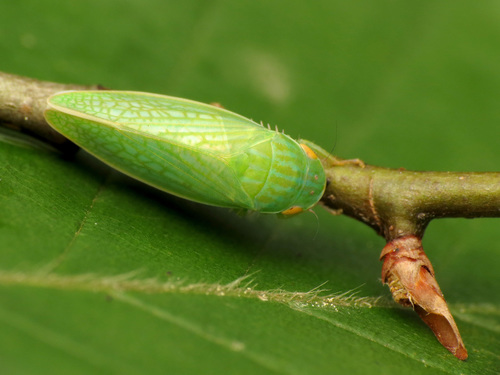
Vertreter der Gattung Gyponana, gemeinhin als grüne Zikaden bekannt, sind faszinierende und häufig vorkommende Insekten innerhalb der Familie Cicadellidae. Diese kleinen, keilförmigen Kreaturen sind hervorragend an das Leben im Laubwerk angepasst, wo sie ihre Tage damit verbringen, Pflanzensaft zu saugen. Gekennzeichnet durch ihre hellgrüne Färbung, die eine ausgezeichnete Tarnung zwischen den Blättern bietet, sind sie ein häufiger Anblick in Gärten, Wäldern und Feldern in ganz Nordamerika. Trotz ihrer geringen Größe spielen Gyponana-Zikaden eine wichtige Rolle in ihren Ökosystemen, indem sie sowohl Pflanzensäfte konsumieren als auch als wichtige Nahrungsquelle für verschiedene räuberische Insekten, Vögel und Spinnen dienen. Ihre bemerkenswerte Sprungfähigkeit und komplexen Vibrationskommunikationsmethoden machen sie zu einem Wunder der evolutionären Anpassung, das Entomologen und Naturbeobachter gleichermaßen fasziniert.
Lebensraum: Typischerweise in gemäßigten Wäldern, Buschlandschaften und Hausgärten zu finden, wo sie auf den Blattunterseiten verschiedener Laubbäume und krautiger Pflanzen ruhen.
Gyponana-Zikaden zeichnen sich durch ihre länglichen, keilförmigen Körper aus, die typischerweise zwischen 1 und 2 Zentimeter lang sind. Sie sind hauptsächlich hellgrün bis gelblich-grün, wodurch sie sich nahtlos in die Wirtsblätter einfügen können. Ihre breiten, flachen Köpfe haben kleine Augen, die manchmal einen subtilen rötlichen Schimmer aufweisen. Je nach Art können einige Individuen schwache, längliche orangefarbene oder rötliche Streifen auf ihrem Pronotum aufweisen. In Ruhestellung werden ihre Flügel dachartig über dem Hinterleib gehalten, wodurch eine saubere, aerodynamische Silhouette entsteht.
Kategorie
InsektenSeltenheit
Gewöhnlich
Gefahr
1/5 · Sehr gering
Snaps
Mach den ersten Snap!
Die Brochosomen-Beschichtung, die sie absondern, ist strukturell so einzigartig, dass Wissenschaftler sie erforschen, um fortschrittliche entspiegelnde und wasserabweisende Materialien zu entwickeln.
Sie werden manchmal als 'Scharfschützen' bezeichnet, weil sie aktiv Tröpfchen von Abfallflüssigkeit, bekannt als Honigtau, wegschnippen, um Raubtiere nicht anzulocken.
Sie können in einem einzigen Sprung bis zum 100-fachen ihrer Körperlänge springen, wobei sie Kräfte erzeugen, die bei einem Menschen zu einem Bewusstseinsverlust führen würden.
Gyponana-Zikaden ernähren sich ausschließlich von Pflanzenflüssigkeiten, wobei sie ihre spezialisierten stechend-saugenden Mundwerkzeuge nutzen, um in die Gefäßsysteme der Wirtspflanzen einzudringen.
Altersunterschiede: Nymphen und Adulte ernähren sich von denselben Pflanzenflüssigkeiten, wobei Nymphen jedoch jüngeres, weicheres Pflanzengewebe bevorzugen.
Pelzig beschreibt Tiere, die eine dichte Schicht aus weichen Haaren oder Fell besitzen.
Soziale Tiere leben in organisierten Gruppen und kooperieren, um ihr Überleben zu sichern, beispielsweise bei der Nahrungssuche, Verteidigung und Aufzucht der Jungen.
Baumbewohnende Tiere leben hauptsächlich in Bäumen und nutzen diese als Unterschlupf, Nahrungsquelle und zum Schutz vor Raubtieren.
Dieses Merkmal kennzeichnet Lebewesen, deren Ernährung vollständig oder hauptsächlich aus pflanzlichem Material besteht.
Tagaktive Tiere sind hauptsächlich bei Tageslicht aktiv und ruhen oder schlafen in der Regel nachts.
Noch keine Alternativnamen vorhanden.
Sammlungen für dieses Objekt erscheinen hier, wenn weitere Themen hinzugefügt werden.
Gefahr
1/5 · Sehr gering
Noch keine besonderen Sicherheitshinweise.
Achte auf sechs Beine, Fühler, drei Körperabschnitte und die Form der Flügel. Käfer haben gehärtete Vorderflügel, Fliegen nur ein funktionierendes Flügelpaar. Winzige Insekten müssen oft aus der Nähe betrachtet werden, bevor ihre Gruppe klar wird. Insekten bestimmen: Lade ein Foto hoch und vergleiche die sichtbaren Merkmale.
1-2 cm
1-2 cm
0.00001-0.00003 kg
1 Jahre
Gyponana-Zikaden ernähren sich ausschließlich von Pflanzenflüssigkeiten, wobei sie ihre spezialisierten stechend-saugenden Mundwerkzeuge nutzen, um in die Gefäßsysteme der Wirtspflanzen einzudringen.
Typischerweise in gemäßigten Wäldern, Buschlandschaften und Hausgärten zu finden, wo sie auf den Blattunterseiten verschiedener Laubbäume und krautiger Pflanzen ruhen.
Saugen
Zoome hinein, um Cluster aufzulösen und zu sehen, wo dieses Objekt fotografiert wurde.
Neueste Snaps erscheinen hier, wenn neue Beobachtungen hinzukommen.
Nimm die Entdeckung mit
Fotografiere deinen Fund mit Snappit, bestimme die Art und füge die Entdeckung deiner Sammlung hinzu.