

Harpactorini
harpactorini
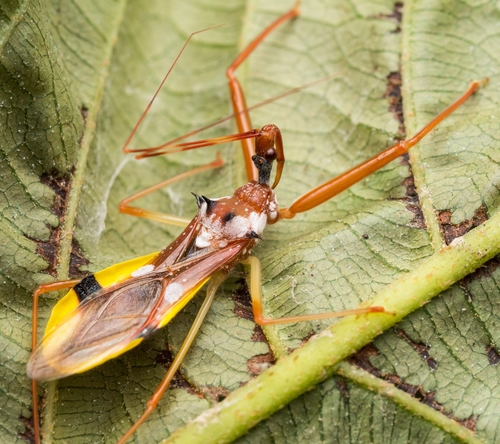
Die Harpactorini sind der größte und vielfältigste Tribus der Raubwanzen innerhalb der Familie Reduviidae. Bekannt für ihre räuberische Geschicklichkeit, dienen diese bemerkenswerten Insekten als wichtige natürliche Schädlingsbekämpfer sowohl in landwirtschaftlichen als auch in wilden Ökosystemen. Sie jagen aktiv eine Vielzahl von erntebeschädigenden Insekten und injizieren mit einem starken, gekrümmten Rüssel einen hochwirksamen Cocktail aus lähmenden Toxinen und Verdauungsenzymen, der die inneren Organe der Beute zur Aufnahme verflüssigt. Ihr aktiver Jagdstil und ihre faszinierenden Verhaltensweisen machen sie zu einer spannenden Gruppe für Naturbeobachter.
Lebensraum: In verschiedenen terrestrischen Umgebungen zu finden, darunter Grasland, landwirtschaftliche Felder, Wälder und Vorstadtgärten, wo sie gewöhnlich auf Blättern oder Blüten auf Beute warten.
Diese auffälligen Insekten haben typischerweise längliche, robuste Körper von 1 bis 4 Zentimetern Länge, oft geschmückt mit Warnfärbungen wie leuchtendem Orange, Rot und Tiefschwarz. Sie zeichnen sich durch einen schmalen Kopf mit einer deutlichen halsartigen Einschnürung, hervorstehenden Komplexaugen und einen kräftigen, dreigliedrigen, gekrümmten Rüssel aus, der unter dem Kopf zusammengefaltet ist. Ihre langen, schlanken Beine sind manchmal mit klebrigen Haaren bedeckt, und ihre häutigen Flügel liegen im Ruhezustand flach über dem Hinterleib.
Kategorie
InsektenSeltenheit
Gewöhnlich
Gefahr
1/5 · Sehr gering
Snaps
Mach den ersten Snap!
Bestimmte weibliche Harpactorini bewachen ihre Eigelege, um sie vor parasitischen Wespen zu schützen.
Einige Arten dieses Tribus beschichten ihre Beine mit klebrigem Baumharz, um fliegende oder kriechende Insekten leicht zu fangen und zu sichern.
Ihr schmerzhafter Abwehrbiss wird wegen der von ihnen injizierten Verdauungsenzyme mit einem Wespenstich verglichen.
Sie sind streng räuberische Insekten, die andere Arthropoden jagen und extraorale Verdauung nutzen, um verflüssigte Beuteinhalte aufzunehmen.
Für dieses Objekt sind noch keine Merkmal-Badges vergeben.
Noch keine Alternativnamen vorhanden.
Sammlungen für dieses Objekt erscheinen hier, wenn weitere Themen hinzugefügt werden.
Gefahr
1/5 · Sehr gering
Noch keine besonderen Sicherheitshinweise.
Achte auf sechs Beine, Fühler, drei Körperabschnitte und die Form der Flügel. Käfer haben gehärtete Vorderflügel, Fliegen nur ein funktionierendes Flügelpaar. Winzige Insekten müssen oft aus der Nähe betrachtet werden, bevor ihre Gruppe klar wird. Insekten bestimmen: Lade ein Foto hoch und vergleiche die sichtbaren Merkmale.
1-4 cm
2-5 cm
0.0001-0.002 kg
1-2 Jahre
5 km/h
Sie sind streng räuberische Insekten, die andere Arthropoden jagen und extraorale Verdauung nutzen, um verflüssigte Beuteinhalte aufzunehmen.
In verschiedenen terrestrischen Umgebungen zu finden, darunter Grasland, landwirtschaftliche Felder, Wälder und Vorstadtgärten, wo sie gewöhnlich auf Blättern oder Blüten auf Beute warten.
Zoome hinein, um Cluster aufzulösen und zu sehen, wo dieses Objekt fotografiert wurde.
Neueste Snaps erscheinen hier, wenn neue Beobachtungen hinzukommen.
Nimm die Entdeckung mit
Fotografiere deinen Fund mit Snappit, bestimme die Art und füge die Entdeckung deiner Sammlung hinzu.