




Jackrogersella
jackrogersella
Jackrogersella ist eine faszinierende Gattung holzzersetzender Schlauchpilze, die zuvor der eng verwandten Gattung Hypoxylon zugeordnet war. Diese widerstandsfähigen Pilze, die oft tote Hartholzzweige, insbesondere gefallene Birken, besiedeln, spielen eine entscheidende Rolle als Saprotrophe, indem sie wichtige Nährstoffe in den Waldboden zurückführen. Sie bilden markante, dunkle, kissenartige Fruchtkörper, sogenannte Stromata, die fest an der Rinde haften und komplexe organische Verbindungen wie Lignin und Zellulose, die die meisten anderen Organismen nicht verdauen können, langsam abbauen. Durch den Abbau von zähen Holzresten eröffnet Jackrogersella Ressourcen für Insekten, Pflanzen und andere Pilze und ist somit ein Schlüssel-Recycler in gemäßigten Waldökosystemen. Für Pilzliebhaber und Waldwanderer bietet das Entdecken dieser holzkohleartigen, höckerigen Krusten einen Einblick in den verborgenen, kontinuierlichen Prozess von Waldzerfall und Regeneration.
Lebensraum: Findet sich in gemäßigten Laub- und Mischwäldern, typischerweise wachsend auf toten, gefallenen Ästen oder stehenden toten Stämmen von Laubbäumen, insbesondere Birken.
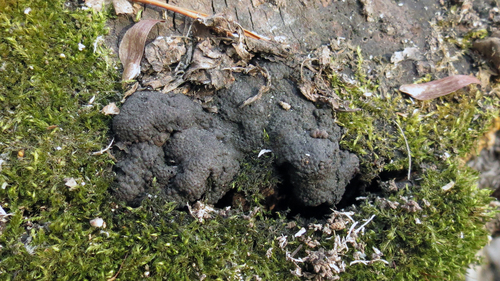
Die Fruchtkörper oder Stromata von Jackrogersella sind typischerweise kissenförmig, abgerundet oder halbkugelförmig und verschmelzen oft zu länglichen, höckerigen Krusten von 1 bis 15 Zentimetern Länge. Anfangs zeigen sie einen rotbraunen oder dunklen kupferfarbenen Farbton, der mit der Zeit zu einem tiefen, kohlschwarzen Ton heranreift. Die Oberfläche ist deutlich genoppt oder texturiert mit winzigen, erhabenen Punkten, welche die Öffnungen der sporenbildenden Perithezien sind, die direkt unter der zähen, kohlenstoffhaltigen Kruste eingebettet sind.
Kategorie
PilzeSeltenheit
Gewöhnlich
Gefahr
1/5 · Sehr gering
Snaps
Mach den ersten Snap!
Obwohl sie wie Holzkohle oder verbranntes Holz aussehen, sind diese dunklen Krusten tatsächlich lebende Pilzstrukturen, die Tausende mikroskopischer Sporensäcke enthalten.
Der Gattungsname Jackrogersella ehrt Jack D. Rogers, einen bedeutenden amerikanischen Mykologen, der sich auf die Erforschung von Xylariaceae-Pilzen spezialisiert hat.
Diese Pilze können während eisiger Winter oder trockener Sommer ruhen und die Sporulation wieder aufnehmen, sobald die Luftfeuchtigkeit wieder steigt.
Als saprotropher Pilz gewinnt er Nährstoffe durch den Abbau von totem holzigem Pflanzengewebe, wobei er hauptsächlich enzymatische Prozesse nutzt, um Zucker und Kohlenstoff aufzunehmen.
Pelzig beschreibt Tiere, die eine dichte Schicht aus weichen Haaren oder Fell besitzen.
Soziale Tiere leben in organisierten Gruppen und kooperieren, um ihr Überleben zu sichern, beispielsweise bei der Nahrungssuche, Verteidigung und Aufzucht der Jungen.
Dieses Merkmal kennzeichnet Organismen, deren Ernährung sowohl pflanzliche als auch tierische Bestandteile umfasst.
Waldlebensräume sind terrestrische Lebensräume, die von dichtem Baumbestand dominiert werden und eine große Vielfalt an Pflanzen- und Tierarten beherbergen.
Tagaktive Tiere sind hauptsächlich bei Tageslicht aktiv und ruhen oder schlafen in der Regel nachts.
Noch keine Alternativnamen vorhanden.
Sammlungen für dieses Objekt erscheinen hier, wenn weitere Themen hinzugefügt werden.
Gefahr
1/5 · Sehr gering
Noch keine besonderen Sicherheitshinweise.
Vergleiche die Hutform, die Unterseite, den Stiel samt Basis und ob der Pilz auf Holz oder auf Erde wächst. Manche Pilze haben Lamellen, andere Poren oder Stacheln. Ein Hut, der nur von oben zu sehen ist, verbirgt oft die wichtigsten Merkmale. Pilze bestimmen: Lade ein Foto hoch und vergleiche die sichtbaren Merkmale.
1+ cm
0.001+ kg
1+ Jahre
Als saprotropher Pilz gewinnt er Nährstoffe durch den Abbau von totem holzigem Pflanzengewebe, wobei er hauptsächlich enzymatische Prozesse nutzt, um Zucker und Kohlenstoff aufzunehmen.
Findet sich in gemäßigten Laub- und Mischwäldern, typischerweise wachsend auf toten, gefallenen Ästen oder stehenden toten Stämmen von Laubbäumen, insbesondere Birken.
Zoome hinein, um Cluster aufzulösen und zu sehen, wo dieses Objekt fotografiert wurde.
Neueste Snaps erscheinen hier, wenn neue Beobachtungen hinzukommen.
Nimm die Entdeckung mit
Fotografiere deinen Fund mit Snappit, bestimme die Art und füge die Entdeckung deiner Sammlung hinzu.