
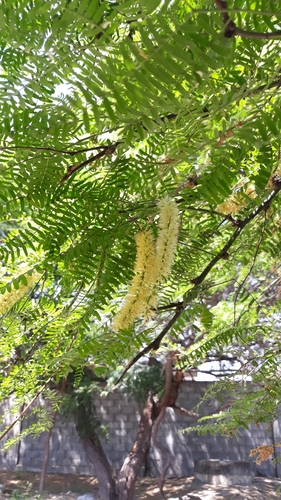


Kiawe
neltuma pallida
Kiawe (Neltuma pallida, früher Prosopis pallida) ist ein unglaublich widerstandsfähiger, dorniger Baum aus der Familie der Hülsenfrüchtler. Ursprünglich in den trockenen Küstenregionen Südamerikas beheimatet, hat er sich erfolgreich in mehreren tropischen Regionen weltweit eingebürgert, insbesondere auf den hawaiianischen Inseln. Kiawe ist bekannt für seine Fähigkeit, unter extrem trockenen und salzhaltigen Bedingungen zu gedeihen, wo sonst kaum etwas wächst, und spielt eine Doppelrolle: Er wird sehr geschätzt für die Produktion von hochwertigem Honig, Holzkohle und Viehfutter, wird aber auch als hochaggressive invasive Art angesehen, die einheimische Vegetation verdrängt. Seine tiefen Pfahlwurzeln und scharfen Dornen machen ihn zu einer beeindruckenden und dominanten Präsenz in trockenen Landschaften.
Lebensraum: Vorkommend in trockenen Küstentiefländern, ariden Strauchlandschaften, Sandstränden und gestörten Ebenen, gedeiht er häufig in brackigen oder hypersalinen Böden.
Kiawe wächst typischerweise als ausladender Baum, der Höhen von 8 bis 15 Metern erreicht und oft einen stark verdrehten, rustikalen Stamm und staubige graubraune Rinde aufweist. Seine Äste sind mit scharfen, kräftigen Dornen bewehrt, die mehrere Zentimeter lang werden können. Das Laub besteht aus hellen, staubig-grünen, doppelt gefiederten Blättern, die der Pflanze helfen, den Wasserverlust unter der sengenden Sonne zu minimieren. Während der Blütezeit produziert er dichte, zylindrische Ähren von hellgelben oder grünlich-gelben Blüten, die schließlich zu langen, hängenden, strohfarbenen Samenschoten reifen, die blassgrünen Bohnen ähneln.
Kategorie
PflanzenSeltenheit
Gewöhnlich
Gefahr
1/5 · Sehr gering
Snaps
Mach den ersten Snap!
Es wird angenommen, dass jeder Kiawe-Baum auf den hawaiianischen Inseln von einem einzigen Samen abstammt, der 1828 von Pater Alexis Bachelot in Honolulu gepflanzt wurde.
Seine Dornen sind so berüchtigt zäh und scharf, dass sie bekanntermaßen Fahrradreifen und sogar dünnsohlige Schuhe leicht durchstechen können.
Kiawe-Holz ist weltweit berühmt für Grillgerichte, da es einen unverwechselbaren, süßen und kräftigen Rauchgeschmack verleiht, der von Köchen sehr geschätzt wird.
Entwickelt ein außergewöhnlich tiefes Pfahlwurzelsystem, das bis zu 50 Meter in den Untergrund reichen kann, wodurch der Baum während schwerer Dürren auf tiefe Grundwasserspiegel zugreifen kann.
Zeigt eine hervorragende Fähigkeit, hohe Bodenversalzungen zu filtern und zu tolerieren, wodurch er direkt entlang der Meeresküsten wachsen kann.
Geht eine Partnerschaft mit spezialisierten Bodenbakterien ein, um atmosphärischen Stickstoff in eine verwertbare organische Form umzuwandeln und so arme und sandige Böden anzureichern.
Wie andere Pflanzen ist Kiawe ein Photoautotroph, der seine eigene chemische Energie erzeugt, indem er Sonnenlicht einfängt und Kohlendioxid und Wasser in Zucker umwandelt.

Apis mellifera
Bienen sammeln aktiv Nektar an den hellgelben Blüten, um einen hochgeschätzten, delikaten weißen Honig zu produzieren.

Bos taurus
Weidetiere fressen die süßen, herabgefallenen Samenschoten und verbreiten die widerstandsfähigen Samen anschließend in ihrem Dung.
Cenchrus ciliaris
Eine aggressive Grasart, die mit Kiawe um Wasser und Nährstoffe in trockenen, brandgefährdeten Lebensräumen konkurriert.
Für dieses Objekt sind noch keine Merkmal-Badges vergeben.
Noch keine Alternativnamen vorhanden.
Sammlungen für dieses Objekt erscheinen hier, wenn weitere Themen hinzugefügt werden.
Gefahr
1/5 · Sehr gering
Noch keine besonderen Sicherheitshinweise.
Beginne mit der ganzen Pflanze und vergleiche dann Blattstellung, Blattränder, Stängel und eventuelle Blüten oder Früchte. Gegenständige Blätter wachsen paarweise, wechselständige einzeln am Stängel. Zusammen verraten diese Details weit mehr als ein einzelnes grünes Blatt. Pflanzen bestimmen: Lade ein Foto hoch und vergleiche die sichtbaren Merkmale.
800+ cm
50+ Jahre
Wie andere Pflanzen ist Kiawe ein Photoautotroph, der seine eigene chemische Energie erzeugt, indem er Sonnenlicht einfängt und Kohlendioxid und Wasser in Zucker umwandelt.
Vorkommend in trockenen Küstentiefländern, ariden Strauchlandschaften, Sandstränden und gestörten Ebenen, gedeiht er häufig in brackigen oder hypersalinen Böden.
Zoome hinein, um Cluster aufzulösen und zu sehen, wo dieses Objekt fotografiert wurde.
Neueste Snaps erscheinen hier, wenn neue Beobachtungen hinzukommen.
Nimm die Entdeckung mit
Fotografiere deinen Fund mit Snappit, bestimme die Art und füge die Entdeckung deiner Sammlung hinzu.

















