
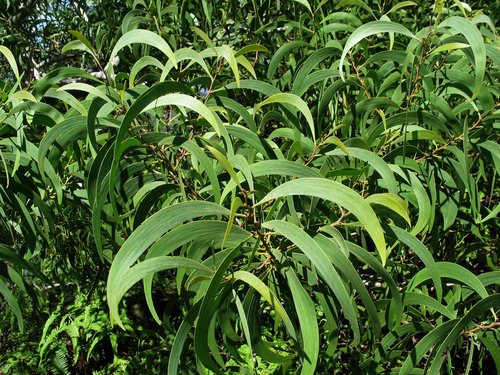


Koa
acacia koa
Die Koa (Acacia koa) ist ein prächtiger, schnell wachsender Baum mit dichtem Blätterdach, der auf den hawaiianischen Inseln endemisch ist und eine der kulturell und ökologisch bedeutsamsten Pflanzen des Archipels darstellt. Bekannt für sein schönes, stark gemasertes Holz, das von sattem Gold bis zu tiefem Schokoladenbraun reicht, wurde Koa historisch von den Ureinwohnern Hawaiis zum Bau von Hochseekanuk, Surfbrettern und Waffen verwendet. Heute wird es von Holzhandwerkern weltweit hoch geschätzt. Als Schlüsselart der feuchten und mesischen Wälder Hawaiis bietet der Koa-Baum entscheidenden Lebensraum für eine Vielzahl endemischer Vögel, Insekten und Unterholzpflanzen. Er spielt eine wesentliche Rolle in der Waldhydrologie und Stickstofffixierung, indem er die empfindlichen vulkanischen Böden seiner Inselheimat pflegt.
Lebensraum: Zu finden in feuchten bis mesischen Bergwäldern auf den größeren hawaiianischen Inseln, typischerweise in Höhenlagen zwischen 300 und 2.000 Metern.
Koa-Bäume sind große Bäume mit breitem Blätterdach, die eine Höhe von bis zu 30 Metern erreichen können. Sie sind leicht an ihren charakteristischen halbmondförmigen „Blättern“ zu erkennen, bei denen es sich eigentlich um modifizierte Blattstiele, sogenannte Phyllodien, handelt. Echte doppelt gefiederte Blätter sind nur an jungen Sämlingen oder schattigen unteren Ästen vorhanden. Die Rinde ist hellgrau, rau und bei älteren Exemplaren tief gefurcht. Während der Blütezeit bildet der Baum hellgelbe, kugelförmige Blütenstände, die winzigen Puderquasten ähneln, gefolgt von flachen, braunen Samenkapseln, die 7 bis 15 Zentimeter lang sind.
Kategorie
PflanzenSeltenheit
Gewöhnlich
Gefahr
1/5 · Sehr gering
Snaps
Mach den ersten Snap!
Ausgewachsene Koa-Bäume haben keine echten Blätter; stattdessen betreiben sie Photosynthese mithilfe von halbmondförmigen, abgeflachten Blattstielen, den sogenannten Phyllodien.
Koa ist der zweithäufigste Baum in Hawaiis Wäldern, nur übertroffen vom Ohia Lehua.
Das Wort 'Koa' bedeutet in der hawaiianischen Sprache 'mutig, kühn, furchtlos oder Krieger', was die Stärke und Widerstandsfähigkeit seines Holzes widerspiegelt.
Koa beherbergt Bradyrhizobium-Bakterien in seinen Wurzelknöllchen, die atmosphärischen Stickstoff in eine nutzbare Form umwandeln, welche arme vulkanische Böden anreichert.
Mit zunehmendem Alter ersetzt Koa seine wasserbedürftigen echten Blätter durch trockenheitstolerante, halbmondförmige Phyllodien, die den Wasserverlust reduzieren.
Koa-Samen besitzen eine harte, langlebige Schale, die jahrzehntelang im Boden ruhen kann und nach einer Vernarbung durch Waldbrände schnell keimt.
Als photoautotrophe Pflanze erzeugt Koa seine eigene Energie durch Photosynthese, indem es Sonnenlicht, Kohlendioxid, Wasser und Bodennährstoffe nutzt.
Drepanis coccinea
Ernährt sich vom Nektar der Koa-Blüten und nistet in seinem Blätterdach.
Coleotichus blackburniae
Ein einheimisches, schillerndes Insekt, das sich von den Samen und Hülsen des Koa-Baumes ernährt.
Hemignathus wilsoni
Ein endemischer hawaiianischer Honigfresser, der seinen spezialisierten Schnabel nutzt, um Insekten unter der Rinde von Koa-Bäumen zu suchen.
Für dieses Objekt sind noch keine Merkmal-Badges vergeben.
Noch keine Alternativnamen vorhanden.
Sammlungen für dieses Objekt erscheinen hier, wenn weitere Themen hinzugefügt werden.
Gefahr
1/5 · Sehr gering
Noch keine besonderen Sicherheitshinweise.
Beginne mit der ganzen Pflanze und vergleiche dann Blattstellung, Blattränder, Stängel und eventuelle Blüten oder Früchte. Gegenständige Blätter wachsen paarweise, wechselständige einzeln am Stängel. Zusammen verraten diese Details weit mehr als ein einzelnes grünes Blatt. Pflanzen bestimmen: Lade ein Foto hoch und vergleiche die sichtbaren Merkmale.
1500-3000 cm
50-150 Jahre
Als photoautotrophe Pflanze erzeugt Koa seine eigene Energie durch Photosynthese, indem es Sonnenlicht, Kohlendioxid, Wasser und Bodennährstoffe nutzt.
Zu finden in feuchten bis mesischen Bergwäldern auf den größeren hawaiianischen Inseln, typischerweise in Höhenlagen zwischen 300 und 2.000 Metern.
Zoome hinein, um Cluster aufzulösen und zu sehen, wo dieses Objekt fotografiert wurde.
Neueste Snaps erscheinen hier, wenn neue Beobachtungen hinzukommen.
Nimm die Entdeckung mit
Fotografiere deinen Fund mit Snappit, bestimme die Art und füge die Entdeckung deiner Sammlung hinzu.

















