


Laevigatae
laevigatae
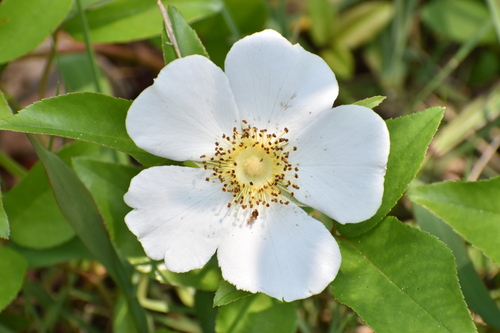
Laevigatae, im Allgemeinen vertreten durch die Art Rosa laevigata (die Cherokee-Rose), ist eine robuste Kletterrose, die sich durch ihr glänzendes, immergrünes Laub und große, duftende weiße Blüten auszeichnet. Ursprünglich beheimatet in Südchina und Taiwan, hat sich dieser wuchsfreudige Kletterstrauch erfolgreich in vielen warmgemäßigten Regionen weltweit angesiedelt, insbesondere im Südosten der Vereinigten Staaten, wo sie als Staatsblume Georgias gefeiert wird. Sie spielt eine wichtige Rolle in lokalen Ökosystemen, indem sie Vögeln dichten Nistschutz und ein reiches Nektarangebot für heimische Bestäuber bietet.
Lebensraum: Wird häufig an Waldrändern, Straßenrändern, entlang von Zäunen und in Uferbereichen in warmgemäßigten Klimazonen gefunden.
Dieser kletternde Holzstrauch besitzt lange, bogenförmige grüne Zweige, die mit kräftigen, hakenförmigen Stacheln bewehrt sind. Seine zusammengesetzten Blätter bestehen typischerweise aus drei stark glänzenden, elliptischen Blättchen mit fein gesägten Rändern. Im späten Frühjahr bildet er einzelne, einfachblättrige Blüten mit einem Durchmesser von 6 bis 10 Zentimetern, die reinweiße Blütenblätter um ein dichtes, goldgelbes Zentrum aus zahlreichen Staubblättern herum zeigen. Die nachfolgenden Früchte (Hagebutten) sind charakteristisch birnenförmig und mit steifen Borsten bedeckt.
Kategorie
PflanzenSeltenheit
Gewöhnlich
Gefahr
1/5 · Sehr gering
Snaps
Mach den ersten Snap!
Die Cherokee-Rose ist berühmt mit dem Pfad der Tränen verbunden, wo der Legende nach die Blumen dort wuchsen, wo eine Träne einer Mutter fiel.
Die Hagebutten werden traditionell in Ostasien geerntet, um einen stärkenden Tee zuzubereiten, der in der traditionellen Medizin wegen seiner adstringierenden Eigenschaften verwendet wird.
Im Gegensatz zu den meisten Wildrosen, die fünf bis neun Blättchen pro Blatt haben, hat die Sektion Laevigatae typischerweise Blätter mit nur drei stark glänzenden Blättchen.
Als Pflanze erzeugt sie ihre eigene Nahrung durch Photosynthese, indem sie Sonnenlicht, Kohlendioxid und Wasser zur Glukoseproduktion nutzt, während sie Mineralien aus dem Boden aufnimmt.
Apis mellifera
Bienen besuchen die großen weißen Blüten, um Pollen zu sammeln, und dienen als primäre Bestäuber.

Mimus polyglottos
Vögel ernähren sich in den Wintermonaten von den reifen, vitamin-C-reichen Hagebutten und tragen so zur Verbreitung der Samen in neuen Gebieten bei.
Popillia japonica
Adulte Käfer fressen im Sommer gierig die Blätter und zarten weißen Blütenblätter.
Für dieses Objekt sind noch keine Merkmal-Badges vergeben.
Sammlungen für dieses Objekt erscheinen hier, wenn weitere Themen hinzugefügt werden.
Gefahr
1/5 · Sehr gering
Noch keine besonderen Sicherheitshinweise.
Beginne mit der ganzen Pflanze und vergleiche dann Blattstellung, Blattränder, Stängel und eventuelle Blüten oder Früchte. Gegenständige Blätter wachsen paarweise, wechselständige einzeln am Stängel. Zusammen verraten diese Details weit mehr als ein einzelnes grünes Blatt. Pflanzen bestimmen: Lade ein Foto hoch und vergleiche die sichtbaren Merkmale.
200+ cm
10+ Jahre
Als Pflanze erzeugt sie ihre eigene Nahrung durch Photosynthese, indem sie Sonnenlicht, Kohlendioxid und Wasser zur Glukoseproduktion nutzt, während sie Mineralien aus dem Boden aufnimmt.
Wird häufig an Waldrändern, Straßenrändern, entlang von Zäunen und in Uferbereichen in warmgemäßigten Klimazonen gefunden.
Zoome hinein, um Cluster aufzulösen und zu sehen, wo dieses Objekt fotografiert wurde.
Neueste Snaps erscheinen hier, wenn neue Beobachtungen hinzukommen.
Nimm die Entdeckung mit
Fotografiere deinen Fund mit Snappit, bestimme die Art und füge die Entdeckung deiner Sammlung hinzu.

















