



Leucoptera pachystimella
Leucoptera pachystimella
Die Leucoptera pachystimella ist ein winziger Falter, der sich gerne in Blättern versteckt. Sie hat wunderschöne weiße Flügel, die in der Natur schwer zu entdecken sind, was sie zu einem besonderen kleinen Freund im Garten macht.
Lebensraum: Gärten
Die Leucoptera pachystimella ist ein winziger Falter, typischerweise 2-3 mm lang, mit leuchtend weißen oder silbrigen Vorderflügeln, die oft einige markante dunkle Flecken oder metallische Zeichnungen aufweisen, besonders nahe den Flügelspitzen. Ihr schlanker Körper und ihre zarten Fransen lassen sie fast gespenstisch erscheinen.
Kategorie
InsektenSeltenheit
Gewöhnlich
Gefahr
1/5 · Sehr gering
Snaps
Mach den ersten Snap!
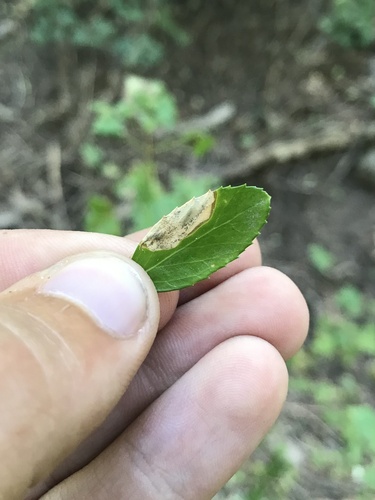
Wenn Sie ein Blatt ihrer Wirtspflanze gegen das Licht halten, könnten Sie die krummen Tunnel sehen, die ihre Larven darin gemacht haben!
Ihr Artname 'pachystimella' stammt von der spezifischen Pflanze, die ihre Raupen so gerne fressen.
Dieser winzige Falter ist oft kleiner als ein Reiskorn, was ihn zu einem der Miniaturen der Natur macht!
Im Gegensatz zu vielen Faltern sind ausgewachsene Leucoptera pachystimella normalerweise tagaktiv und fliegen tagsüber herum!
Leucoptera pachystimella-Larven können in Pflanzenblätter tunneln, versteckte Behausungen schaffen und sich an den grünen Geweben laben, sicher vor vielen Fressfeinden.
Leucoptera pachystimella hat winzige weiße Flügel, die ihr helfen, sich perfekt mit weißen Blüten oder sonnenbesprenkelten Blättern zu vermischen, wodurch sie sehr schwer zu entdecken ist.
Leucoptera pachystimella kann ihren vollständigen Lebenszyklus vom Ei bis zum erwachsenen Tier in nur wenigen Wochen abschließen, was jedes Jahr viele Generationen schlüpfen lässt.
Larven knabbern an Pflanzenblättern, während erwachsene Falter süßen Nektar für Energie schlürfen.
Altersunterschiede: Larven graben sich in die inneren Gewebe von Pflanzenblättern und fressen diese, während erwachsene Tiere sich von Blütennektar ernähren.
Pachystima myrsinites
Ihre Larven ernähren sich ausschließlich von den Blättern dieses Strauches.

Parus atricapillus
Kleine Vögel können erwachsene Falter für eine schnelle Mahlzeit schnappen.
Argiope aurantia
Spinnen fangen erwachsene Falter oft in ihren klebrigen Netzen als Nahrung.
Einzelgänger leben den größten Teil ihres Lebens allein und interagieren mit Artgenossen nur zur Paarung oder zur Aufzucht der Jungen.
Beschreibt Pflanzen, die für eine Vielzahl von bestäubenden Organismen besonders attraktiv und nützlich sind.
Getarnt beschreibt Organismen, die über eine Färbung oder Musterung verfügen, durch die sie mit ihrer Umgebung verschmelzen.
Dieses Merkmal kennzeichnet Lebewesen, deren Ernährung vollständig oder hauptsächlich aus pflanzlichem Material besteht.
Bezieht sich auf Arten, die deutlich kleiner sind als der Durchschnitt oder das Typische ihrer Art.
Tagaktive Tiere sind hauptsächlich bei Tageslicht aktiv und ruhen oder schlafen in der Regel nachts.
Dieses Lebensraummerkmal weist auf Arten hin, die in städtischen und vorstädtischen Umgebungen mit Menschen zusammenleben können und von Menschen geschaffene Strukturen sowie Grünflächen nutzen.
Beschreibt Organismen, die Pollen übertragen und so die Befruchtung und Fortpflanzung von Pflanzen ermöglichen.
Noch keine Alternativnamen vorhanden.
Gefahr
1/5 · Sehr gering
Es ist am besten, Falter aus der Ferne zu betrachten und sie nicht zu berühren.
Vergleiche die Flügelform in Ruhe, die Zeichnung der Vorderflügel, die Fühler und den Körperbau. Bei kleinen braunen Faltern kommt es oft auf feine Details an, die ein Handyfoto nicht immer einfängt. Nachtfalter bestimmen: Lade ein Foto hoch und vergleiche die sichtbaren Merkmale.
4-6 mm
2-3 mm
7-21 Tage
Larven knabbern an Pflanzenblättern, während erwachsene Falter süßen Nektar für Energie schlürfen.
Gärten
Nahrungssuche
6
Zoome hinein, um Cluster aufzulösen und zu sehen, wo dieses Objekt fotografiert wurde.
Neueste Snaps erscheinen hier, wenn neue Beobachtungen hinzukommen.
Nimm die Entdeckung mit
Fotografiere deinen Fund mit Snappit, bestimme die Art und füge die Entdeckung deiner Sammlung hinzu.