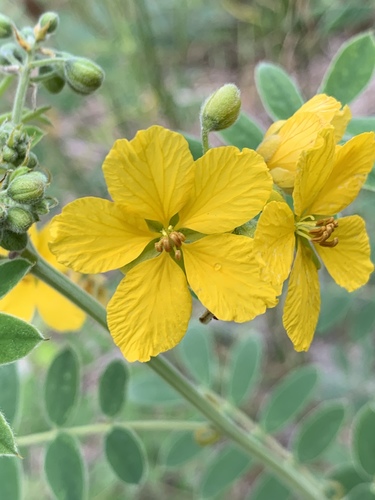


Lindheimers Senna
senna lindheimeriana
Lindheimers Senna, auch bekannt als Samtblatt-Senna, ist eine attraktive, aufrecht wachsende, mehrjährige Krautpflanze, die in den ariden und semiariden Regionen der südwestlichen Vereinigten Staaten und Nordmexikos heimisch ist. Gekennzeichnet durch ihr weiches, samtiges graugrünes Laub und leuchtende Büschel hellgelber Blüten, ist diese Pflanze ein widerstandsfähiger Überlebenskünstler in rauen, sonnenverwöhnten Umgebungen. Sie spielt eine entscheidende Rolle in ihrem lokalen Ökosystem, indem sie einheimischen Insekten Pollen und Nektar liefert und als Wirtspflanze für mehrere Schmetterlingsarten dient.
Lebensraum: Typischerweise zu finden in trockenen, felsigen Kalkböden, Wüstengrasländern, Canyonböden und Buschlandschaften der südwestlichen Vereinigten Staaten und Nordmexikos.
Dieser Halbstrauch wird typischerweise 90 bis 150 cm hoch und hat samtige, gefiederte Blätter mit 3 bis 8 Paaren elliptischer Fiederblättchen, die mit feinen, dichten Haaren bedeckt sind, die der Pflanze einen silbergrauen Glanz verleihen. Vom Spätsommer bis zum Herbst bildet sie leuchtende, fünfblättrige gelbe Blüten von etwa 2,5 cm Breite in endständigen oder achselständigen Büscheln. Diesen Blüten folgen abgeflachte, leicht gekrümmte braune Samenhülsen, die ebenfalls fein behaart sind.
Kategorie
PflanzenSeltenheit
Common
Gefahr
1/5 · Sehr gering
Snaps
1
Ihr Artname 'lindheimeriana' ehrt Ferdinand Lindheimer, der weithin als der Vater der texanischen Botanik gilt.
Die Blüten der Pflanze können nicht durch gewöhnlichen Wind oder gelegentliche Insektenbesuche bestäubt werden; sie benötigen 'Vibrationsbestäubung' durch große einheimische Bienen.
Die samtigen Haare auf den Blättern fühlen sich unglaublich weich an, was ihr den Spitznamen 'Samtblatt-Senna' eingebracht hat.
Als photosynthetische Pflanze produziert sie ihre eigene Nahrung unter Verwendung von Sonnenlicht, Kohlendioxid, Wasser und essentiellen Mineralnährstoffen, die aus dem Boden aufgenommen werden.
Abaeis nicippe
Die Raupen dieser Schmetterlingsart ernähren sich als Hauptnahrungsquelle vom Laub der Lindheimers Senna.

Bombus pensylvanicus
Liefert Nektar und Pollen durch spezialisierte Vibrationsbestäubung, bei der die Biene ihre Flugmuskeln vibrieren lässt, um den Pollen freizusetzen.
Pogonomyrmex desertorum
Angelockt von extrafloralen Nektarien patrouillieren diese Ameisen die Pflanze und verteidigen sie vor zerstörerischen Raupen und Käfern.
Für dieses Objekt sind noch keine Merkmal-Badges vergeben.
Noch keine Alternativnamen vorhanden.
Sammlungen für dieses Objekt erscheinen hier, wenn weitere Themen hinzugefügt werden.
Gefahr
1/5 · Sehr gering
Noch keine besonderen Sicherheitshinweise.
Der einfachste Weg, Lindheimers Senna zu bestimmen, ist die Verwendung der Naturführer-App Snappit.
90-150 cm
3-10 Jahre
Als photosynthetische Pflanze produziert sie ihre eigene Nahrung unter Verwendung von Sonnenlicht, Kohlendioxid, Wasser und essentiellen Mineralnährstoffen, die aus dem Boden aufgenommen werden.
Typischerweise zu finden in trockenen, felsigen Kalkböden, Wüstengrasländern, Canyonböden und Buschlandschaften der südwestlichen Vereinigten Staaten und Nordmexikos.
Photosynthese
Zoome hinein, um Cluster aufzulösen und zu sehen, wo dieses Objekt fotografiert wurde.

Texas, US
Hier kann man sehen östliches Fuchshörnchen und Mexikanischer Bootschwanz.
Führer anzeigen →

Texas, US
Hier kann man sehen Antilopenhorn-Seidenpflanze und Lindheimers Senna.
Führer anzeigen →
Texas, US
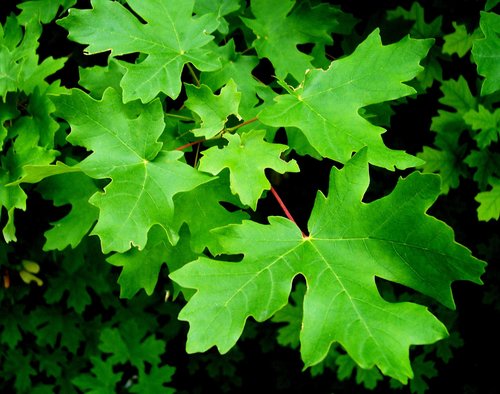
Hier kann man sehen Großzahn-Ahorn, Texas-Madrone und Scharlachrote Lederblume.
Führer anzeigen →

Texas, US
Hier kann man sehen Philenor-Schwalbenschwanz und Antilopenhorn-Seidenpflanze.
Führer anzeigen →
Nimm die Entdeckung mit
Fotografiere deinen Fund mit Snappit, bestimme die Art und füge die Entdeckung deiner Sammlung hinzu.











.jpg&width=800)



_001.jpg&width=800)




