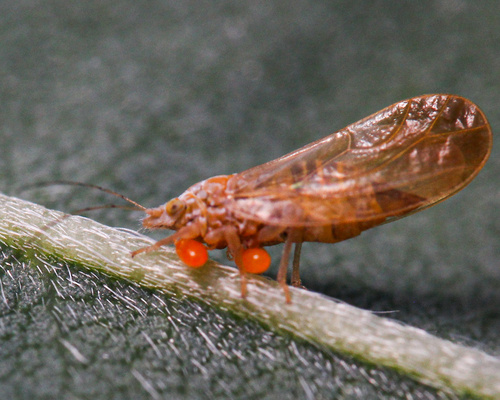





Livilla variegata
Livilla variegata
Livilla variegata ist ein farbenfrohes kleines Insekt, das sich gerne in Blättern versteckt. Es hat helle Muster, die ihm helfen, sich an Blumen und Pflanzen anzupassen, was es zu einem lustigen Fund für Naturforscher macht!
Lebensraum: Städtische Gebiete
Die Livilla variegata ist ein winziges Insekt, meist gesprenkelt braun oder grau mit gelblichen Sprenkeln, wodurch sie sich nahtlos in die Baumrinde einfügt. Ihre klaren, zarten Flügel weisen deutliche dunkle Adern auf, was sie von anderen kleinen pflanzenbewohnenden Insekten unterscheidet.
Kategorie
InsektenSeltenheit
Gewöhnlich
Gefahr
1/5 · Sehr gering
Snaps
Mach den ersten Snap!
Livilla variegata lässt manchmal Lärchennadeln früher als gewöhnlich abfallen.
Wissenschaftler nennen sie manchmal „Springende Pflanzenläuse“ wegen ihrer unglaublichen Sprünge!
Ihre Jungen, genannt Nymphen, sondern wachsartige „Lerps“ ab, unter denen sie sich zum Schutz verstecken!
Sie sind mit winzigen Blattläusen und sogar den lauten Zikaden verwandt, die man im Sommer hört.
Dieses winzige Insekt ist ein Pflanzenfresser, der sich vom zuckerhaltigen Saft von Lärchen ernährt.
Einzelgänger leben den größten Teil ihres Lebens allein und interagieren mit Artgenossen nur zur Paarung oder zur Aufzucht der Jungen.
Farbenfroh beschreibt Organismen oder Objekte, die eine große Vielfalt an leuchtenden und deutlich erkennbaren Farben aufweisen.
Getarnt beschreibt Organismen, die über eine Färbung oder Musterung verfügen, durch die sie mit ihrer Umgebung verschmelzen.
Dieses Merkmal kennzeichnet Lebewesen, deren Ernährung vollständig oder hauptsächlich aus pflanzlichem Material besteht.
Tagaktive Tiere sind hauptsächlich bei Tageslicht aktiv und ruhen oder schlafen in der Regel nachts.
Dieses Lebensraummerkmal weist auf Arten hin, die in städtischen und vorstädtischen Umgebungen mit Menschen zusammenleben können und von Menschen geschaffene Strukturen sowie Grünflächen nutzen.
Beschreibt Organismen, die Pollen übertragen und so die Befruchtung und Fortpflanzung von Pflanzen ermöglichen.
Noch keine Alternativnamen vorhanden.
Gefahr
1/5 · Sehr gering
Immer nur ansehen, aber Insekten nicht berühren, es sei denn, ein Erwachsener erlaubt es.
Achte auf sechs Beine, Fühler, drei Körperabschnitte und die Form der Flügel. Käfer haben gehärtete Vorderflügel, Fliegen nur ein funktionierendes Flügelpaar. Winzige Insekten müssen oft aus der Nähe betrachtet werden, bevor ihre Gruppe klar wird. Insekten bestimmen: Lade ein Foto hoch und vergleiche die sichtbaren Merkmale.
4-6 mm
2-3 mm
30-60 Tage
Dieses winzige Insekt ist ein Pflanzenfresser, der sich vom zuckerhaltigen Saft von Lärchen ernährt.
Städtische Gebiete
Sammeln
6
Zoome hinein, um Cluster aufzulösen und zu sehen, wo dieses Objekt fotografiert wurde.
Neueste Snaps erscheinen hier, wenn neue Beobachtungen hinzukommen.
Nimm die Entdeckung mit
Fotografiere deinen Fund mit Snappit, bestimme die Art und füge die Entdeckung deiner Sammlung hinzu.