
_1.JPG&width=800)





Long-tailed Skipper
Urbanus proteus
The Long-tailed Skipper is a small butterfly with beautiful blue and brown wings. Its long tail makes it look special as it flutters around flowers in search of nectar.
Lebensraum: Urban areas
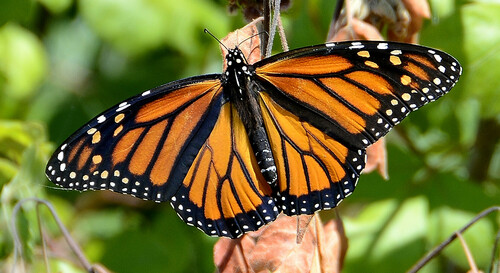
The Long-tailed Skipper has an iridescent blue-green body and dark brownish-purple wings marked with distinct, glassy square spots. Its hindwings feature two very long, prominent tails, making it easy to identify among other butterflies.
Kategorie
InsektenSeltenheit
Common
Gefahr
1/5 · Sehr gering
Snaps
Mach den ersten Snap!
Even though it's an insect, it travels thousands of miles, migrating south for winter!
If startled, the chrysalis of this skipper can wiggle very fast to scare away danger!
Its caterpillars are called 'leaf-rollers' because they make a cozy home by folding leaves!
Unlike most butterflies, it often holds its front and hind wings at different angles while resting.
Long-tailed Skipper has two long tails that can confuse predators, drawing attacks away from its vital body parts.
Long-tailed Skipper can fly with incredible speed and erratic movements to evade birds and other airborne threats.
Long-tailed Skipper uses its long proboscis to reach deep nectar in flowers, accessing food others can't.
Its caterpillar larvae roll up leaves as homes, protecting them from predators while they munch away.
Adults sip sweet flower nectar, while their hungry caterpillars munch on plant leaves.
Altersunterschiede: Larvae (caterpillars) eat leaves; adults drink nectar using a long proboscis.
Phaseolus vulgaris
Its larvae consume the leaves of this plant.

Glycine max
Caterpillars feed on soybean leaves, sometimes as a pest.
.jpg&width=800)
Lantana camara
Adults drink nectar from Lantana flowers, aiding pollination.
.jpg&width=800)
Tyrannus tyrannus
Fast-flying kingbirds are known predators of adult skippers.
Beschreibt Pflanzen, die für eine Vielzahl von bestäubenden Organismen besonders attraktiv und nützlich sind.
Farbenfroh beschreibt Organismen oder Objekte, die eine große Vielfalt an leuchtenden und deutlich erkennbaren Farben aufweisen.
Dieses Merkmal kennzeichnet Lebewesen, deren Ernährung vollständig oder hauptsächlich aus pflanzlichem Material besteht.
Dieses Merkmal kennzeichnet Lebewesen, die bei der Jagd, Flucht oder Fortbewegung eine außergewöhnliche Schnelligkeit aufweisen.

Tagaktive Tiere sind hauptsächlich bei Tageslicht aktiv und ruhen oder schlafen in der Regel nachts.

Dieses Lebensraummerkmal weist auf Arten hin, die in städtischen und vorstädtischen Umgebungen mit Menschen zusammenleben können und von Menschen geschaffene Strukturen sowie Grünflächen nutzen.

Beschreibt Organismen, die Pollen übertragen und so die Befruchtung und Fortpflanzung von Pflanzen ermöglichen.
Noch keine Alternativnamen vorhanden.
Gefahr
1/5 · Sehr gering
Butterflies are gentle and safe to watch. Enjoy looking at them from a distance!
38-50 mm
15-20 mm
7-14 Tage
25 km/h
Adults sip sweet flower nectar, while their hungry caterpillars munch on plant leaves.
Urban areas
Foraging
6
Zoome hinein, um Cluster aufzulösen und zu sehen, wo dieses Objekt fotografiert wurde.
Neueste Snaps erscheinen hier, wenn neue Beobachtungen hinzukommen.







_obsitalis._-_Flickr_-_gailhampshire.jpg&width=800)





.jpg&width=800)