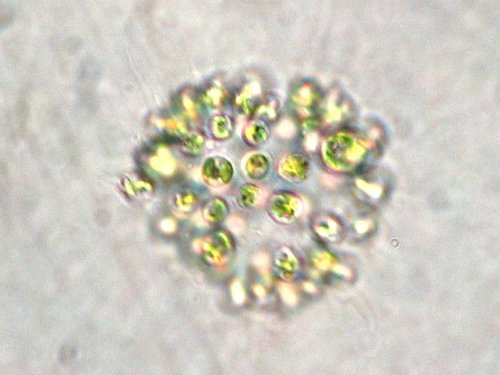


Microcystis Aeruginosa
microcystis aeruginosa
Microcystis aeruginosa ist ein weltweit verbreitetes Süßwasser-Cyanobakterium, das für seine Fähigkeit berüchtigt ist, in nährstoffreichen Gewässern ausgedehnte und schädliche Algenblüten zu bilden. Obwohl die einzelnen Bakterien mikroskopisch klein sind, sammeln sie sich in sichtbaren Kolonien an und bilden grüne oder blaugrüne Schlieren auf der Wasseroberfläche. Diese Blüten sind nicht nur unschön, sondern können auch starke Toxine, sogenannte Microcystine, produzieren, die erhebliche Gesundheitsrisiken für Menschen, Vieh und Wildtiere darstellen. Zudem können sie aquatische Ökosysteme schwer beeinträchtigen, indem sie den Sauerstoffgehalt senken und das Sonnenlicht blockieren. Das Verständnis von Microcystis aeruginosa ist entscheidend für das Management der Wasserqualität und die Minderung der Umwelt- und Gesundheitsfolgen der Eutrophierung.
Lebensraum: Dieses Cyanobakterium kommt typischerweise in eutrophen (nährstoffreichen), warmen und relativ stehenden Süßwassergewässern wie Seen, Teichen, Stauseen und langsam fließenden Flüssen vor.
Die Kolonien von Microcystis aeruginosa erscheinen als makroskopische Ansammlungen, die von kleinen, körnigen Punkten bis hin zu großen, unregelmäßig geformten Klumpen oder ausgedehnten Oberflächenteppichen reichen. Diese Kolonien sind typischerweise grün oder blaugrün, manchmal auch grünlich-braun, und haben eine gallertartige oder schmierige Textur, die auf dem Wasser schwimmt. Die einzelnen Zellen sind kugelig bis eiförmig, messen 3-8 Mikrometer im Durchmesser und sind dicht in einer Schleimhülle verpackt, was zum schwimmfähigen, oft trüben Erscheinungsbild der Kolonie beiträgt.
Kategorie
AnimalSeltenheit
Gewöhnlich
Gefahr
1/5 · Sehr gering
Snaps
Mach den ersten Snap!
Microcystis aeruginosa ist weltweit eine der häufigsten Ursachen für schädliche Algenblüten in Süßwassergewässern.
Microcystis-Blüten tragen oft zur Sauerstoffverarmung (Hypoxie) in Gewässern bei, wenn die großen Bakterienmassen absterben und sich zersetzen, was Fischen und anderen Wasserlebewesen schadet.
Die von Microcystis produzierten Toxine, Microcystine genannt, sind starke Lebergifte, die bei Tieren und Menschen schwere Leberschäden verursachen können.
Diese Cyanobakterien können ihren Auftrieb mithilfe von Gasvesikeln steuern, was es ihnen ermöglicht, sich in der Wassersäule vertikal zu bewegen, um die Lichtexposition und Nährstoffaufnahme zu optimieren.
Microcystis aeruginosa besitzt Gasvakuolen, die es ihm ermöglichen, seine Position in der Wassersäule zu regulieren, indem es für optimales Sonnenlicht an die Oberfläche steigt oder zur Nährstoffaufnahme absinkt.
Es produziert starke Lebergifte (Hepatotoxine), sogenannte Microcystine, die schädlich für die Leber sind und bei Aufnahme oder Kontakt für Menschen und Tiere giftig sein können.
Einzelne Zellen aggregieren zu großen Kolonien, die von einer Schleimhülle umgeben sind, was Schutz vor Fressfeinden und UV-Strahlung bietet und eine effiziente Nährstoffaufnahme ermöglicht.
Microcystis aeruginosa ist photoautotroph und stellt seine eigene Nahrung durch Photosynthese her, indem es Sonnenlicht, Kohlendioxid und anorganische Nährstoffe in Energie und organische Materie umwandelt.
Daphnia magna
Bestimmte Zooplanktonarten, obwohl einige es aufgrund von Toxinen meiden.
N/A
Überschüssige Nährstoffe in Gewässern, die zur Blütenbildung führen.

Homo sapiens
Menschen sind durch Toxine im Trinkwasser oder bei Freizeitaktivitäten im Wasser betroffen.
N/A
Konkurriert um Licht und Nährstoffe, besonders in dichten Blüten, was deren Wachstum beeinträchtigt.
Für dieses Objekt sind noch keine Merkmal-Badges vergeben.
Noch keine Alternativnamen vorhanden.
Sammlungen für dieses Objekt erscheinen hier, wenn weitere Themen hinzugefügt werden.
Gefahr
1/5 · Sehr gering
Noch keine besonderen Sicherheitshinweise.
Der einfachste Weg, Microcystis Aeruginosa zu bestimmen, ist die Verwendung der Naturführer-App Snappit.
0 cm
Microcystis aeruginosa ist photoautotroph und stellt seine eigene Nahrung durch Photosynthese her, indem es Sonnenlicht, Kohlendioxid und anorganische Nährstoffe in Energie und organische Materie umwandelt.
Dieses Cyanobakterium kommt typischerweise in eutrophen (nährstoffreichen), warmen und relativ stehenden Süßwassergewässern wie Seen, Teichen, Stauseen und langsam fließenden Flüssen vor.
Photosynthese, Nährstoffaufnahme
Zoome hinein, um Cluster aufzulösen und zu sehen, wo dieses Objekt fotografiert wurde.
Neueste Snaps erscheinen hier, wenn neue Beobachtungen hinzukommen.
Nimm die Entdeckung mit
Fotografiere deinen Fund mit Snappit, bestimme die Art und füge die Entdeckung deiner Sammlung hinzu.