
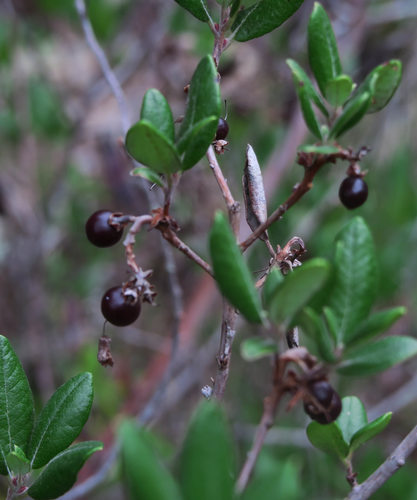


Mission-Manzanita
xylococcus bicolor
Die Mission-Manzanita (Xylococcus bicolor) ist ein robuster, immergrüner Strauch, der im Küsten-Chaparral Südkaliforniens und des nördlichen Baja California heimisch ist. In ihrem trockenen, sonnenverwöhnten Lebensraum sticht sie als wichtiges Refugium und Nahrungsquelle für die lokale Tierwelt hervor. Obwohl sie den gängigen Manzanitas der Gattung Arctostaphylos sehr ähnelt, ist sie die einzige Art ihrer eigenen Gattung, Xylococcus, was sie zu einem einzigartigen evolutionären Relikt der botanischen Geschichte der Region macht. Ihre Widerstandsfähigkeit gegenüber Waldbränden und Dürre unterstreicht die faszinierenden Überlebensstrategien mediterraner Pflanzen.
Lebensraum: Vorkommen in trockenem Küsten-Salbeigebüsch, Chaparral-Hängen und Vorgebirgen in niedriger Höhe unter 800 Metern, typischerweise auf sandigen oder felsigen Böden.
Dieser verholzende Strauch wird typischerweise zwischen 1,5 und 3 Meter hoch und weist eine dichte, runde Form mit zerrissener, graubrauner Rinde an älteren Ästen und rötlichen Zweigen am Neuaustrieb auf. Seine ledrigen, dunkelgrünen Blätter sind sehr markant: Sie sind oben glänzend und haben Ränder, die sich fest nach unten rollen, wodurch eine kontrastierende, blasse, filzartige weiße Unterseite sichtbar wird. Im Spätwinter und frühen Frühling produziert sie hängende, urnenförmige Blüten, die in ihrer Farbe von weiß bis zartrosa reichen und sich schließlich zu glänzenden, dunkelrot- bis schwarzen holzigen Beeren entwickeln.
Kategorie
PflanzenSeltenheit
Gewöhnlich
Gefahr
1/5 · Sehr gering
Snaps
Mach den ersten Snap!
Historisch nutzten lokale indigene Völker wie die Kumeyaay das dichte, harte Holz der Pflanze zur Herstellung von robusten Grabstöcken und Kochutensilien.
Der Gattungsname Xylococcus bedeutet im Griechischen 'Holzbeere' und beschreibt die außergewöhnlich harte, knochenähnliche Samenkapsel, die sich in ihren fleischigen Früchten befindet.
Im Gegensatz zu echten Manzanitas der Gattung Arctostaphylos, die typischerweise eine glatte, rötliche Rinde aufweisen, entwickelt die Mission-Manzanita im Alter eine raue, graubraune, sich ablösende Rinde.
Sie besitzt einen holzigen, unterirdischen Lignotuber, der es der Pflanze ermöglicht, nach dem Verbrauch ihres oberirdischen Laubes durch Waldbrände schnell neue grüne Triebe zu bilden und sich zu regenerieren.
Die Blätter weisen stark eingerollte Ränder und eine behaarte, lichtreflektierende Unterseite auf, um den Feuchtigkeitsverlust zu reduzieren und die Spaltöffnungen vor heißen, trockenen Winden zu schützen.
Sie bildet eine Partnerschaft mit spezialisierten Mykorrhizapilzen im Boden, wodurch ihre Fähigkeit verbessert wird, Wasser und essentielle Nährstoffe aus nährstoffarmen, felsigen Böden zu entziehen.
Die Mission-Manzanita ist eine sich selbst versorgende Pflanze, die ihre eigene Energie durch Photosynthese erzeugt, indem sie Sonnenlicht, Kohlendioxid und Wasser in Zucker umwandelt.
Callipepla californica
Die Kalifornische Schopfwachtel ernährt sich ausgiebig von den herabgefallenen trockenen Beeren des Strauches und sucht Deckung unter dessen dichtem Blätterdach.
Bombus vosnesenskii
Die Gelbgesichtshummel besucht die Winterblüten, um Nektar zu sammeln, und fungiert als wichtiger Bestäuber für die Pflanze.

Odocoileus hemionus
Maultierhirsche fressen gelegentlich das immergrüne Laub in trockenen Herbstperioden, wenn andere Nahrungsquellen knapp sind.
Für dieses Objekt sind noch keine Merkmal-Badges vergeben.
Noch keine Alternativnamen vorhanden.
Sammlungen für dieses Objekt erscheinen hier, wenn weitere Themen hinzugefügt werden.
Gefahr
1/5 · Sehr gering
Noch keine besonderen Sicherheitshinweise.
Beginne mit der ganzen Pflanze und vergleiche dann Blattstellung, Blattränder, Stängel und eventuelle Blüten oder Früchte. Gegenständige Blätter wachsen paarweise, wechselständige einzeln am Stängel. Zusammen verraten diese Details weit mehr als ein einzelnes grünes Blatt. Pflanzen bestimmen: Lade ein Foto hoch und vergleiche die sichtbaren Merkmale.
150-300 cm
50-150 Jahre
Die Mission-Manzanita ist eine sich selbst versorgende Pflanze, die ihre eigene Energie durch Photosynthese erzeugt, indem sie Sonnenlicht, Kohlendioxid und Wasser in Zucker umwandelt.
Vorkommen in trockenem Küsten-Salbeigebüsch, Chaparral-Hängen und Vorgebirgen in niedriger Höhe unter 800 Metern, typischerweise auf sandigen oder felsigen Böden.
Zoome hinein, um Cluster aufzulösen und zu sehen, wo dieses Objekt fotografiert wurde.
Neueste Snaps erscheinen hier, wenn neue Beobachtungen hinzukommen.
Nimm die Entdeckung mit
Fotografiere deinen Fund mit Snappit, bestimme die Art und füge die Entdeckung deiner Sammlung hinzu.


















