

Mount-Diablo-Manzanita
arctostaphylos auriculata
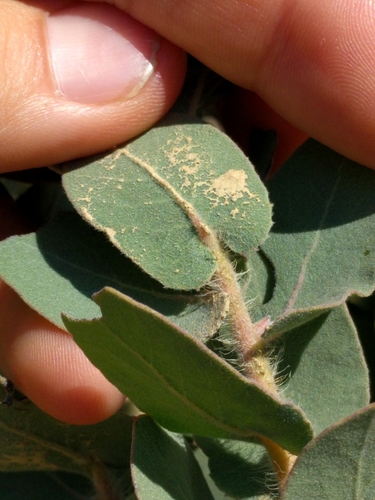
Die Mount-Diablo-Manzanita (Arctostaphylos auriculata) ist ein seltener und auffälliger immergrüner Strauch, der auf den Sandsteinhängen des Mount Diablo im Contra Costa County, Kalifornien, endemisch ist. Bekannt für ihr wunderschönes, silbriges Laub und die glatte, mahagonifarbene Rinde, ist dieser Chaparral-Spezialist ein wahrer botanischer Schatz der San Francisco Bay Area. Ihre einzigartigen ohrförmigen Blattbasen, die die Stängel umfassen, unterscheiden sie von anderen Manzanita-Arten. Als obligater Feuerkeimer ist diese widerstandsfähige Pflanze auf den natürlichen Kreislauf von Waldbränden angewiesen, um ihre harten Samen aufzubrechen und neues Wachstum zu initiieren. Sie spielt eine wichtige Rolle in ihrem lokalen Ökosystem, indem sie im Spätwinter, wenn nur wenige andere Pflanzen blühen, wichtigen Nektar für einheimische Bienen und Kolibris liefert.
Lebensraum: Findet sich hauptsächlich auf trockenen Sandsteinrücken und Chaparral-Hängen im Mikroklima der Mount-Diablo-Region.
Dieser aufrechte Strauch wird typischerweise 100 bis 450 Zentimeter hoch und weist stark verzweigte Strukturen auf, die in jungen Jahren mit feinen, weiß-samtigen Haaren bedeckt sind und sich später zu glatter, dunkel rotbrauner Rinde entwickeln. Das markanteste Merkmal sind seine Blätter: Sie sind hell graugrün, eiförmig, auf beiden Seiten dicht behaart und überlappen oder umfassen den Stängel auf einzigartige Weise mit ohrförmigen Lappen an der Basis. Im Winter blühen Büschel kleiner, urnenförmiger Blüten in Weiß- bis Hellrosatönen, gefolgt von runden, klebrigen, behaarten dunkelroten Beeren.
Kategorie
PflanzenSeltenheit
Gewöhnlich
Gefahr
1/5 · Sehr gering
Snaps
1
Da sie keine Basiskrallte hat, kann diese Manzanita nach einem Brand nicht aus ihren Wurzeln neu austreiben; stattdessen regeneriert sich ihre gesamte Population rein aus Samen.
Sie ist stark lokalisiert und kommt fast ausschließlich auf den Sandsteinböden des Mount Diablo und nirgendwo sonst auf der Welt vor.
Der wissenschaftliche Artname 'auriculata' bedeutet im Lateinischen 'geohrt' und bezieht sich direkt auf die ohrförmigen Lappen an der Basis ihrer Blätter.
Als photoautotrophe Pflanze synthetisiert sie ihre eigene Nahrung mithilfe von Sonnenlicht, Kohlendioxid, Wasser und Bodennährstoffen durch Photosynthese.
Für dieses Objekt sind noch keine Merkmal-Badges vergeben.
Noch keine Alternativnamen vorhanden.
Sammlungen für dieses Objekt erscheinen hier, wenn weitere Themen hinzugefügt werden.
Gefahr
1/5 · Sehr gering
Noch keine besonderen Sicherheitshinweise.
Beginne mit der ganzen Pflanze und vergleiche dann Blattstellung, Blattränder, Stängel und eventuelle Blüten oder Früchte. Gegenständige Blätter wachsen paarweise, wechselständige einzeln am Stängel. Zusammen verraten diese Details weit mehr als ein einzelnes grünes Blatt. Pflanzen bestimmen: Lade ein Foto hoch und vergleiche die sichtbaren Merkmale.
100-450 cm
20-100 Jahre
Als photoautotrophe Pflanze synthetisiert sie ihre eigene Nahrung mithilfe von Sonnenlicht, Kohlendioxid, Wasser und Bodennährstoffen durch Photosynthese.
Findet sich hauptsächlich auf trockenen Sandsteinrücken und Chaparral-Hängen im Mikroklima der Mount-Diablo-Region.
Zoome hinein, um Cluster aufzulösen und zu sehen, wo dieses Objekt fotografiert wurde.
Nimm die Entdeckung mit
Fotografiere deinen Fund mit Snappit, bestimme die Art und füge die Entdeckung deiner Sammlung hinzu.