

Neolasioptera Triadenii
neolasioptera triadenii
Neolasioptera triadenii ist eine hochspezialisierte Art von Gallmücke innerhalb der Familie Cecidomyiidae. Dieses winzige Insekt ist bekannt für seine komplexe, koevolutionäre Beziehung zum Sumpf-Johanniskraut (Triadenum-Arten). Weibliche Gallmücken legen ihre Eier in die Stängel der Pflanze, und die schlüpfenden Larven scheiden Biochemikalien aus, die Pflanzenwachstumshormone nachahmen. Diese Manipulation zwingt die Wirtspflanze, eine markante, geschwollene Schutzstruktur zu bilden, die als Stängelgalle bezeichnet wird. In dieser maßgeschneiderten organischen Kinderstube ernähren sich die Larven sicher von nährstoffreichem Gewebe, geschützt vor Fressfeinden und rauem Wetter. Obwohl die erwachsenen Gallmücken winzig, zart und aufgrund ihrer kurzen Lebenszyklen von nur wenigen Tagen selten zu beobachten sind, ist ihre Anwesenheit durch die Identifizierung dieser charakteristischen Stängelgallen leicht zu dokumentieren. Diese Art spielt eine faszinierende Rolle in Feuchtgebiet-Ökosystemen, demonstriert die Komplexität von Pflanzen-Insekten-Interaktionen und dient als lokalisierter Indikator für gesunde Feuchtgebiet-Pflanzengemeinschaften.
Lebensraum: Vorkommend in Feuchtwiesen, Süßwasser-Marschen, Mooren und feuchten Seeufern, wo ihre Wirtspflanze, das Sumpf-Johanniskraut, gedeiht.
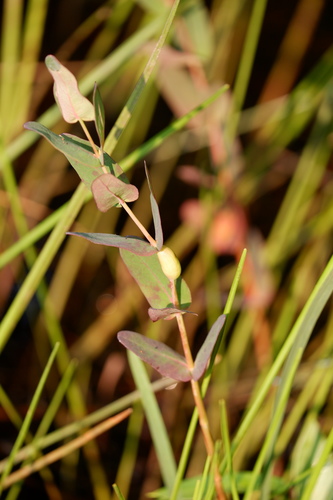
Erwachsene Neolasioptera triadenii sind unglaublich winzige Fliegen, die nur 1,5 bis 2,5 Millimeter lang sind, mit einem zarten, dämmrig-grauen bis schwärzlichen Körper, klaren Flügeln mit reduzierter Äderung und langen, perlenartigen Antennen. Aufgrund ihrer geringen Größe werden sie in der Wildnis am zuverlässigsten durch ihre Larvengallen identifiziert. Diese Gallen erscheinen als deutliche, spindelförmige (fusiforme) Schwellungen an den Stängeln des Sumpf-Johanniskrauts. Die Gallen sind typischerweise grün bis rötlich-braun, fügen sich in die natürliche Färbung der Wirtspflanze ein, stören aber spürbar deren gerade, zylindrische Stängelform.
Kategorie
InsektenSeltenheit
Gewöhnlich
Gefahr
1/5 · Sehr gering
Snaps
Mach den ersten Snap!
Bürgerwissenschaftler können diese Gallmücken im tiefsten Winter leicht entdecken und aufzeichnen, da die getrockneten, geschwollenen Stängelgallen aus dem Schnee herausragend gut sichtbar bleiben.
Obwohl erwachsene Gallmücken innerhalb weniger Tage nach dem Schlüpfen sterben, verbringt das Larvenstadium fast ein ganzes Jahr sicher in den abgestorbenen, trockenen Stängeln der Wirtspflanze überwinternd.
Die von dieser Gallmücke induzierte Galle wirkt wie ein modifiziertes, extra-somatisches Organ der Wirtspflanze, das aktiv Nährstoffe aus dem Rest der Pflanze zieht, um den Eindringling zu ernähren.
Larven scheiden spezialisierte Verbindungen aus, die die Zellentwicklung der Wirtspflanze kapern und sie zwingen, eine schützende, nährstoffreiche Schwellung zu bilden.
Die holzigen Wände der induzierten Stängelgalle schützen die sich entwickelnden Larven vor extremen Temperaturen, Austrocknung und starkem Regen.
Adulte Weibchen besitzen hochsensible chemische Rezeptoren, die es ihnen ermöglichen, spezifische Triadenum-Feuchtgebietspflanzen zu lokalisieren und ihre Eier ausschließlich dort abzulegen.
Larven ernähren sich intern von den spezialisierten, nährstoffreichen Pflanzengeweben, die von ihrer Wirtspflanze innerhalb der Stängelgalle erzeugt werden, während erwachsene Tiere im Allgemeinen keine Nahrung aufnehmen.
Triadenum virginicum
Bietet die essentielle physische Struktur und Ernährung, die für das Larvenstadium der Gallmücke erforderlich sind.
Platygaster
Parasitoide Wespen zielen auf die Larven in den Gallen ab und legen Eier in sie, um sie von innen heraus zu verzehren.
Für dieses Objekt sind noch keine Merkmal-Badges vergeben.
Noch keine Alternativnamen vorhanden.
Sammlungen für dieses Objekt erscheinen hier, wenn weitere Themen hinzugefügt werden.
Gefahr
1/5 · Sehr gering
Noch keine besonderen Sicherheitshinweise.
Achte auf sechs Beine, Fühler, drei Körperabschnitte und die Form der Flügel. Käfer haben gehärtete Vorderflügel, Fliegen nur ein funktionierendes Flügelpaar. Winzige Insekten müssen oft aus der Nähe betrachtet werden, bevor ihre Gruppe klar wird. Insekten bestimmen: Lade ein Foto hoch und vergleiche die sichtbaren Merkmale.
0+ cm
0+ cm
0+ kg
1+ Jahre
2 km/h
Larven ernähren sich intern von den spezialisierten, nährstoffreichen Pflanzengeweben, die von ihrer Wirtspflanze innerhalb der Stängelgalle erzeugt werden, während erwachsene Tiere im Allgemeinen keine Nahrung aufnehmen.
Vorkommend in Feuchtwiesen, Süßwasser-Marschen, Mooren und feuchten Seeufern, wo ihre Wirtspflanze, das Sumpf-Johanniskraut, gedeiht.
Zoome hinein, um Cluster aufzulösen und zu sehen, wo dieses Objekt fotografiert wurde.
Neueste Snaps erscheinen hier, wenn neue Beobachtungen hinzukommen.
Nimm die Entdeckung mit
Fotografiere deinen Fund mit Snappit, bestimme die Art und füge die Entdeckung deiner Sammlung hinzu.