
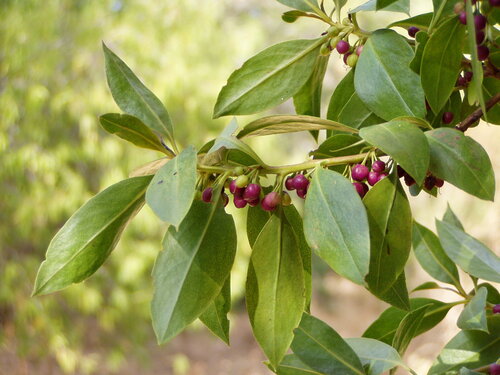


Ngaio
myoporum laetum
Der Ngaio ist ein widerstandsfähiger, schnell wachsender immergrüner Strauch oder kleiner Baum, der an den Küsten Neuseelands heimisch ist. Weit bekannt für seine unglaubliche Toleranz gegenüber rauen Küstenwinden und Salznebel, spielt diese Art eine wichtige ökologische Rolle bei der Stabilisierung von Dünen und Klippenrändern. Er wird oft als robuster Hecken- oder Windschutz in exponierten Küstengärten angebaut. Während er ausgezeichneten Schutz bietet und Beeren produziert, die von einheimischen Vögeln bevorzugt werden, enthalten fast alle Teile der Pflanze – insbesondere die Blätter – 'Ngaion', ein toxisches ätherisches Öl, das die Pflanze vor säugetierlichen Pflanzenfressern schützt.
Lebensraum: Häufig in Küstenumgebungen, einschließlich Klippen, Sanddünen, felsigen Küsten und Tiefland-Küstenwäldern in ganz Neuseeland gefunden.
Ngaio wächst typischerweise als ausladender Strauch oder runder Baum und erreicht Höhen von 1 bis 10 Metern. Er zeichnet sich durch lanzettförmige, leuchtend grüne Blätter aus, die sich etwas fleischig oder ledrig anfühlen und mit einzigartigen, durchscheinenden Drüsenpunkten bedeckt sind, die sichtbar werden, wenn man sie gegen das Licht hält. Im Frühling und Sommer produziert er kleine, sternförmige weiße Blüten, die mit deutlichen violetten Flecken gesprenkelt sind, aus denen sich später saftige, rötlich-violette längliche Früchte (Steinfrüchte) von etwa 5 bis 8 Millimetern Länge entwickeln.
Kategorie
PflanzenSeltenheit
Gewöhnlich
Gefahr
1/5 · Sehr gering
Snaps
Mach den ersten Snap!
Trotz seiner medizinischen und insektenabwehrenden Anwendungen ist die Pflanze für Nutztiere wie Pferde und Schafe hochgiftig und verursacht bei Verzehr schwere Leberschäden.
Die indigenen Māori rieben historisch zerdrückte Blätter des Ngaio-Baumes direkt auf ihre Haut, um stechende Mücken und Sandfliegen abzuwehren.
Die durchscheinenden Punkte auf den Blättern sind tatsächlich winzige ölabsondernde Drüsen, die die Blätter bei Licht betrachtet aussehen lassen, als wären sie mit Nadeln durchstochen worden.
Die Blätter weisen Tausende winziger, durchscheinender Drüsen auf, die Ngaion enthalten, ein toxisches Öl, das Insektenschädlinge und Säugetierherbivore vom Fressen abhält.
Sie besitzt dicke, ledrige Blätter und eine flexible Holzstruktur, die es ihr ermöglicht, extremen küstennahen Salznebel und stürmische Winde zu überstehen.
Mit einem weitläufigen und tiefen Wurzelsystem kann sich der Ngaio fest in wandernden Sanden verankern und so Erosion entlang der Küstendünen verhindern.
Ngaio ist eine photosynthetische Pflanze, die ihre eigenen organischen Verbindungen und Energie mithilfe von Sonnenlicht, Wasser, Kohlendioxid und essentiellen Nährstoffen aus dem Boden herstellt.
Hemiphaga novaeseelandiae
Die einheimische Taube frisst die reifen violetten Früchte und fungiert als wichtiger Samenverbreiter für den Baum.
Klambothrips myopori
Ein invasiver Schädlingsinsekt, das sich ausgiebig von den jungen Blättern ernährt und schwere Blattgallen und Schäden verursacht.
Prosthemadera novaeseelandiae
Besucht die kleinen weißen Blüten, um Nektar zu fressen und so die Bestäubung der Pflanze zu unterstützen.
Für dieses Objekt sind noch keine Merkmal-Badges vergeben.
Noch keine Alternativnamen vorhanden.
Sammlungen für dieses Objekt erscheinen hier, wenn weitere Themen hinzugefügt werden.
Gefahr
1/5 · Sehr gering
Noch keine besonderen Sicherheitshinweise.
Beginne mit der ganzen Pflanze und vergleiche dann Blattstellung, Blattränder, Stängel und eventuelle Blüten oder Früchte. Gegenständige Blätter wachsen paarweise, wechselständige einzeln am Stängel. Zusammen verraten diese Details weit mehr als ein einzelnes grünes Blatt. Pflanzen bestimmen: Lade ein Foto hoch und vergleiche die sichtbaren Merkmale.
100-1000 cm
30-80 Jahre
Ngaio ist eine photosynthetische Pflanze, die ihre eigenen organischen Verbindungen und Energie mithilfe von Sonnenlicht, Wasser, Kohlendioxid und essentiellen Nährstoffen aus dem Boden herstellt.
Häufig in Küstenumgebungen, einschließlich Klippen, Sanddünen, felsigen Küsten und Tiefland-Küstenwäldern in ganz Neuseeland gefunden.
Zoome hinein, um Cluster aufzulösen und zu sehen, wo dieses Objekt fotografiert wurde.
Neueste Snaps erscheinen hier, wenn neue Beobachtungen hinzukommen.
Nimm die Entdeckung mit
Fotografiere deinen Fund mit Snappit, bestimme die Art und füge die Entdeckung deiner Sammlung hinzu.

















