




Abendsegler
Nyctalus
Abendsegler sind besondere Fledermäuse, die nachts fliegen! Sie haben große Ohren und können Insekten im Dunkeln fangen. Diese kleinen Geschöpfe helfen, unsere Himmel frei von lästigen Insekten zu halten.
Lebensraum: Wälder
Der Abendsegler hat glattes, rötlich-braunes Fell auf dem Rücken und helleres Fell am Bauch. Er hat breite, dunkle Flügel und ausgeprägte pilzförmige Ohrlappen, sogenannte Tragi, die ihn von anderen Fledermäusen abheben.
Kategorie
SäugetiereSeltenheit
Common
Gefahr
1/5 · Sehr gering
Snaps
Mach den ersten Snap!
Manche Abendsegler wandern Hunderte von Kilometern zwischen ihren Sommer- und Winterquartieren!
Manche junge Menschen können die hohen Rufe von Abendseglern tatsächlich hören!
Sie sind geschickte Luftjäger, die schnelle Käfer und Motten direkt aus dem Himmel schnappen!
Sie ruhen oft in hohlen Bäumen und teilen ihre Behausungen manchmal mit Vögeln!
Abendsegler können in völliger Dunkelheit navigieren und jagen, indem sie hochfrequente Laute aussenden und auf Echos hören.
Abendsegler haben lange, schmale Flügel, die ihnen helfen, schnell und direkt hoch über dem Baumkronendach zu fliegen, um Beute zu fangen.
Abendsegler können in Torpor fallen, wobei Körpertemperatur und Herzfrequenz gesenkt werden, um Energie bei kaltem Wetter oder Nahrungsmangel zu sparen.
Diese schnellen Fledermäuse fressen hauptsächlich fliegende Insekten, die sie in der Luft fangen.

Strix aluco
Jagd Fledermäuse während des Ausflugs oder der Rückkehr zu den Schlafplätzen.
.jpg&width=800)
Martes martes
Kann Baumhöhlen erreichen, um ruhende Fledermäuse zu jagen.
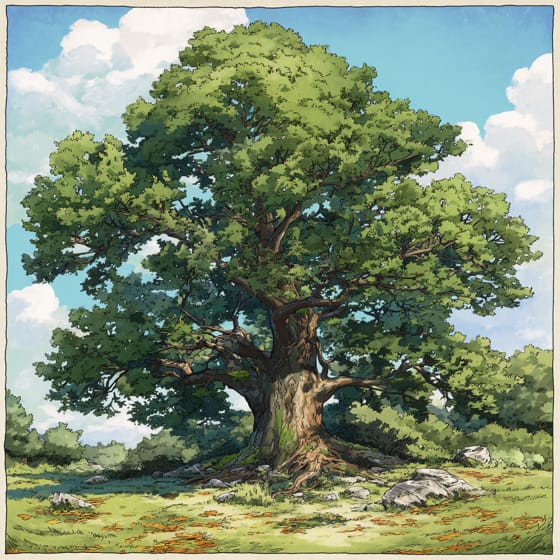
Quercus robur
Reife Eichenbäume bieten essentielle Schlafplätze in Höhlen.

Melolontha melolontha
Ein großer Käfer, der eine primäre Nahrungsquelle für Abendsegler ist.
Pelzig beschreibt Tiere, die eine dichte Schicht aus weichen Haaren oder Fell besitzen.
Dieses Merkmal kennzeichnet Organismen, deren Nahrung hauptsächlich aus Insekten und anderen kleinen Wirbellosen besteht.
Echoortung ist ein biologisches Sonar, das Tiere nutzen, um zu navigieren, zu jagen und zu kommunizieren, indem sie Schallwellen aussenden und die Echos interpretieren.
Waldlebensräume sind terrestrische Lebensräume, die von dichtem Baumbestand dominiert werden und eine große Vielfalt an Pflanzen- und Tierarten beherbergen.

Dieses Merkmal kennzeichnet Organismen, deren Ernährung vollständig oder hauptsächlich aus tierischem Gewebe besteht.

Dieses Merkmal kennzeichnet Lebewesen, die bei der Jagd, Flucht oder Fortbewegung eine außergewöhnliche Schnelligkeit aufweisen.

Nachtaktive Tiere sind hauptsächlich in den Nachtstunden aktiv und ruhen oder schlafen normalerweise tagsüber.
Gefahr
1/5 · Sehr gering
Wenn Sie eine Fledermaus sehen, beobachten Sie sie ruhig aus der Ferne. Sie sind scheu und ziehen es vor, in Ruhe gelassen zu werden.
Der einfachste Weg, Abendsegler zu bestimmen, ist die Verwendung der Naturführer-App Snappit.
6-8.5 cm
32-40 cm
0.018-0.04 kg
4-12 Jahre
50 km/h
Diese schnellen Fledermäuse fressen hauptsächlich fliegende Insekten, die sie in der Luft fangen.
Wälder
Zoome hinein, um Cluster aufzulösen und zu sehen, wo dieses Objekt fotografiert wurde.
Neueste Snaps erscheinen hier, wenn neue Beobachtungen hinzukommen.
Nimm die Entdeckung mit
Fotografiere deinen Fund mit Snappit, bestimme die Art und füge die Entdeckung deiner Sammlung hinzu.




.jpg&width=800)


.JPG&width=800)



.jpg&width=800)
