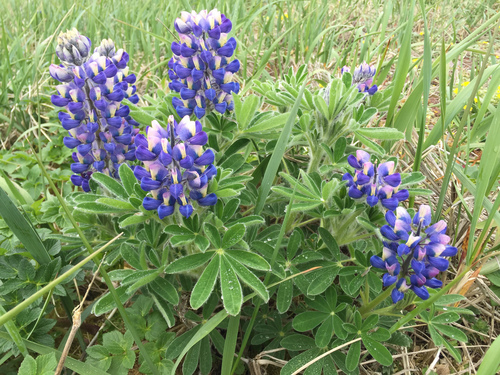


Nootka-Lupine
lupinus nootkatensis
Die Nootka-Lupine, wissenschaftlicher Name Lupinus nootkatensis, ist eine lebendige mehrjährige Wildblume, die in den Küstenregionen des pazifischen Nordwestens beheimatet ist. Bekannt für ihre auffälligen Ähren blau-violetter Blüten, ist sie ein herausragendes Merkmal von Wiesen, Küstenfelsen und gestörten Gebieten. Über ihren ästhetischen Reiz hinaus spielt dieses Mitglied der Erbsen-Familie eine entscheidende ökologische Rolle als Stickstofffixierer, indem es den Boden anreichert und anderes Pflanzenleben in oft nährstoffarmen Umgebungen unterstützt. Ihre Widerstandsfähigkeit und Fähigkeit, karge Landschaften zu besiedeln, machen sie zu einer wichtigen Pionierart in der ökologischen Sukzession.
Lebensraum: Die Nootka-Lupine ist typischerweise auf Küstenwiesen, Klippen, in lichten Wäldern, Lichtungen, an Straßenrändern und anderen gestörten Standorten zu finden und gedeiht in gut durchlässigen Böden.
Die Nootka-Lupine präsentiert sich als aufrechte krautige Staude, die typischerweise zwischen 30 und 100 Zentimeter hoch wird. Ihre markantesten Merkmale sind die dichten, hoch aufragenden Ähren erbsenartiger Blüten, die normalerweise ein leuchtendes Blau oder Purpurblau sind, manchmal mit einem Hauch von Weiß oder Rosa. Die Blätter sind handförmig, in einer Rosette an der Basis und wechselständig am Stiel angeordnet, wobei jedes aus 7 bis 11 schmalen, ovalen Blättchen besteht, die von einem zentralen Punkt ausgehen. Stängel und Blätter sind oft mit feinen, seidigen Haaren bedeckt, was der Pflanze ein etwas weiches, silbriges Aussehen verleiht.
Kategorie
PflanzenSeltenheit
Common
Gefahr
1/5 · Sehr gering
Snaps
1
Die indigenen Völker des pazifischen Nordwestens nutzten die Nootka-Lupine traditionell für verschiedene Zwecke, darunter einige medizinische Anwendungen und Fasern, obwohl aufgrund ihrer Toxizität eine sorgfältige Zubereitung erforderlich war.
Der Gattungsname 'Lupinus' stammt vom lateinischen Wort 'lupus' ab, was 'Wolf' bedeutet, da die alten Römer glaubten, Lupinen 'fräßen' Nährstoffe aus dem Boden, obwohl wir heute wissen, dass sie ihn anreichern.
Obwohl schön, enthalten viele Teile der Nootka-Lupine, insbesondere die Samen, toxische Alkaloide, die bei Einnahme durch Vieh oder Menschen schädlich sein können.
Durch eine symbiotische Beziehung mit Rhizobium-Bakterien in ihren Wurzelknöllchen wandelt die Nootka-Lupine atmosphärischen Stickstoff in eine verwertbare Form um, wodurch der Boden für sich und die umliegenden Pflanzen angereichert wird.
Diese Art kann sich leicht in nährstoffarmen oder kürzlich gestörten Böden etablieren und dient als entscheidende Pionierpflanze, die die Bodenqualität verbessert und das Wachstum anderer Flora fördert.
Die Nootka-Lupine produziert bittere und toxische Alkaloide in ihren Geweben, die die meisten Pflanzenfresser davon abhalten, ihre Blätter, Stängel und Samen zu verzehren, wodurch sie sich vor Fraß schützt.
Als photosynthetischer Organismus produziert die Nootka-Lupine ihre eigene Nahrung (Zucker) aus Sonnenlicht, Wasser und Kohlendioxid. Sie nimmt auch essentielle Mineralien und gebundenen Stickstoff aus dem Boden auf.

Bombus spp.
Bestäubt Blüten, sammelt Nektar und Pollen
Rhizobium leguminosarum
Bildet eine symbiotische Beziehung in Wurzelknöllchen zur Stickstofffixierung
Odocoileus hemionus columbianus
Äst Blätter und Triebe ab, besonders in frühen Wachstumsstadien
Selasphorus rufus
Ernährt sich von Nektar und Pollen und trägt zur Bestäubung bei
Für dieses Objekt sind noch keine Merkmal-Badges vergeben.
Noch keine Alternativnamen vorhanden.
Sammlungen für dieses Objekt erscheinen hier, wenn weitere Themen hinzugefügt werden.
Gefahr
1/5 · Sehr gering
Noch keine besonderen Sicherheitshinweise.
Der einfachste Weg, Nootka-Lupine zu bestimmen, ist die Verwendung der Naturführer-App Snappit.
30-100 cm
2-7 Jahre
Als photosynthetischer Organismus produziert die Nootka-Lupine ihre eigene Nahrung (Zucker) aus Sonnenlicht, Wasser und Kohlendioxid. Sie nimmt auch essentielle Mineralien und gebundenen Stickstoff aus dem Boden auf.
Die Nootka-Lupine ist typischerweise auf Küstenwiesen, Klippen, in lichten Wäldern, Lichtungen, an Straßenrändern und anderen gestörten Standorten zu finden und gedeiht in gut durchlässigen Böden.
Photosynthese Und Nährstoffaufnahme
Zoome hinein, um Cluster aufzulösen und zu sehen, wo dieses Objekt fotografiert wurde.
Nimm die Entdeckung mit
Fotografiere deinen Fund mit Snappit, bestimme die Art und füge die Entdeckung deiner Sammlung hinzu.












.jpg&width=800)



_001.jpg&width=800)




