

'Ohelo 'Ai
vaccinium reticulatum
Die 'Ohelo 'Ai (Vaccinium reticulatum) ist ein widerstandsfähiger, endemischer hawaiianischer Strauch, der in einigen der kargsten Vulkanlandschaften auf den Inseln Maui und Hawaii gedeiht. Als niedrig wachsendes Mitglied der Heidekrautgewächse ist sie berühmt für ihre farbenfrohen, essbaren Beeren, die von leuchtend rot über gelb bis orange reichen. Sie spielt eine entscheidende Rolle in der lokalen hawaiianischen Kultur und Ökologie, indem sie als Pionierart auf frischen Lavaströmen dient. Historisch ist diese Pflanze tief mit der hawaiianischen Mythologie verwoben, insbesondere als heilige Opfergabe an Pele, die Vulkangöttin. Ihre robuste Natur ermöglicht es ihr, extreme Sonne, Wind und nährstoffarme Vulkanasche zu überstehen, was sie zu einer der ersten Pflanzen macht, die sich auf neu entstandenen Böden ansiedelt. Besucher von Hochgebieten wie Haleakala und dem Hawaii-Volcanoes-Nationalpark begegnen dieser schönen und kulturell bedeutsamen Pflanze häufig.
Lebensraum: Zu finden in hochgelegenen vulkanischen Strauchlandschaften, alpinen Wüsten und offenen Mooren, typischerweise auf relativ jungen Lavaströmen und Aschefeldern.
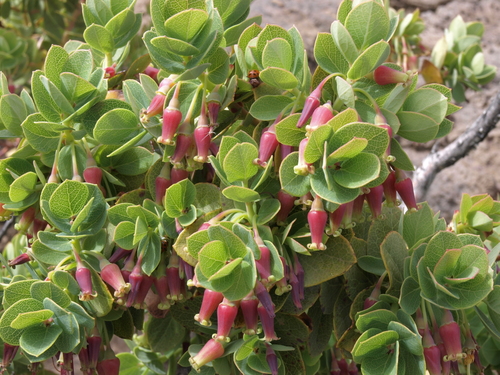
Dieser kompakte, verholzende Strauch wird typischerweise 10 bis 130 Zentimeter hoch und nimmt oft eine runde oder niederliegende Form an, um sich vor Höhenwinden zu schützen. Seine kleinen, steifen, abgerundeten Blätter sind ledrig mit fein gesägten Rändern und erscheinen oft als leuchtendes Rot-Pink, wenn sie jung sind, bevor sie zu Dunkelgrün reifen. Die Blüten sind klein, glockenförmig und hängen nach unten, gefärbt in Rosatönen, Rot oder Grünlich-Gelb. Das auffälligste Merkmal sind seine fleischigen, kugelförmigen Beeren, die brillante Rot-, Gelb- oder Orangetöne aufweisen und mit einem leichten, wachsartigen Überzug bedeckt sind.
Kategorie
PflanzenSeltenheit
Gewöhnlich
Gefahr
1/5 · Sehr gering
Snaps
Mach den ersten Snap!
In der hawaiianischen Tradition sind die Beeren Pele, der Göttin der Vulkane, heilig, und es ist Brauch, ihr einen Zweig darzubringen, bevor man davon isst.
Ihr Artname 'reticulatum' bezieht sich auf das ausgeprägte, netzartige Adernmuster, das auf ihren steifen, ledrigen Blättern sichtbar ist.
Die Beeren sind eine Hauptnahrungsquelle für die Nene, Hawaiis einheimischen und gefährdeten Staatsvogel.
Sie ist außergewöhnlich gut an die Besiedlung von rauer, nährstoffarmer Vulkanasche und jungen Lavaströmen angepasst, wo andere Pflanzen nicht überleben können.
Sie bildet eine Partnerschaft mit spezialisierten ericoiden Mykorrhizapilzen im Boden, um die Nährstoff- und Wasseraufnahme in kargen vulkanischen Umgebungen zu maximieren.
Ihre dicken, ledrigen Blätter und ihr niedriger Wuchs schützen sie vor intensiver Sonneneinstrahlung, starken Winden und eisigen alpinen Temperaturen.
Als photoautotrophe Pflanze synthetisiert sie ihre eigene Energie aus Sonnenlicht, Kohlendioxid und Wasser mithilfe von Chlorophyll.
Branta sandvicensis
Die gefährdete hawaiianische Gans ernährt sich stark von den nahrhaften Beeren und dient als primärer Samenverbreiter.
Drepanis coccinea
Nektarfressende hawaiianische Honigfresser besuchen die glockenförmigen Blüten und bestäuben sie dabei.
Für dieses Objekt sind noch keine Merkmal-Badges vergeben.
Noch keine Alternativnamen vorhanden.
Sammlungen für dieses Objekt erscheinen hier, wenn weitere Themen hinzugefügt werden.
Gefahr
1/5 · Sehr gering
Noch keine besonderen Sicherheitshinweise.
Beginne mit der ganzen Pflanze und vergleiche dann Blattstellung, Blattränder, Stängel und eventuelle Blüten oder Früchte. Gegenständige Blätter wachsen paarweise, wechselständige einzeln am Stängel. Zusammen verraten diese Details weit mehr als ein einzelnes grünes Blatt. Pflanzen bestimmen: Lade ein Foto hoch und vergleiche die sichtbaren Merkmale.
10-150 cm
10-50 Jahre
Als photoautotrophe Pflanze synthetisiert sie ihre eigene Energie aus Sonnenlicht, Kohlendioxid und Wasser mithilfe von Chlorophyll.
Zu finden in hochgelegenen vulkanischen Strauchlandschaften, alpinen Wüsten und offenen Mooren, typischerweise auf relativ jungen Lavaströmen und Aschefeldern.
Zoome hinein, um Cluster aufzulösen und zu sehen, wo dieses Objekt fotografiert wurde.
Neueste Snaps erscheinen hier, wenn neue Beobachtungen hinzukommen.
Nimm die Entdeckung mit
Fotografiere deinen Fund mit Snappit, bestimme die Art und füge die Entdeckung deiner Sammlung hinzu.