
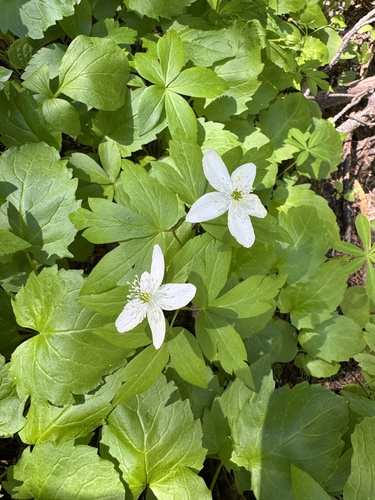


Oregon-Anemone
anemonoides oregana
Die Oregon-Anemone (Anemonoides oregana) ist eine bezaubernde mehrjährige Wildblume, die in den schattigen, feuchten Wäldern des pazifischen Nordwestens beheimatet ist. Aus einem zarten unterirdischen Rhizom aufsteigend, bricht dieser Frühjahrsblüher in Blüte aus, gerade wenn das Waldkronendach zu belaubt, und bedeckt den feuchten Waldboden mit Farbtupfern. Sie wird für ihre sanfte Schönheit und ihre ökologische Rolle im Frühling sehr geschätzt, da sie einige der ersten auftauchenden Bestäuber der Saison anzieht. Im Gegensatz zu vielen Gartenanemonen ist diese Wildart perfekt an die feuchten, moosigen Umgebungen unter Nadel- und Laubbäumen angepasst, wo sie im gefilterten Sonnenlicht still gedeiht.
Lebensraum: Findet sich in feuchten, schattigen Nadel- oder Mischwäldern, Dickichten und entlang von Bachufern in niedrigen bis mittleren Höhenlagen.
Diese zarte Pflanze wächst zwischen 5 und 30 Zentimetern hoch und weist einen einzelnen, schlanken Stängel auf, der von einer einzelnen Blüte gekrönt wird. Die Blüte, die 2 bis 4 Zentimeter im Durchmesser misst, zeigt typischerweise fünf bis neun kronblattähnliche Kelchblätter, deren Farbe von Hellblau und Violett bis Rosa, Rötlich-Purpur oder selten Weiß reicht. Umgeben von einem Büschel zahlreicher blasser Staubblätter und einem zentralen Stempelkopf, kontrastieren diese farbigen Kelchblätter wunderschön mit den tief geteilten, dreiteiligen, tief gelappten Blättern der Pflanze, die sich direkt unter der Blüte um den Stängel quirlförmig anordnen.
Kategorie
PflanzenSeltenheit
Gewöhnlich
Gefahr
1/5 · Sehr gering
Snaps
Mach den ersten Snap!
Der gebräuchliche Name 'Windröschen' stammt vom altgriechischen Wort 'anemos' (Wind), da man glaubte, die Blüten würden sich nur öffnen, wenn der Wind wehte.
Die Pflanze enthält Protoanemonin, eine chemische Verbindung, die Hautreizungen verursachen kann, wodurch sie für die meisten Säugetier-Pflanzenfresser ungenießbar wird.
Im Gegensatz zu vielen anderen Blumen hat die Oregon-Anemone keine echten Blütenblätter; ihre leuchtenden Farben stammen von ihren modifizierten, kronblattähnlichen Kelchblättern.
Mithilfe unterirdischer kriechender Rhizome bildet diese Pflanze Klonkolonien, die es ihr ermöglichen, den Winter zu überleben und sich schnell auf Waldböden auszubreiten.
Sie erscheint und blüht früh im Frühling, um Sonnenlicht einzufangen, bevor das überhängende Baumkronendach sich vollständig schließt, wodurch ihr Photosynthesefenster maximiert wird.
Die Wurzeln bilden Beziehungen mit Bodenpilzen, was die Nährstoff- und Wasseraufnahme der Pflanze in nährstoffarmen Waldböden verbessert.
Als photosynthetische Pflanze produziert die Oregon-Anemone ihre eigenen organischen Nährstoffe aus Sonnenlicht, Wasser, Kohlendioxid und essentiellen Bodenmineralien.
Für dieses Objekt sind noch keine Merkmal-Badges vergeben.
Noch keine Alternativnamen vorhanden.
Sammlungen für dieses Objekt erscheinen hier, wenn weitere Themen hinzugefügt werden.
Gefahr
1/5 · Sehr gering
Noch keine besonderen Sicherheitshinweise.
Beginne mit der ganzen Pflanze und vergleiche dann Blattstellung, Blattränder, Stängel und eventuelle Blüten oder Früchte. Gegenständige Blätter wachsen paarweise, wechselständige einzeln am Stängel. Zusammen verraten diese Details weit mehr als ein einzelnes grünes Blatt. Pflanzen bestimmen: Lade ein Foto hoch und vergleiche die sichtbaren Merkmale.
5-30 cm
3-10 Jahre
Als photosynthetische Pflanze produziert die Oregon-Anemone ihre eigenen organischen Nährstoffe aus Sonnenlicht, Wasser, Kohlendioxid und essentiellen Bodenmineralien.
Findet sich in feuchten, schattigen Nadel- oder Mischwäldern, Dickichten und entlang von Bachufern in niedrigen bis mittleren Höhenlagen.
Zoome hinein, um Cluster aufzulösen und zu sehen, wo dieses Objekt fotografiert wurde.
Neueste Snaps erscheinen hier, wenn neue Beobachtungen hinzukommen.
Nimm die Entdeckung mit
Fotografiere deinen Fund mit Snappit, bestimme die Art und füge die Entdeckung deiner Sammlung hinzu.


















