


Parrys Agave
agave parryi
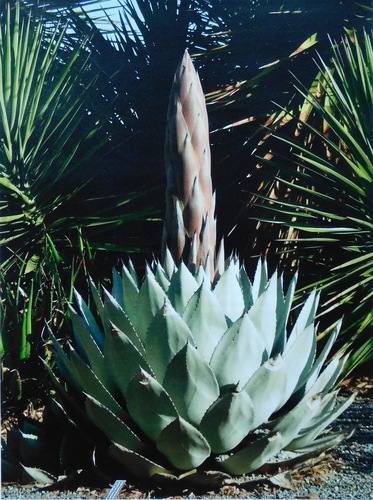
Parrys Agave (Agave parryi), auch bekannt als Meskal-Agave, ist eine beeindruckende, langsam wachsende Sukkulente, die in den trockenen Bergregionen des südwestlichen Teils der Vereinigten Staaten und Nordmexikos beheimatet ist. Bekannt für ihre außergewöhnlich symmetrische, artischockenähnliche Rosettenform, hat sich diese robuste Pflanze an extreme Umweltbedingungen angepasst und übersteht sowohl Minusgrade im Winter als auch sengende Sommerhitze. Sie speichert Feuchtigkeit in ihren dicken, fleischigen Blättern, um lange Dürreperioden zu überstehen, was sie zu einem wahren Überlebenskünstler der amerikanischen Wüsten macht. Über Jahrhunderte hinweg ernteten indigene Völker wie die Apachen die Herzen dieser Pflanze und rösteten sie als wichtige Quelle für Nahrung und Fasern.
Lebensraum: Typischerweise in trockenen, steinigen Böden, an Hängen, in Graslandschaften und Chaparral-Gebieten innerhalb von Eichen- und Kiefern-Wacholder-Wäldern in höheren Lagen zu finden.
Diese Sukkulente bildet eine dichte, kugelförmige Rosette aus breiten, löffelförmigen Blättern, deren Farbe von blass blau-grau bis hellgrün reicht und die bis zu 60 Zentimeter hoch und breit werden können. Jedes Blatt ist am Rand mit kleinen Zähnen gesäumt, die dunkelbraun oder schwarz sind, und endet in einem scharfen, prominenten Dorn, der bis zu 3 Zentimeter lang werden kann. Am Ende ihres Lebens produziert sie einen spektakulären, hoch aufragenden Blütenstiel, der bis zu 4,5 Meter hoch werden kann und Büschel leuchtend gelber Blüten zeigt, die aus rot-orangefarbenen Knospen hervorgehen.
Kategorie
PflanzenSeltenheit
Gewöhnlich
Gefahr
1/5 · Sehr gering
Snaps
Mach den ersten Snap!
Obwohl sie den Spitznamen 'Jahrhundertpflanze' trägt, lebt sie normalerweise zwischen 10 und 30 Jahren und nicht ein ganzes Jahrhundert.
Indigene Apachen-Gruppen rösteten den zentralen Kern der Pflanze historisch in unterirdischen Steingruben bis zu zwei Tage lang, um eine süße, nach Melasse schmeckende Nahrung herzustellen.
Es ist eine monokarpische Pflanze, was bedeutet, dass sie nur einmal am Ende ihres langen Lebens blüht und all ihre Energiereserven verbraucht, um Samen zu produzieren, bevor sie stirbt.
Öffnet ihre Spaltöffnungen nur nachts, um Kohlendioxid aufzunehmen, wodurch der Wasserverlust durch Verdunstung an heißen Wüstentagen drastisch reduziert wird.
Nutzt hochspezialisiertes internes Parenchymgewebe in ihren dicken Blättern, um große Wasservorräte während der Regenzeit zu speichern.
Produziert genetische Klone oder Ausläufer, sogenannte Pups, um ihre Basis herum, wodurch das Überleben des Organismus auch nach dem Absterben der Hauptrosette gesichert ist.
Synthetisiert ihre eigene Nahrung mithilfe von Sonnenlicht, Kohlendioxid und Wasser durch Photosynthese, ergänzt durch essentielle Nährstoffe, die von ihren Wurzeln aufgenommen werden.
Leptonycteris nivalis
Bestäubt die nachtaktiven gelben Blüten, trinkt reichen Nektar im Austausch für die Pollenübertragung.
Scyphophorus acupunctatus
Gräbt sich in das Herz der Agave, um Eier zu legen, wobei sich die Larven von der Pflanze ernähren und diese letztendlich verrotten lassen.

Apis mellifera
Besucht den energiereichen Nektar der Tagblüten, um Pollen und Nektar zu sammeln.
Für dieses Objekt sind noch keine Merkmal-Badges vergeben.
Noch keine Alternativnamen vorhanden.
Sammlungen für dieses Objekt erscheinen hier, wenn weitere Themen hinzugefügt werden.
Gefahr
1/5 · Sehr gering
Noch keine besonderen Sicherheitshinweise.
Vergleiche Blattstellung, Rosettenform, Rippen, Dornen und Blüten. Bedenke, dass Trockenheit und starke Sonne Farbe und Form einer Pflanze verändern können. Sukkulenten bestimmen: Lade ein Foto hoch und vergleiche die sichtbaren Merkmale.
30-60 cm
5-20 kg
10-30 Jahre
Synthetisiert ihre eigene Nahrung mithilfe von Sonnenlicht, Kohlendioxid und Wasser durch Photosynthese, ergänzt durch essentielle Nährstoffe, die von ihren Wurzeln aufgenommen werden.
Typischerweise in trockenen, steinigen Böden, an Hängen, in Graslandschaften und Chaparral-Gebieten innerhalb von Eichen- und Kiefern-Wacholder-Wäldern in höheren Lagen zu finden.
Zoome hinein, um Cluster aufzulösen und zu sehen, wo dieses Objekt fotografiert wurde.
Neueste Snaps erscheinen hier, wenn neue Beobachtungen hinzukommen.
Nimm die Entdeckung mit
Fotografiere deinen Fund mit Snappit, bestimme die Art und füge die Entdeckung deiner Sammlung hinzu.

















