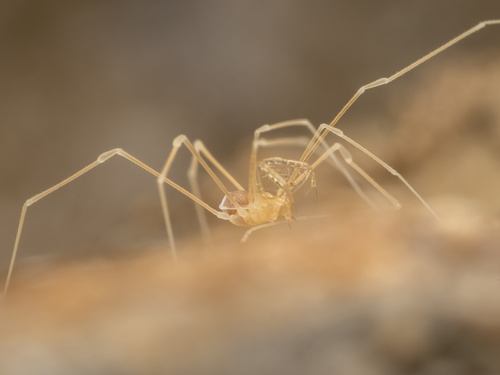


Phalangodes Armata
phalangodes armata
Die Phalangodes Armata, auch einfach als Höhlen-Weberknecht bekannt, ist ein faszinierendes und hoch spezialisiertes Spinnentier, das an das Leben in der ewigen Dunkelheit unterirdischer Ökosysteme angepasst ist. Vorwiegend in den Kalksteinhöhlensystemen des südöstlichen Vereinigten Staaten zu finden, zeigt dieses zarte Geschöpf die unglaubliche Kraft der evolutionären Anpassung. Im Gegensatz zu ihren an der Oberfläche lebenden Verwandten haben diese Weberknechte ein scharfes Sehvermögen gegen hoch entwickelte taktile und chemische Sinne eingetauscht, um sich in ihren rauen, pechschwarzen Behausungen zurechtzufinden. Die Beobachtung von Phalangodes Armata ist ein Genuss für jeden Höhlenforscher oder Untertage-Enthusiasten. Diese Spinnentiere spielen eine wichtige Rolle in der Höhlenökologie, indem sie sowohl Prädatoren von Mikro-Wirbellosen als auch Aasfresser von organischem Detritus sind. Ihre Anwesenheit ist ein wichtiger Indikator für ein gesundes, funktionierendes Höhlenökosystem und unterstreicht das empfindliche Gleichgewicht des Lebens unter der Erde.
Lebensraum: Typischerweise in den dunklen Zonen von Kalksteinhöhlen zu finden, an feuchten Wänden, Decken oder unter verrottendem organischem Material klammernd.
Dieses winzige Spinnentier hat einen kompakten, ovalen Körper von nur 1,5 bis 3 Millimetern Länge, mit einer blassgelben, bernsteinfarbenen oder durchscheinenden Färbung, der eine schützende dunkle Pigmentierung fehlt. Es besitzt extrem lange, fadenförmige Beine, wobei das zweite Beinpaar auffällig verlängert ist, um als sensorische Antennen zu dienen. Seine Pedipalpen sind stark mit scharfen, auffälligen Stacheln bewaffnet, die zum Greifen von Beute verwendet werden, und seine Augen sind stark reduziert und erscheinen als kleine, nicht funktionale dunkle Flecken auf dem Kopf.
Kategorie
InvertebrateSeltenheit
Gewöhnlich
Gefahr
1/5 · Sehr gering
Snaps
Mach den ersten Snap!
Aufgrund seiner evolutionären Anpassung an das Leben in dunklen Höhlensystemen hat es stark reduzierte Augen und verlässt sich fast ausschließlich auf taktile und chemische Sinne.
Sein zweites Beinpaar ist doppelt so lang wie sein Körper und funktioniert fast genau wie die Antennen eines Insekts.
Im Gegensatz zu echten Spinnen produziert Phalangodes Armata keine Seide und spinnt keine Netze, sondern verlässt sich stattdessen auf aktives Kriechen und Futtersuche.
Ernährt sich opportunistisch von kleinen höhlenbewohnenden Wirbellosen, Pilzsporen und organischen Ablagerungen, die in unterirdischen Ökosystemen gefunden werden.
Für dieses Objekt sind noch keine Merkmal-Badges vergeben.
Noch keine Alternativnamen vorhanden.
Sammlungen für dieses Objekt erscheinen hier, wenn weitere Themen hinzugefügt werden.
Gefahr
1/5 · Sehr gering
Noch keine besonderen Sicherheitshinweise.
Vergleiche Körpersymmetrie, Gehäuse, Segmente, Beine, Tentakel und die Fortbewegung des Tiers. Wirbellose umfassen viele nicht verwandte Gruppen, beginne also mit dem Körperbau. Wirbellose bestimmen: Lade ein Foto hoch und vergleiche die sichtbaren Merkmale.
0 cm
0.00001-0.00005 kg
1-3 Jahre
Ernährt sich opportunistisch von kleinen höhlenbewohnenden Wirbellosen, Pilzsporen und organischen Ablagerungen, die in unterirdischen Ökosystemen gefunden werden.
Typischerweise in den dunklen Zonen von Kalksteinhöhlen zu finden, an feuchten Wänden, Decken oder unter verrottendem organischem Material klammernd.
Futtersuche
10-40
Zoome hinein, um Cluster aufzulösen und zu sehen, wo dieses Objekt fotografiert wurde.
Neueste Snaps erscheinen hier, wenn neue Beobachtungen hinzukommen.
Nimm die Entdeckung mit
Fotografiere deinen Fund mit Snappit, bestimme die Art und füge die Entdeckung deiner Sammlung hinzu.