




Phlox
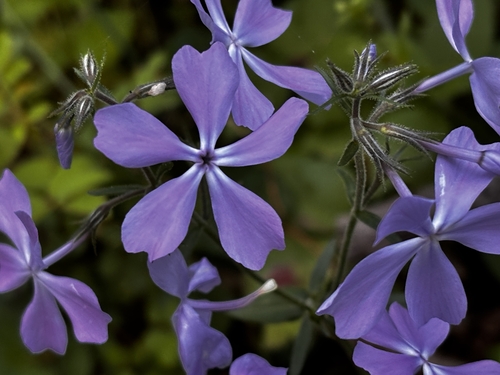
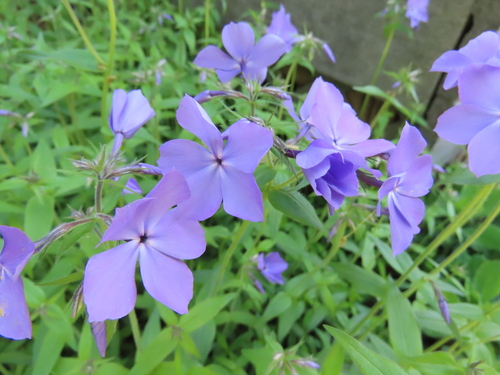
Phlox divaricata
Phlox ist eine wunderschöne Blütenpflanze mit Büscheln farbenfroher Blüten. Sie zieht Schmetterlinge und Bienen mit ihrem süßen Duft und ihren leuchtenden Farben an und lässt Gärten wie einen Regenbogen aussehen.
Lebensraum: Gärten, Wälder
Der Phlox hat Büschel zarter, fünfblättriger, sternförmiger Blüten, die in leuchtenden Rosa-, Lila-, Blau- und Weißtönen blühen. Seine schlanken Stängel tragen schmale, lanzettliche Blätter und bilden eine zarte, farbenfrohe Pracht in Gärten und Wäldern.
Kategorie
PflanzenSeltenheit
Common
Gefahr
1/5 · Sehr gering
Snaps
23
Viele wilde Phlox-Arten sind in Nordamerika heimisch und gedeihen in Wäldern und auf Wiesen!
Einige Phlox-Blüten leuchten unter UV-Licht und sind so für Insektenbestäuber noch besser sichtbar!
Der Name 'Phlox' stammt von einem griechischen Wort ab, das 'Flamme' bedeutet und sich auf die feurigen Farben einiger Arten bezieht!
Winzige Kolibris lieben es, süßen Nektar aus den hohen, farbenprächtigen Blüten des Garten-Phlox zu schlürfen.
Papilio glaucus
Eine entscheidende Nektarquelle für diese großen, farbenprächtigen Schmetterlinge.
Bombus impatiens
Bienen besuchen Phlox-Blüten, um wichtigen Nektar und Pollen zu sammeln.

Hyles lineata
Angezohen von den duftenden Blüten, besonders aktiv in der Dämmerung.
Mehrjährige Pflanzen leben länger als zwei Jahre und treiben in der Regel jedes Jahr aus ihren Wurzeln neu aus, um zu wachsen und zu blühen.
Blütenpflanzen sind alle Pflanzen, die als Teil ihres Fortpflanzungszyklus Blüten bilden.
Zierpflanzen werden hauptsächlich wegen ihres ästhetischen Reizes angebaut und verschönern Landschaften und Gärten mit ihrem attraktiven Laub, ihren Blüten oder ihrer Form.
Blütenbüschel sind Blütenstände, bei denen einzelne Blüten dicht beieinander an einem gemeinsamen Stängel angeordnet sind.

Frühlingsblüher bilden ihre Blüten im Frühjahr und kündigen oft das Ende des Winters und den Beginn neuen Wachstums an.

Schattenverträgliche Pflanzen sind an das Wachstum und Gedeihen in Bereichen mit wenig Licht angepasst und benötigen weniger direkte Sonneneinstrahlung.

Duftende Blüten verströmen ein angenehmes Aroma, oft um Bestäuber anzulocken oder zur Abwehr.
Gefahr
1/5 · Sehr gering
Genießen Sie die Schönheit des Phlox aus sicherer Entfernung und vermeiden Sie es, Teile der Pflanze zu berühren oder zu essen.
Der einfachste Weg, Phlox zu bestimmen, ist die Verwendung der Naturführer-App Snappit.
30-120 cm
30-90 cm
1-3 cm
Spring to late Summer
Nein
Keine
Mehrjährig
Zoome hinein, um Cluster aufzulösen und zu sehen, wo dieses Objekt fotografiert wurde.
28.04.2026
Morristown Historic DistrictBildnachweis
(c) William J. Deml, some rights reserved (CC BY)
Lizenz: CC BY 4.0 ↗
Das Bild wird möglicherweise zugeschnitten im Kartenrahmen angezeigt.
11.05.2025
Salem Historic DistrictBildnachweis
(c) Chelsea Carroll, some rights reserved (CC BY)
Lizenz: CC BY 4.0 ↗
Das Bild wird möglicherweise zugeschnitten im Kartenrahmen angezeigt.
Iowa, US
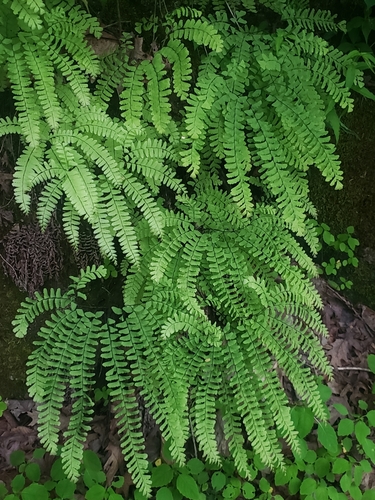
Hier kann man sehen Nördlicher Frauenhaarfarn und Waldnessel.
Führer anzeigen →

Michigan, US
Hier kann man sehen Hickory-Haarbüschelmotte und Maiapfel.
Führer anzeigen →

Minnesota, US
Hier kann man sehen östliche Erdhummel, Truthuhn und Braunband-Hummel.
Führer anzeigen →

New York, US
Hier kann man sehen Hakengimpel, Hortensien-Blattroller und Bachforelle.
Führer anzeigen →

Kentucky, US
Hier kann man sehen Rotwangen-Schmuckschildkröte und Schnaken-Orchidee.
Führer anzeigen →

Iowa, US
Hier kann man sehen Monarch und Amerikanischer Weißpelikan.
Führer anzeigen →
Nimm die Entdeckung mit
Fotografiere deinen Fund mit Snappit, bestimme die Art und füge die Entdeckung deiner Sammlung hinzu.







.jpg&width=800)


_001.jpg&width=800)



