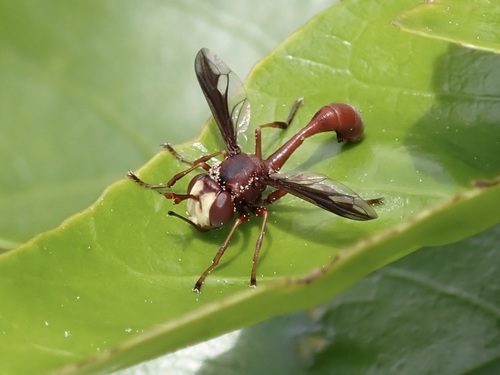


Physocephala Burgessi
physocephala burgessi
Physocephala burgessi, gemeinhin bekannt als Dickkopffliege, ist ein faszinierendes Insekt aus der Familie der Conopidae. Diese Fliegen zeichnen sich durch ihren einzigartigen Lebenszyklus aus, bei dem sich die Larven als interne Parasitoide anderer Insekten, hauptsächlich Bienen und Wespen, entwickeln. Während die erwachsenen Fliegen harmlose Nektarfresser sind, macht ihre Fortpflanzungsstrategie sie zu einem interessanten Bestandteil ihres Ökosystems, indem sie eine Rolle bei der Regulierung der Populationen ihrer Wirte spielen. Oft werden sie aufgrund ihrer auffälligen Mimikry mit Wespen verwechselt. Physocephala burgessi sind ein Zeugnis evolutionärer Anpassung. Ihre Anwesenheit deutet oft auf eine gesunde Population ihrer Wirtsinsekten sowie auf eine Fülle von blühenden Pflanzen hin, die den erwachsenen Tieren Nektar liefern. Sie sind ein hervorragendes Beispiel für die komplexen und oft verborgenen Beziehungen innerhalb von Insektengemeinschaften.
Lebensraum: Findet sich in offenen, sonnigen Gebieten wie Wiesen, Gärten, Feldrändern und lichten Wäldern, wo Wirtsinsekten und nektarproduzierende Blütenpflanzen reichlich vorhanden sind.
Physocephala burgessi zeigt ein ausgeprägtes wespenartiges Aussehen, eine Form der Bates'schen Mimikry, die hilft, Fressfeinde abzuschrecken. Erwachsene Tiere haben typischerweise schlanke, längliche Körper mit einer vorherrschenden schwarzen Färbung, oft verziert mit kontrastierenden gelben oder rotbraunen Markierungen, insbesondere am Hinterleib. Ihre Köpfe sind relativ groß und abgerundet ('dickköpfig'), mit auffälligen Augen. Die Flügel sind klar oder leicht getönt, oft mit dunklen Adern, und werden charakteristisch über dem Körper gehalten, was ihre Ähnlichkeit mit kleinen Wespen noch verstärkt. Größenmäßig sind sie mittelkleine Fliegen, die gewöhnlich eine Körperlänge von 10-15 mm messen.
Kategorie
InsektenSeltenheit
Gewöhnlich
Gefahr
1/5 · Sehr gering
Snaps
Mach den ersten Snap!
Trotz ihres wespenartigen Aussehens sind diese Fliegen für den Menschen völlig harmlos und ernähren sich als erwachsene Tiere ausschließlich von Nektar.
Weibliche Physocephala burgessi legen ihre Eier oft auf Wirtsinsekten ab, während der Wirt im Flug ist, was unglaubliche Präzision und Timing erfordert.
Der 'Dickkopf'-Teil ihres gebräuchlichen Namens bezieht sich auf den charakteristischen breiten Kopf der Fliegen der Familie Conopidae.
Die Larven dieser Fliegen sind Endoparasitoide, was bedeutet, dass sie im Inneren ihres Wirtes leben und sich ernähren, was schließlich zum Tod des Wirtes führt.
Erwachsene Physocephala burgessi imitieren das Aussehen von Wespen sehr genau, mit schlanken, gebänderten Körpern und oft einem summenden Flug. Diese Mimikry bietet Schutz vor Raubtieren, die stechende Insekten meiden.
Das Larvenstadium dieser Fliege ist ein hochspezialisierter innerer Parasitoid. Weibliche Fliegen legen Eier auf oder in die Körper lebender erwachsener Bienen und Wespen, wobei die sich entwickelnde Larve den Wirt von innen verzehrt.
Erwachsene weibliche Fliegen besitzen ausgeprägte sensorische Fähigkeiten, um geeignete Wirtsinsekten zu lokalisieren, oft identifizieren sie diese im Flug. Dann legen sie schnell und mit bemerkenswerter Präzision ein Ei ab, um das Überleben ihrer Nachkommen zu sichern.
Adulte Physocephala burgessi ernähren sich ausschließlich von Nektar verschiedener Blütenpflanzen, der ihnen Energie liefert. Im Gegensatz dazu sind ihre Larven obligate interne Parasitoide, die sich entwickeln, indem sie die Gewebe ihrer lebenden Insektenwirte verzehren.
Altersunterschiede: Ja, Adulte sind Nektarfresser, während Larven interne Parasitoide anderer Insekten sind.
Helianthus annuus
Adulte ernähren sich von Nektar verschiedener Blütenpflanzen.
Bombus impatiens
Larven parasitieren und entwickeln sich im Inneren der Körper verschiedener Bienenarten.

Sphex ichneumoneus
Larven parasitieren auch verschiedene solitäre Wespenarten.
Sayornis phoebe
Adulte Fliegen werden gelegentlich von insektenfressenden Vögeln gejagt.
Für dieses Objekt sind noch keine Merkmal-Badges vergeben.
Noch keine Alternativnamen vorhanden.
Sammlungen für dieses Objekt erscheinen hier, wenn weitere Themen hinzugefügt werden.
Gefahr
1/5 · Sehr gering
Noch keine besonderen Sicherheitshinweise.
Achte auf sechs Beine, Fühler, drei Körperabschnitte und die Form der Flügel. Käfer haben gehärtete Vorderflügel, Fliegen nur ein funktionierendes Flügelpaar. Winzige Insekten müssen oft aus der Nähe betrachtet werden, bevor ihre Gruppe klar wird. Insekten bestimmen: Lade ein Foto hoch und vergleiche die sichtbaren Merkmale.
10-15 cm
18-25 cm
0.00005-0.0001 kg
Adulte Physocephala burgessi ernähren sich ausschließlich von Nektar verschiedener Blütenpflanzen, der ihnen Energie liefert. Im Gegensatz dazu sind ihre Larven obligate interne Parasitoide, die sich entwickeln, indem sie die Gewebe ihrer lebenden Insektenwirte verzehren.
Findet sich in offenen, sonnigen Gebieten wie Wiesen, Gärten, Feldrändern und lichten Wäldern, wo Wirtsinsekten und nektarproduzierende Blütenpflanzen reichlich vorhanden sind.
Futtersuche (adulte), Parasitismus (larven)
100-500
Zoome hinein, um Cluster aufzulösen und zu sehen, wo dieses Objekt fotografiert wurde.
Neueste Snaps erscheinen hier, wenn neue Beobachtungen hinzukommen.
Nimm die Entdeckung mit
Fotografiere deinen Fund mit Snappit, bestimme die Art und füge die Entdeckung deiner Sammlung hinzu.