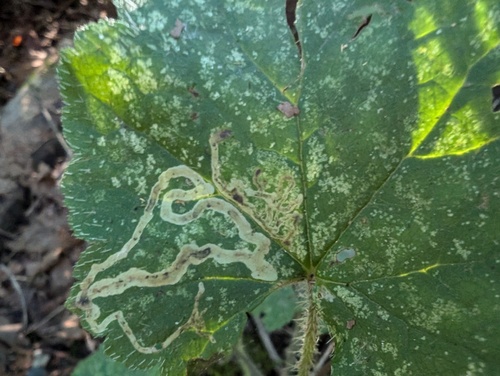





Phytomyza tiarellae
Phytomyza tiarellae
Phytomyza tiarellae ist ein winziges Insekt, das gerne an Pflanzen knabbert. Diese kleinen Kreaturen sind oft in Gärten zu finden und können schwierig zu entdecken sein, weil sie so klein sind!
Lebensraum: Gärten
Die Phytomyza tiarellae ist eine winzige, dunkelbraune Fliege, typischerweise schwarz oder dunkelgrau, mit klaren Flügeln und manchmal gelblichen Markierungen an Kopf oder Thorax. Ihre geringe Größe, oft nur 1-3 Millimeter lang, macht sie inmitten von Laub schwer zu entdecken.
Kategorie
InsektenSeltenheit
Gewöhnlich
Gefahr
1/5 · Sehr gering
Snaps
Mach den ersten Snap!
Obwohl es Fliegen sind, sind Adulte zu klein, um Sie zu beißen!
Ihre Babys sind winzige Ingenieure, die verwinkelte Tunnel in Blättern schnitzen!
Sie sind nach Tiarella-Pflanzen benannt, ihrem Lieblingsheim und ihrer Lieblingsnahrung!
Sie legen ihre Eier tief versteckt im Pflanzengewebe ab, um sie zu schützen.
Larven knabbern Pflanzenblätter von innen, während Adulte sich von süßem Nektar ernähren.
Altersunterschiede: Larven fressen Pflanzenblätter von innen, aber Adulte trinken Nektar oder Pflanzensaft.
Tiarella cordifolia
Larven graben Gänge und ernähren sich in seinen Blättern.
Poecile atricapillus
Sucht auf Blättern nach kleinen Insekten und Larven.

Misumena vatia
Überfällt kleine Insekten auf Blüten und Blättern.
Einzelgänger leben den größten Teil ihres Lebens allein und interagieren mit Artgenossen nur zur Paarung oder zur Aufzucht der Jungen.
Dieses Merkmal kennzeichnet Lebewesen, deren Ernährung vollständig oder hauptsächlich aus pflanzlichem Material besteht.
Bezieht sich auf Arten, die deutlich kleiner sind als der Durchschnitt oder das Typische ihrer Art.
Dieses Lebensraummerkmal weist auf Arten hin, die in städtischen und vorstädtischen Umgebungen mit Menschen zusammenleben können und von Menschen geschaffene Strukturen sowie Grünflächen nutzen.
Noch keine Alternativnamen vorhanden.
Gefahr
1/5 · Sehr gering
Es ist am besten, Insekten aus der Ferne zu betrachten und sie nicht zu berühren.
Achte auf sechs Beine, Fühler, drei Körperabschnitte und die Form der Flügel. Käfer haben gehärtete Vorderflügel, Fliegen nur ein funktionierendes Flügelpaar. Winzige Insekten müssen oft aus der Nähe betrachtet werden, bevor ihre Gruppe klar wird. Insekten bestimmen: Lade ein Foto hoch und vergleiche die sichtbaren Merkmale.
2-5 mm
1-3 mm
30-50 Tage
0.5 km/h
Larven knabbern Pflanzenblätter von innen, während Adulte sich von süßem Nektar ernähren.
Gärten
Futtersuche
Zoome hinein, um Cluster aufzulösen und zu sehen, wo dieses Objekt fotografiert wurde.
Neueste Snaps erscheinen hier, wenn neue Beobachtungen hinzukommen.
Nimm die Entdeckung mit
Fotografiere deinen Fund mit Snappit, bestimme die Art und füge die Entdeckung deiner Sammlung hinzu.