


Pilo
coprosma montana
Pilo, wissenschaftlich bekannt als Coprosma montana, ist ein widerstandsfähiger und fester Bestandteil der einheimischen Strauchvegetation in den alpinen und subalpinen Regionen Neuseelands. Diese robuste Pflanze spielt eine entscheidende ökologische Rolle in ihrer rauen Umgebung, indem sie oft dichte Dickichte bildet, die empfindlichen Bergökosystemen Schutz und Stabilität bieten. Ihre Anpassungsfähigkeit an extreme Bedingungen, von starken Winden über intensive UV-Strahlung bis hin zu kalten Temperaturen, macht sie zu einem faszinierenden Beispiel für evolutionären Erfolg in herausfordernden Lebensräumen. Pilo trägt erheblich zur Biodiversität bei, indem sie einheimischen Vögeln und Wirbellosen Nahrungsquellen bietet, was ihre Bedeutung im komplexen Netz des Berglandlebens unterstreicht.
Lebensraum: Überwiegend in subalpinen und alpinen Buschlandschaften, felsigen Vorsprüchen und Bergwäldern zu finden, oft in exponierten Höhenlagen.
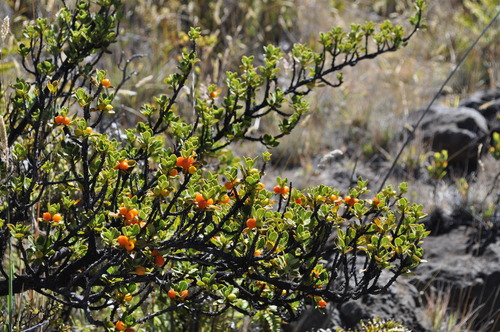
Pilo präsentiert sich typischerweise als kleiner bis mittelgroßer Strauch, der oft dichte, verworrene Massen bildet. Seine Blätter sind klein, dick und ledrig, eine Anpassung, um Wasserverlust zu reduzieren und rauen Bedingungen standzuhalten. Sie sind im Allgemeinen dunkelgrün, oft mit einer glänzenden Oberfläche, und können in exponierten Bereichen leicht bronzefarben erscheinen. Die Pflanze ist zweihäusig und trägt unauffällige grüne Blüten, die zu kleinen, fleischigen, roten oder orangefarbenen Steinfrüchten (Beeren) heranreifen, die im reifen Zustand visuell auffällig vor dem Laub hervorstechen. Die Äste sind steif und oft miteinander verflochten, was zu ihrem kompakten und robusten Erscheinungsbild beiträgt.
Kategorie
PflanzenSeltenheit
Gewöhnlich
Gefahr
1/5 · Sehr gering
Snaps
Mach den ersten Snap!
Wie viele neuseeländische Pflanzen hat Coprosma montana kleine, grüne, unauffällige Blüten, die windbestäubt oder von kleinen, einheimischen Insekten bestäubt werden.
Der Name 'Coprosma' leitet sich vom griechischen 'kopros' (Kot) und 'osme' (Geruch) ab und bezieht sich auf den unangenehmen Geruch der zerdrückten Blätter einiger Arten dieser Gattung.
Die kleinen, zähen Blätter von Coprosma montana sind speziell angepasst, um extremer Austrocknung und Gefriertemperaturen standzuhalten, die in ihrem Hochgebirgslebensraum häufig vorkommen.
Coprosma montana besitzt robuste Anpassungen, darunter kleine, ledrige Blätter und eine kompakte Wuchsform, die es ihr ermöglichen, in den rauen, exponierten Bedingungen alpiner Umgebungen mit starken Winden, kalten Temperaturen und intensiver UV-Strahlung zu gedeihen.
Mit getrennten männlichen und weiblichen Pflanzen fördert Pilo die Fremdbestäubung, wodurch die genetische Vielfalt und Widerstandsfähigkeit innerhalb ihrer Populationen erhöht wird, was für die Anpassung an sich ändernde Umweltbedingungen entscheidend ist.
Die Pflanze produziert kleine, leuchtend rote oder orangefarbene fleischige Früchte (Steinfrüchte), die für einheimische Vögel sehr attraktiv sind und so eine effiziente Samenverbreitung in ihrem Berglandlebensraum ermöglichen.
Als autotrophe Pflanze erzeugt Pilo ihre eigene Energie durch Photosynthese, indem sie Sonnenlicht, Kohlendioxid aus der Atmosphäre und Wasser sowie essentielle mineralische Nährstoffe aus dem Boden nutzt.
Prosthemadera novaeseelandiae
Frisst die Früchte der Pflanze und hilft bei der Samenverbreitung.

Cervus elaphus
Ästhet an den Blättern und Stängeln des Strauches.

Various species
In Verbindung mit dem Wurzelsystem der Pflanze, verbessert die Nährstoffaufnahme.
Various species
Bestäubt die Blüten und erleichtert die Fortpflanzung.
Für dieses Objekt sind noch keine Merkmal-Badges vergeben.
Noch keine Alternativnamen vorhanden.
Sammlungen für dieses Objekt erscheinen hier, wenn weitere Themen hinzugefügt werden.
Gefahr
1/5 · Sehr gering
Noch keine besonderen Sicherheitshinweise.
Beginne mit der ganzen Pflanze und vergleiche dann Blattstellung, Blattränder, Stängel und eventuelle Blüten oder Früchte. Gegenständige Blätter wachsen paarweise, wechselständige einzeln am Stängel. Zusammen verraten diese Details weit mehr als ein einzelnes grünes Blatt. Pflanzen bestimmen: Lade ein Foto hoch und vergleiche die sichtbaren Merkmale.
50-250 cm
2-20 kg
20-80 Jahre
Als autotrophe Pflanze erzeugt Pilo ihre eigene Energie durch Photosynthese, indem sie Sonnenlicht, Kohlendioxid aus der Atmosphäre und Wasser sowie essentielle mineralische Nährstoffe aus dem Boden nutzt.
Überwiegend in subalpinen und alpinen Buschlandschaften, felsigen Vorsprüchen und Bergwäldern zu finden, oft in exponierten Höhenlagen.
Nahrungssuche
Zoome hinein, um Cluster aufzulösen und zu sehen, wo dieses Objekt fotografiert wurde.
Neueste Snaps erscheinen hier, wenn neue Beobachtungen hinzukommen.
Nimm die Entdeckung mit
Fotografiere deinen Fund mit Snappit, bestimme die Art und füge die Entdeckung deiner Sammlung hinzu.

















