

Pimelia Ascendens
pimelia ascendens
Die Pimelia Ascendens ist ein faszinierender Schwarzkäfer, der endemisch in Küstendünen und trockenen Sandgebieten vorkommt. Bekannt für seine Widerstandsfähigkeit, hat sich dieses flugunfähige Insekt perfekt an das Überleben in einigen der schwierigsten, wasserarmen Landschaften angepasst. Es spielt eine entscheidende Rolle in seinem Ökosystem als Recycler, indem es organischen Detritus abbaut und Nährstoffe in den sandigen Boden zurückführt. Die Beobachtung eines dieser robusten Käfer, wie er mühsam durch den Treibsand navigiert, ist ein wahres Zeugnis der Widerstandsfähigkeit der Natur. Ihre langsamen, bedächtigen Bewegungen und kuppelförmigen Körper machen sie zu ikonischen Bewohnern trockener Küstenökosysteme, wo sie ein evolutionäres Wunder des Überlebens in der Wüste darstellen.
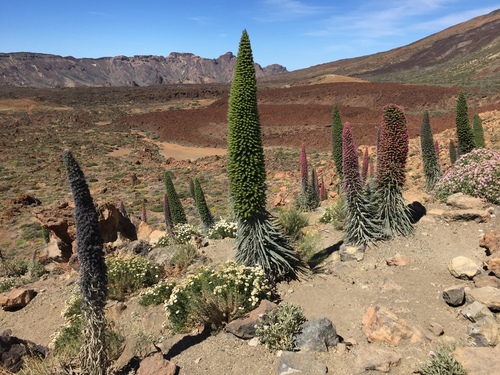
Lebensraum: Vorkommend in Küstensanddünen und halbtrockenem Buschland, typischerweise in der Nähe von niedrig wachsender halophytischer Vegetation.
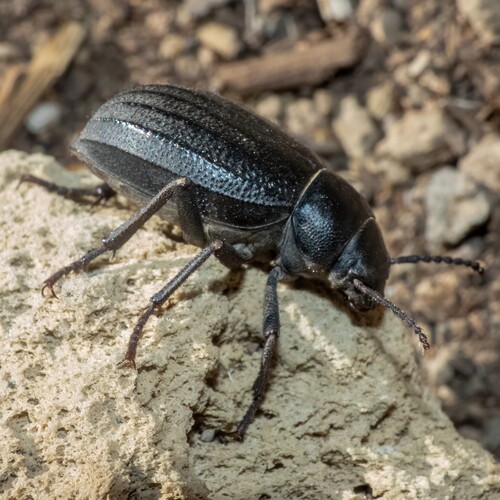
Dieser Käfer zeichnet sich durch einen robusten, stark gepanzerten, sub-kugeligen Körper aus, der vollständig mattschwarz oder tief anthrazitfarben ist. Seine verwachsenen Elytren (Flügeldecken) sind deutlich mit feinen Graten, Unebenheiten oder Körnchen strukturiert, die strukturelle Festigkeit verleihen und den Wasserverlust reduzieren. Da ihm Hinterflügel fehlen, ist er vollständig flugunfähig. Er besitzt kräftige, gegliederte Beine, die an das Gehen auf losem Sand angepasst sind, und erreicht eine Erwachsenenlänge von etwa 1,5 bis 2,5 Zentimetern.
Kategorie
InsektenSeltenheit
Gewöhnlich
Gefahr
1/5 · Sehr gering
Snaps
Mach den ersten Snap!
Da sie nicht fliegen können, verlassen sich diese Käfer vollständig auf das Gehen und können überraschend lange Gesamtstrecken über wandernde Dünen zurücklegen, um Nahrung zu suchen.
Ihre verwachsenen Flügeldecken wirken wie ein isolierender Schild, der ihre empfindlichen inneren Organe vor der sengenden Wüstensonne kühl hält.
Sie spielen eine entscheidende ökologische Rolle als Sanitärarbeiter der Dünen, indem sie totes organisches Material beseitigen, das sich sonst ansammeln würde.
Ihre verwachsenen Elytren bilden eine versiegelte, feuchte subelytrale Höhle über ihren Atemöffnungen, die den Wasserverlust in heißen, trockenen Klimazonen drastisch reduziert.
Ausgestattet mit starken, grabfähigen Beinen können sie schnell lockeren Sand ausheben, um sich zu vergraben und extremen Mittagstemperaturen oder Raubtieren zu entkommen.
Ein außergewöhnlicher chemischer Spürsinn ermöglicht es ihnen, trockene Pflanzenreste und organischen Abfall über weite Strecken in kargen Landschaften zu lokalisieren.
Ernährt sich hauptsächlich von verrottendem Pflanzenmaterial, trockenen Blättern, Samen und gelegentlich von toten Insektenresten, die auf der Sandoberfläche gefunden werden.
Altersunterschiede: Larven leben unterirdisch und ernähren sich überwiegend von verrottendem Wurzelmaterial, während erwachsene Tiere an der Oberfläche nach Nahrung suchen.
Gallotia galloti
Ein primärer Eidechsen-Prädator, der erwachsene Käfer auf offenen Dünen jagt.
Euphorbia balsamifera
Bietet essentiellen Schatten, Mikrohabitat-Feuchtigkeit und herabfallendes Laub als Nahrung.
Pimelia radula
Konkurriert um Nahrungsressourcen und Unterschlupf in sich überschneidenden Mikrohabitaten.
Für dieses Objekt sind noch keine Merkmal-Badges vergeben.
Noch keine Alternativnamen vorhanden.
Sammlungen für dieses Objekt erscheinen hier, wenn weitere Themen hinzugefügt werden.
Gefahr
1/5 · Sehr gering
Noch keine besonderen Sicherheitshinweise.
Achte auf die harten Flügeldecken, die in einer Linie auf dem Rücken zusammenstoßen, und vergleiche dann Fühler, Körperform, Beine und Zeichnung. Metallische Farben verändern sich je nach Licht stark. Käfer bestimmen: Lade ein Foto hoch und vergleiche die sichtbaren Merkmale.
1-3 cm
0.001-0.003 kg
1-3 Jahre
1 km/h
Ernährt sich hauptsächlich von verrottendem Pflanzenmaterial, trockenen Blättern, Samen und gelegentlich von toten Insektenresten, die auf der Sandoberfläche gefunden werden.
Vorkommend in Küstensanddünen und halbtrockenem Buschland, typischerweise in der Nähe von niedrig wachsender halophytischer Vegetation.
Futtersuche
Zoome hinein, um Cluster aufzulösen und zu sehen, wo dieses Objekt fotografiert wurde.
Neueste Snaps erscheinen hier, wenn neue Beobachtungen hinzukommen.
Nimm die Entdeckung mit
Fotografiere deinen Fund mit Snappit, bestimme die Art und füge die Entdeckung deiner Sammlung hinzu.