

Plantago Webbii
plantago webbii
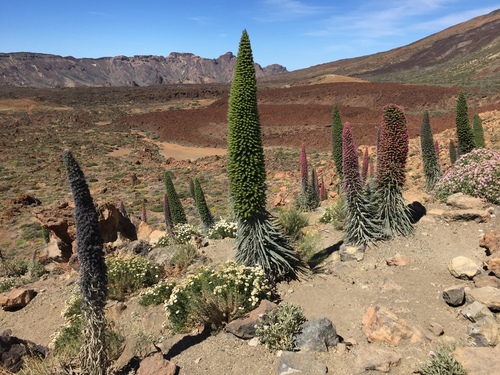
Plantago Webbii ist ein faszinierender, robuster, ausdauernder Strauch, der endemisch in den hochgelegenen Vulkanlandschaften der Kanarischen Inseln vorkommt, insbesondere in den subalpinen Zonen von Teneriffa, La Palma und Gran Canaria gedeiht. Als niedriges, dichtes, halbkugelförmiges Polster hat sich diese einzigartige Pflanze spektakulär an einige der unwirtlichsten Umgebungen des Archipels angepasst, wo intensive Sonneneinstrahlung, dramatische Temperaturschwankungen und austrocknende Winde vorherrschen.
Lebensraum: Findet sich in hochgelegenen vulkanischen Buschlandschaften und an felsigen Hängen der Kanarischen Inseln, typischerweise über 1.500 Metern Höhe.
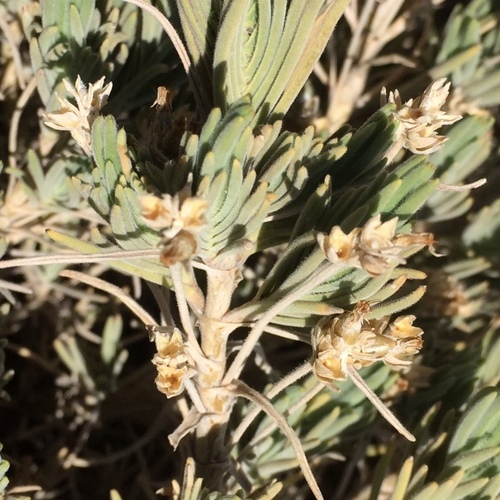
Diese Art bildet einen kompakten, holzigen Strauch, der 10 bis 40 Zentimeter hoch wird. Ihr auffälligstes Merkmal ist die dichte Anordnung schmaler, lanzettlicher Blätter, die stark mit seidigen, silbrig-weißen Haaren bedeckt sind, was der gesamten Pflanze ein schimmerndes, blass-salbeigrünes Aussehen verleiht. Während ihrer Blütezeit treibt sie aufrechte, zylindrische Ähren mit winzigen, dezenten bräunlich-gelben Blüten aus, die über das Laub hinausreichen.
Kategorie
PflanzenSeltenheit
Gewöhnlich
Gefahr
1/5 · Sehr gering
Snaps
Mach den ersten Snap!
Obwohl sie ein enger Verwandter gewöhnlicher Rasenunkräuter ist, hat sich diese Pflanze angepasst, um als holziger, langlebiger Strauch auf rauem Vulkangestein zu überleben.
Sie ist hervorragend an extreme Temperaturschwankungen angepasst und übersteht glühende Tageshitze und eisige Nachttemperaturen in der subalpinen Zone Teneriffas.
Die dichten silbrigen Haare, die ihre Blätter bedecken, wirken wie ein natürlicher Sonnenschutz, der die harte UV-Strahlung der Hochgebirgslagen der Kanarischen Inseln reflektiert.
Als photoautotrophe Pflanze synthetisiert sie ihre eigene Nahrung unter Nutzung von Sonnenlicht, Kohlendioxid und Wasser durch den Prozess der Photosynthese.
Für dieses Objekt sind noch keine Merkmal-Badges vergeben.
Noch keine Alternativnamen vorhanden.
Sammlungen für dieses Objekt erscheinen hier, wenn weitere Themen hinzugefügt werden.
Gefahr
1/5 · Sehr gering
Noch keine besonderen Sicherheitshinweise.
Beginne mit der ganzen Pflanze und vergleiche dann Blattstellung, Blattränder, Stängel und eventuelle Blüten oder Früchte. Gegenständige Blätter wachsen paarweise, wechselständige einzeln am Stängel. Zusammen verraten diese Details weit mehr als ein einzelnes grünes Blatt. Pflanzen bestimmen: Lade ein Foto hoch und vergleiche die sichtbaren Merkmale.
10-40 cm
0.1-0.8 kg
5-20 Jahre
Als photoautotrophe Pflanze synthetisiert sie ihre eigene Nahrung unter Nutzung von Sonnenlicht, Kohlendioxid und Wasser durch den Prozess der Photosynthese.
Findet sich in hochgelegenen vulkanischen Buschlandschaften und an felsigen Hängen der Kanarischen Inseln, typischerweise über 1.500 Metern Höhe.
Zoome hinein, um Cluster aufzulösen und zu sehen, wo dieses Objekt fotografiert wurde.
Neueste Snaps erscheinen hier, wenn neue Beobachtungen hinzukommen.
Nimm die Entdeckung mit
Fotografiere deinen Fund mit Snappit, bestimme die Art und füge die Entdeckung deiner Sammlung hinzu.