




Podabrus
podabrus
Podabrus ist eine faszinierende Gattung von Weichkäfern, weithin bekannt für ihre weichen, länglichen Körper und ihre sehr nützlichen räuberischen Gewohnheiten. Diese Käfer, die häufig in Gärten, Wiesen und Wäldern anzutreffen sind, sind hervorragende natürliche Schädlingsbekämpfer. Sie fressen unersättlich Blattläuse, kleine Raupen und andere weichhäutige Insektenschädlinge, was sie zum besten Freund jedes Gärtners macht. Ihr zartes Aussehen täuscht über ihre Rolle als beeindruckende, aktive Jäger in den von ihnen bewohnten Mikro-Ökosystemen hinweg. Als tagaktive Nahrungssucher sind Podabrus-Käfer häufig auf leuchtenden Blüten und dichtem Laub zu sehen. Neben der Jagd ergänzen sie ihre Ernährung gelegentlich mit Nektar und Pollen und wirken dabei beiläufig als kleinere Bestäuber, wenn sie von Blüte zu Blüte reisen.
Lebensraum: Typischerweise in Wiesen, Gärten, landwirtschaftlichen Feldern und Waldrändern zu finden, wo blühende Pflanzen und weichhäutige Insektenbeute reichlich vorhanden sind.
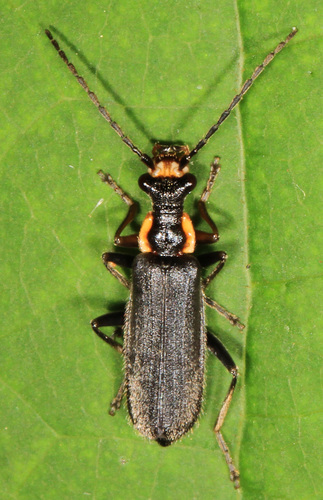
Podabrus-Käfer sind relativ klein, typischerweise zwischen 0,5 und 1,5 Zentimeter lang, und zeichnen sich durch ihre länglichen, weichhäutigen Formen mit ledrigen Flügeldecken (Elytren) aus. Ihre Färbung ist normalerweise eine Mischung aus Schwarz, Braun, Grau oder Gelb. Im Gegensatz zu vielen anderen Weichkäfern haben Mitglieder der Gattung Podabrus einen deutlich sichtbaren Kopf, der nicht vollständig vom Pronotum (der Platte, die den Thorax bedeckt) verdeckt ist, was ihnen das deutliche Aussehen eines 'Halses' verleiht. Sie besitzen lange, fadenförmige Antennen und dünne Beine, die perfekt an das Klettern durch komplexes Laub angepasst sind.
Kategorie
InsektenSeltenheit
Gewöhnlich
Gefahr
1/5 · Sehr gering
Snaps
Mach den ersten Snap!
Sie werden von Gärtnern und Bauern als natürliche biologische Schädlingsbekämpfer sehr geschätzt, da ein einziger Käfer Dutzende von Blattläusen an einem einzigen Tag verzehren kann.
Um Podabrus von eng verwandten Weichkäfern zu unterscheiden, achten Entomologen auf ihren ausgeprägten 'Hals', da ihr Kopf nicht vollständig unter ihrem Thoraxschild versteckt ist.
Im Gegensatz zu den meisten stark gepanzerten Käfern haben Podabrus weiche, ledrige Flügeldecken, was ihnen den Spitznamen 'Lederflügel' eingebracht hat.
Wenn sie von Raubtieren bedroht werden, können sie schädliche chemische Verbindungen aus speziellen Drüsen absondern, um sich ungenießbar zu machen.
Ihre biegsamen, ledrigen Flügeldecken und das Fehlen einer starren Panzerung ermöglichen es ihnen, sich leicht in enge Blütenstrukturen zu zwängen, um versteckte Schädlinge zu jagen.
Sie besitzen spezialisierte Mundwerkzeuge, die darauf ausgelegt sind, weichhäutige landwirtschaftliche Schädlinge wie Blattläuse schnell zu ergreifen, zu durchstechen und zu verzehren.
Sowohl erwachsene Tiere als auch Larven sind primär räuberisch und ernähren sich hauptsächlich von weichhäutigen Insekten, obwohl erwachsene Tiere gelegentlich Nektar und Pollen zu sich nehmen.
Altersunterschiede: Larven sind strikt räuberische Bodenbewohner, während erwachsene Tiere in den oberen Teilen von Pflanzen Nahrung suchen und ihre karnivore Ernährung mit Nektar ergänzen.
Acyrthosiphon pisum
Podabrus-Käfer sind wichtige Prädatoren pflanzenschädigender Blattläuse.

Hirundo rustica
Insektenfressende Vögel jagen häufig erwachsene Weichkäfer.
Solidago canadensis
Sie suchen auf blühenden Pflanzen nach Nahrung und bestäuben sie beiläufig während der Jagd.
Pelzig beschreibt Tiere, die eine dichte Schicht aus weichen Haaren oder Fell besitzen.
Einzelgänger leben den größten Teil ihres Lebens allein und interagieren mit Artgenossen nur zur Paarung oder zur Aufzucht der Jungen.
Dieses Merkmal kennzeichnet Lebewesen, deren Ernährung vollständig oder hauptsächlich aus pflanzlichem Material besteht.
Waldlebensräume sind terrestrische Lebensräume, die von dichtem Baumbestand dominiert werden und eine große Vielfalt an Pflanzen- und Tierarten beherbergen.
Nachtaktive Tiere sind hauptsächlich in den Nachtstunden aktiv und ruhen oder schlafen normalerweise tagsüber.
Noch keine Alternativnamen vorhanden.
Sammlungen für dieses Objekt erscheinen hier, wenn weitere Themen hinzugefügt werden.
Gefahr
1/5 · Sehr gering
Noch keine besonderen Sicherheitshinweise.
Achte auf die harten Flügeldecken, die in einer Linie auf dem Rücken zusammenstoßen, und vergleiche dann Fühler, Körperform, Beine und Zeichnung. Metallische Farben verändern sich je nach Licht stark. Käfer bestimmen: Lade ein Foto hoch und vergleiche die sichtbaren Merkmale.
0-1 cm
1-2 cm
0.0001-0.0005 kg
1 Jahre
5 km/h
Sowohl erwachsene Tiere als auch Larven sind primär räuberisch und ernähren sich hauptsächlich von weichhäutigen Insekten, obwohl erwachsene Tiere gelegentlich Nektar und Pollen zu sich nehmen.
Typischerweise in Wiesen, Gärten, landwirtschaftlichen Feldern und Waldrändern zu finden, wo blühende Pflanzen und weichhäutige Insektenbeute reichlich vorhanden sind.
Zoome hinein, um Cluster aufzulösen und zu sehen, wo dieses Objekt fotografiert wurde.
Neueste Snaps erscheinen hier, wenn neue Beobachtungen hinzukommen.
Nimm die Entdeckung mit
Fotografiere deinen Fund mit Snappit, bestimme die Art und füge die Entdeckung deiner Sammlung hinzu.