


Pua Kala
argemone glauca
Pua Kala (Argemone glauca), auch bekannt als Hawaiianischer Mohn, ist eine auffällige endemische Pflanzenart, die auf den Hawaii-Inseln beheimatet ist. Diese robuste Staude ist bekannt für ihre brillanten weißen Blüten, die sich von einem Zentrum zahlreicher leuchtend gelber Staubblätter abheben. Sie gedeiht in den rauen, trockenen Umgebungen von Küstendünen, trockenen Strauchlandschaften und vulkanischen Hängen und zeichnet sich als eine der wenigen einheimischen hawaiianischen Pflanzen aus, die mit scharfen Verteidigungsdornen ausgestattet ist. Historisch hatte Pua Kala einen bedeutenden kulturellen und medizinischen Wert für die Ureinwohner Hawaiis, die ihren leuchtend gelben, latexartigen Saft zur Linderung von Zahnschmerzen und Hautleiden nutzten. Heute ist sie ein wichtiger Bestandteil der fragilen Trockenland-Ökosysteme Hawaiis, liefert Nahrung für einheimische Bestäuber und fungiert als Pionierart auf trockenen vulkanischen Böden.
Lebensraum: Typischerweise zu finden an trockenen, felsigen und sonnenexponierten Hängen, Lavafeldern und Küstenstrauchlandschaften auf den Hawaii-Inseln.
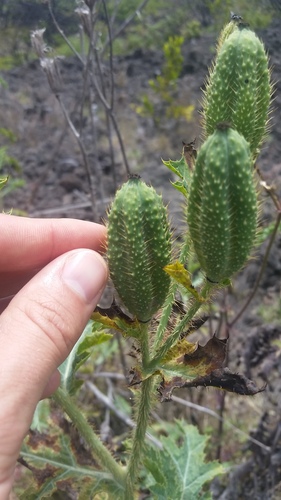
Diese aufrechte, buschige Krautpflanze erreicht typischerweise eine Höhe von 60 bis 120 cm. Sie ist leicht an ihren spektakulären, großen weißen Blüten mit kreppapierartigen Blütenblättern von bis zu 8 cm Durchmesser zu erkennen, die eine dichte zentrale Ansammlung goldgelber Staubblätter umgeben. Ihr Laub ist tief gelappt, blass bläulich-grün (glauceszent) und stark mit scharfen, steifen Dornen entlang der Blattränder und Stängel bewehrt. Nach der Blüte produziert sie längliche, stachelige Samenkapseln, die sich öffnen, um zahlreiche kleine schwarze Samen freizugeben.
Kategorie
PflanzenSeltenheit
Gewöhnlich
Gefahr
1/5 · Sehr gering
Snaps
Mach den ersten Snap!
Alte Hawaiianer nutzten den leuchtend gelben Latexsaf der Pflanze als Schmerzmittel zur Behandlung von schmerzhaften Zahnschmerzen und Neuralgien.
Ihr wissenschaftlicher Name, Argemone glauca, bezieht sich auf ihre glauceszenten oder bläulich-grünen, wachsartigen Blätter, die ihr helfen, das intensive hawaiianische Sonnenlicht zu überleben.
Pua Kala ist eine der sehr wenigen einheimischen hawaiianischen Pflanzen, die physikalische Abwehrmechanismen wie Dornen entwickelt hat, was ungewöhnlich ist, da Hawaii historisch keine einheimischen Säugetierherbivoren hatte.
Produziert eine pudrige, wachsartige Beschichtung auf ihren Blättern, die ihnen einen bläulichen Farbton verleiht und hilft, Wasserverlust unter trockenen Bedingungen zu reduzieren.
Schreckt potenzielle Pflanzenfresser mit scharfen, furchterregenden Dornen ab, die ihre Stängel, Blätter und Samenkapseln dicht bedecken.
Entwickelt ein tiefes, robustes Pfahlwurzelsystem, um Feuchtigkeit zu sichern und sich in lockeren vulkanischen Böden zu stabilisieren.
Als photoautotrophe Pflanze erzeugt Pua Kala ihre eigene Nahrung mit Sonnenlicht, Kohlendioxid, Wasser und Mineralien durch den Prozess der Photosynthese.
Hylaeus anthracinus
Die endemische hawaiianische Gelbgesichtsbiene sammelt Pollen aus den großen gelben Zentren der Pua Kala-Blüten.
Xylocopa sonorina
Die eingeführte Sonoranische Holzbienenart besucht die Blüten für Nektar und fungiert als effektiver Bestäuber.
Für dieses Objekt sind noch keine Merkmal-Badges vergeben.
Noch keine Alternativnamen vorhanden.
Sammlungen für dieses Objekt erscheinen hier, wenn weitere Themen hinzugefügt werden.
Gefahr
1/5 · Sehr gering
Noch keine besonderen Sicherheitshinweise.
Beginne mit der ganzen Pflanze und vergleiche dann Blattstellung, Blattränder, Stängel und eventuelle Blüten oder Früchte. Gegenständige Blätter wachsen paarweise, wechselständige einzeln am Stängel. Zusammen verraten diese Details weit mehr als ein einzelnes grünes Blatt. Pflanzen bestimmen: Lade ein Foto hoch und vergleiche die sichtbaren Merkmale.
60-120 cm
2-5 Jahre
Als photoautotrophe Pflanze erzeugt Pua Kala ihre eigene Nahrung mit Sonnenlicht, Kohlendioxid, Wasser und Mineralien durch den Prozess der Photosynthese.
Typischerweise zu finden an trockenen, felsigen und sonnenexponierten Hängen, Lavafeldern und Küstenstrauchlandschaften auf den Hawaii-Inseln.
50-150
14-28 Tage
Zoome hinein, um Cluster aufzulösen und zu sehen, wo dieses Objekt fotografiert wurde.
Neueste Snaps erscheinen hier, wenn neue Beobachtungen hinzukommen.
Nimm die Entdeckung mit
Fotografiere deinen Fund mit Snappit, bestimme die Art und füge die Entdeckung deiner Sammlung hinzu.


















