


Pyrrhobryum spiniforme
pyrrhobryum spiniforme
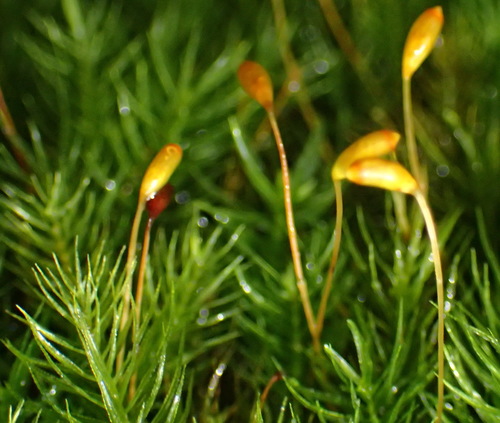
Pyrrhobryum spiniforme, gemeinhin bekannt als Stachelspitzmoos, ist ein auffälliges Bryophyt, das einem Miniatur-Kiefernwald ähnelt. Es gedeiht unter feuchten, humid Bedingungen und bildet dichte, üppige Büschel, die dem Waldboden, verrottenden Baumstämmen und Baumstämmen lebendiges Leben verleihen. Seine alte evolutionäre Abstammung macht es zu einem faszinierenden Objekt für Naturliebhaber, da es zeigt, wie primitive Pflanzen Millionen von Jahren ohne ein Gefäßsystem gedeihen konnten. Es spielt eine wichtige Rolle in seinem Ökosystem, indem es Feuchtigkeit speichert, Bodenerosion verhindert und Mikrohabitate für unzählige winzige Organismen bietet.
Lebensraum: Typischerweise in feuchten, schattigen tropischen und subtropischen Wäldern zu finden, wo es in dichten Büscheln auf verrottenden Baumstämmen, Baumstämmen und nassen Felsen wächst.
Dieses Moos bildet aufrechte, starre Büschel, die 2 bis 8 Zentimeter hoch werden. Seine Stängel sind oft unverzweigt und mit schmalen, linear-lanzettlichen Blättern geschmückt, die in einer scharfen Spitze enden. Unter einem Vergrößerungsglas zeigen die Blattränder charakteristische doppelt gezahnte Stacheln, die der Art ihren Namen geben. Die Farbe reicht von einem hellen, goldgelb-grün an den Spitzen bis zu einem dunkleren Grün an der Basis, die oft von einer flaumigen Matte aus rotbraunen Rhizoiden umhüllt ist.
Kategorie
PflanzenSeltenheit
Gewöhnlich
Gefahr
1/5 · Sehr gering
Snaps
Mach den ersten Snap!
Trotz seiner Ähnlichkeit mit Miniatur-Nadelbäumen vermehrt sich dieses Moos über mikroskopisch kleine Sporen und nicht über Samen.
Seine dichten, feuchten Büschel fungieren als Miniatur-Oasen, die mikroskopische Wasserbären und Rädertierchen beherbergen.
Der wissenschaftliche Name spiniforme bedeutet stachelförmig, inspiriert durch die doppelte Reihe winziger Zähne an den Blatträndern.
Als photosynthetisches Bryophyt erzeugt es seine eigene Nahrung unter Verwendung von Sonnenlicht, Kohlendioxid und Wasser, das aus seiner feuchten Umgebung aufgenommen wird.
Für dieses Objekt sind noch keine Merkmal-Badges vergeben.
Noch keine Alternativnamen vorhanden.
Sammlungen für dieses Objekt erscheinen hier, wenn weitere Themen hinzugefügt werden.
Gefahr
1/5 · Sehr gering
Noch keine besonderen Sicherheitshinweise.
Vergleiche Wuchsform, Verzweigung, winzige Blättchen und eventuelle Sporenkapseln. Moose, Lebermoose und Flechten können am selben Ort wachsen, sind aber völlig verschiedene Organismen. Moos bestimmen: Lade ein Foto hoch und vergleiche die sichtbaren Merkmale.
2-8 cm
2-10 Jahre
Als photosynthetisches Bryophyt erzeugt es seine eigene Nahrung unter Verwendung von Sonnenlicht, Kohlendioxid und Wasser, das aus seiner feuchten Umgebung aufgenommen wird.
Typischerweise in feuchten, schattigen tropischen und subtropischen Wäldern zu finden, wo es in dichten Büscheln auf verrottenden Baumstämmen, Baumstämmen und nassen Felsen wächst.
Zoome hinein, um Cluster aufzulösen und zu sehen, wo dieses Objekt fotografiert wurde.
Neueste Snaps erscheinen hier, wenn neue Beobachtungen hinzukommen.
Nimm die Entdeckung mit
Fotografiere deinen Fund mit Snappit, bestimme die Art und füge die Entdeckung deiner Sammlung hinzu.


















